
Sweet wines: noble rot, raisining and ice wine
30 bottles, from Tokaj to the CapeA sweet wine keeps the sugar of the grape itself. The winemaker concentrates the berry before pressing it: waiting for noble rot, letting the bunches dry on the vine or on racks, or picking the grapes frozen in the depths of winter. Fermentation stops of its own accord, or nearly, and the wine stays rich, carried by an acidity that keeps it light on its feet.
Here you will find Tokaji from Hungary, Vin de Constance from the Cape, grains nobles from Valais, recioto and vin santo from Italy, late harvests from Austria and Chile, and a Canadian ice wine. Fortified wines, port first and foremost, are gathered on the sweet wines page.
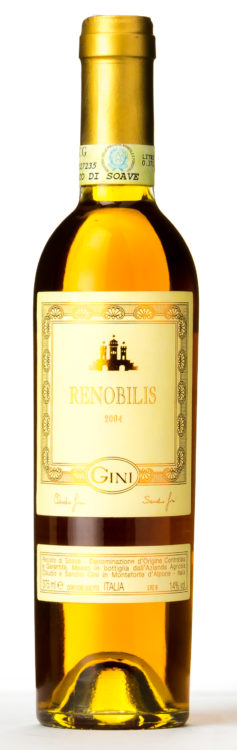
Gini - Renobilis 2013
A sweet Soave wine with a strong terroir, combining aromatic richness, freshness and a long finish.
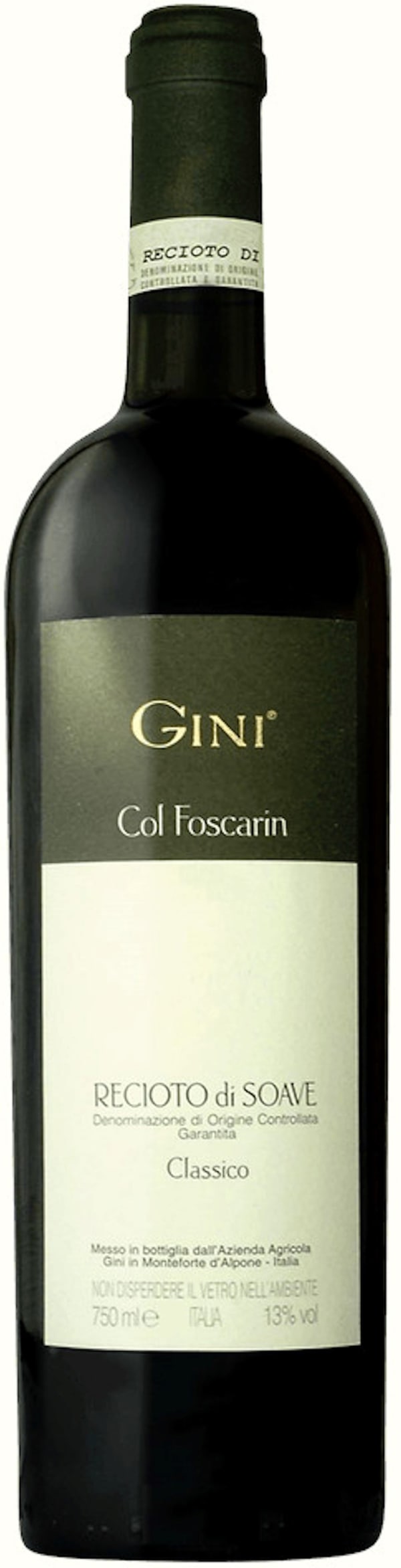
Gini - Col Foscarin Recioto di Soave 2016
A high-altitude Recioto di Soave, where the luscious richness meets the volcanic freshness of the Col Foscarin terroir.
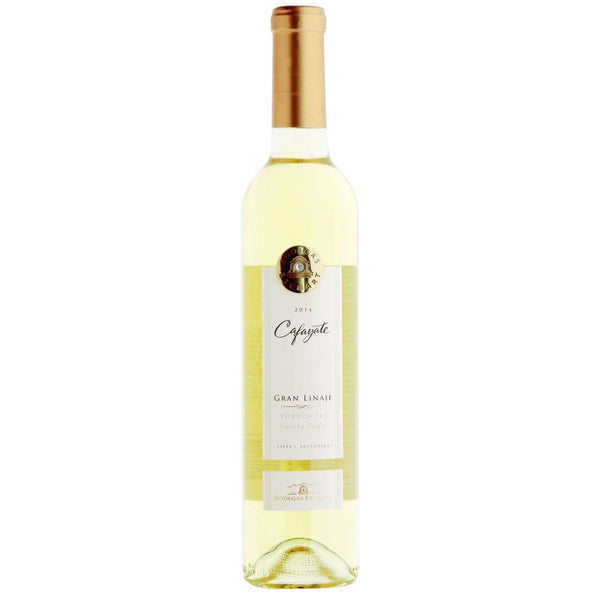
Etchart - Cosecha Tardia Torrontés 2024
Late-harvest Torrontés, lychee and honey, for dessert or spicy food.
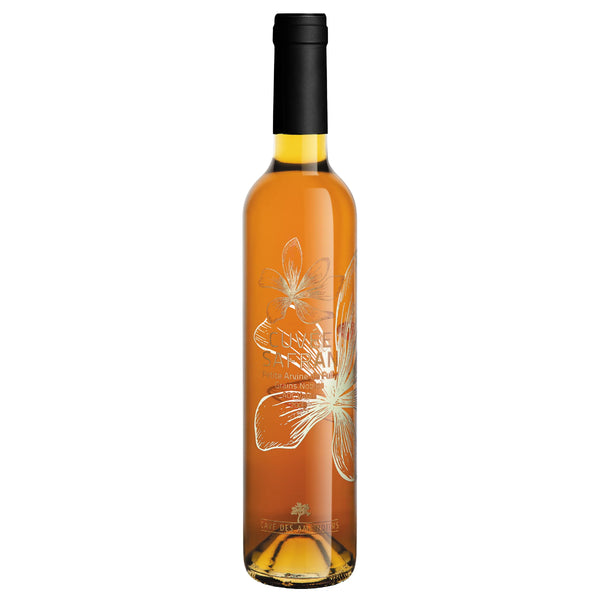
Cave des Amandiers - Cuvée Safran 2011
Noble-rot grapes, thirteen years in wood, candied fruit and honey for a rare sweet wine.
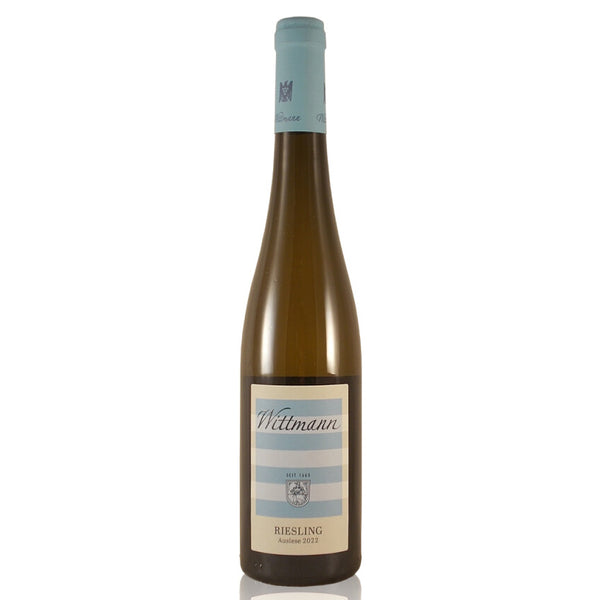
Wittmann - Auslese Riesling 2023
Candied citrus, peach and honey, a Riesling Auslese whose acidity keeps it from becoming heavy.
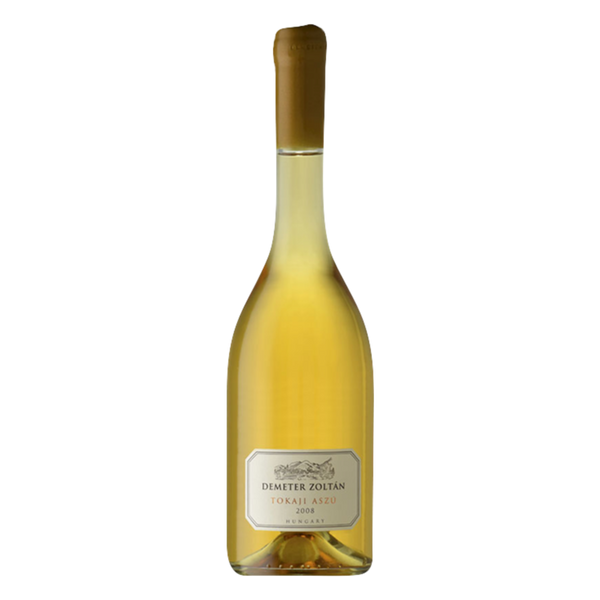
Demeter Zoltan - Tokaji Aszú 6 puttonyos 2016
Six ways to concentrate the grape
Every sweet wine starts from a berry richer in sugar than the yeast can convert. What changes from one region to another is how you get there: a fungus, the sun, the air of a loft or frost.
| Method | What's happening | In the glass | At our place |
|---|---|---|---|
| Noble rot, selected berries Tokaji Aszú, grains nobles | Botrytis pierces the skin, the water evaporates, the shrivelled berries are picked one by one | Dried apricot, candied orange, honey, great vivacity | Tokaji Aszú 6 Puttonyos 2003, Château de Sárospatak€77 per 50 cl bottle, sold singly |
| Noble rot, whole bunch Tokaji Szamorodni | The bunch is harvested as it is, healthy and botrytised berries together | Quince, yellow fruit, lighter sweetness | Tokaji Edes Szamorodni 2021, Château de Sárospatak€29.90 per 50 cl bottle, sold singly |
| Late harvest Spätlese, Auslese, late harvest | The grapes stay on the vine for weeks after the harvest and become overripe | Fresh fruit, flowers, moderate sugar | Gewürztraminer Ruster Spätlese 2024, Bruno Landauer€19.90 per bottle, sold singly |
| Raisining on the vine Vin de Constance | The berries dry on the vine in the sun and wind, then are picked | Lychee, orange blossom, candied peel | Vin de Constance 2021, Klein Constantia€78 per 50 cl bottle, sold singly |
| Raisining on racks Recioto, vin santo, passito | The picked bunches dry for weeks or months on racks before pressing | Raisin, almond, toasted hazelnut | Col Foscarin Recioto di Soave 2016, Gini€85.60 per bottle, in a set of 2 |
| Ice wine Eiswein, icewine | The grapes freeze on the vine and are pressed frozen: only the sweet juice flows out | Mango, apricot, very crisp acidity | Vin de Glace Vidal 2022, Donald Ziraldo€51 per 37.5 cl bottle, in a set of 2 |
Port, Banyuls or Muscat de Rivesaltes follow another path: grape spirit is added during fermentation to stop it. These fortified wines are on the sweet wines and port pages.
Which sweet wine with which dish
A sweet wine can be served well beyond dessert. Its acidity cuts through fat, its sugar answers salt and spice: it is the wine for foie gras, blue cheese and Thai cooking.
| Dish | Recommended style | At our place | Why it works |
|---|---|---|---|
| Foie gras | Tokaji Szamorodni, late harvest | Tokaji Szamorodni Eszter 2023, Demeter Zoltán€60 per 50 cl bottle, sold singly | The acidity of Furmint lightens the fat, the honey prolongs the texture |
| Roquefort, Fourme, blue cheeses | Tokaji Aszú, Vin de Constance | Grand Constance 2021, Groot Constantia€62 per 37.5 cl bottle, sold singly | The salt of the blue calls for sugar, the concentration stands up to the strong flavour |
| Curry, Thai cooking | Aromatic late harvest | Cosecha Tardía Torrontés 2024, Etchart€20.60 per bottle, by the case of 6 | The sugar soothes the chilli, the perfume of the grape answers the lemongrass |
| Apricot tart, tarte Tatin | Grains nobles, Tokaji Aszú | Late Harvest 2014, Dolce€129.40 per 37.5 cl bottle, sold singly | Candied fruit against cooked fruit, and an acidity at least equal to that of the dessert |
| Cantucci, almond biscuits | Vin santo | Vin Santo 2015, Fèlsina€60 per 37.5 cl bottle, in a set of 2 | The Tuscan tradition: you dip the biscuit, and the toasted hazelnut of the wine meets the almond |
| Red berries, milk chocolate | Late-harvest red | Merlot Ruster Spätlese 2024, Bruno Landauer€19.90 per bottle, sold singly | The red fruit of the Merlot gently accompanies that of the dessert |
The dessert must stay less sweet than the wine. Beyond that, the wine seems thin: for a very sweet dessert, choose a Tokaji Aszú or a grain noble from Valais.
A bottle for every mood
From a first sweet wine to a meditation wine, a way in for every occasion.
Stay under €20
A late harvest from Lake Neusiedl, rose and lychee, with a light sweetness: the perfect way in.
Gewürztraminer Spätlese, €19.90 per bottle, sold singlyThe great Hungarian classic
Aszú, szamorodni, fordítás: all the Tokaji in our selection, from lively Furmint to 6 puttonyos for ageing.
See the Tokaji pageFor foie gras
A whole botrytised bunch, aged a year in barrique: quince, honey and an acidity that lightens the dish.
Edes Szamorodni 2021, €29.90 per 50 cl bottleA wine with history
The raisined Muscat from the Cape that Napoleon had delivered to Saint Helena, revived by Klein Constantia.
Vin de Constance 2021, €78 per 50 cl bottleFor spicy cooking
A biodynamic Riesling Auslese from Rheinhessen, sugar and razor-sharp acidity, for curry and Peking duck.
Auslese Riesling 2022, €38.95 per 50 cl bottle, by the case of 6Taste an ice wine
Vidal frozen on the vine in Ontario: mango, apricot, and an acidity that keeps the palate fresh.
Vin de Glace Vidal 2022, €51 per 37.5 cl bottle, in a set of 2A sweet red
A Merlot harvested late on the shores of Lake Neusiedl, indulgent red fruit, for fruit desserts.
Merlot Spätlese 2024, €19.90 per bottle, sold singlyA meditation wine
A Petite Arvine from Valais made from grains nobles, thirteen years in barrique: candied fruit, honey, sweet spices.
Cuvée Safran 2011, €146 per 50 cl bottle
The world's sweet wines, from one method to another
We built this selection around the great schools of sweetness rather than a single country. Tokaj takes first place, with Château de Sárospatak, Royal Tokaji and Demeter Zoltán: from the Edes Szamorodni to the Tokaji Aszú 6 puttonyos 2016 from Demeter Zoltán, €299 per 37.5 cl bottle. The Cape follows with the three Constantia estates, which have revived the raisined Muscat of the 18th century.
Valais brings rarity: Chappaz, on the slopes of Fully, and the Cave des Amandiers pick Petite Arvine as grains nobles. Italy shows drying on racks, from Gini's Recioto di Soave to Fèlsina's Vin Santo and Fenech's Malvasia delle Lipari, dried for two weeks in the Salina sun. Bruno Landauer, Wittmann, Tarapacá and Etchart round things off with easy-to-open late harvests, from €12.90 per 50 cl bottle at Tarapacá, by the case of 6.
Liquoreux, moelleux, doux: the words
On a European label, “moelleux” (medium sweet) means a still wine with 12 to 45 grams of sugar per litre, “doux” (sweet) a wine above that. Liquoreux is a term of usage for the richest, often above 100 grams: Buitenverwachting's Vin de Constantia 1769 keeps 140 per litre. A Tokaji Aszú 6 puttonyos has at least 150.
The Wine Wanderer Team
What we are asked about sweet wines
What is the difference between a liquoreux and a moelleux wine?
It is a question of degree. A moelleux keeps a little sugar, between 12 and 45 grams per litre: it goes well with a savoury dish. A liquoreux keeps much more, often over 100 grams, with an almost syrupy texture. A late harvest such as Bruno Landauer's Spätlese sits close to moelleux, a Tokaji Aszú at the very top of the scale.
Is port a sweet wine?
Port is a fortified sweet wine: grape spirit is added to the fermenting must, which stops the yeasts and keeps the sugar. A liquoreux keeps its sugar because the grape contained too much for the yeast. Both families are gathered on the sweet wines page, and ports have their own page.
What is noble rot?
It is a fungus, Botrytis cinerea, which develops in autumn when misty mornings alternate with dry, sunny afternoons. It pierces the grape skin, the water evaporates and the berry shrivels, concentrating sugar, acidity and aromas. It gives Tokaji Aszú, the grains nobles of Valais such as Chappaz's Grain Noble, and Dolce's Late Harvest, in Napa Valley.
What does puttonyos mean on a Tokaji?
The puttony is the hod in which the aszú berries, shrivelled by noble rot, were collected. A given number of them was added to a cask of base wine: the more hods, the richer the wine. Today, the 6 puttonyos designation means at least 150 grams of sugar per litre. The whole range is on the Tokaji page.
At what temperature should you serve a sweet wine?
Chilled, between 8 and 10 °C for most. An ice wine or a light late harvest is enjoyed a little colder, at around 6 to 8 °C. An old Tokaji Aszú or a vin santo benefits from being served at 10 or 12 °C, to let the ageing aromas speak. A small glass is enough: 6 to 8 cl per person.
How long can an open bottle be kept?
Much longer than a dry wine, because sugar and acidity protect the wine. Recorked and kept in the fridge, a late harvest lasts one to two weeks, a Tokaji Aszú or a vin santo several weeks. That is also why sweet wines are often sold in 37.5 or 50 cl bottles.
Which sweet wine to choose with foie gras?
Look for a wine that is rich but lively: a Tokaji Szamorodni such as the one from Château de Sárospatak, €29.90 per 50 cl bottle, or a late harvest. With pan-fried foie gras and fruit, a Vin de Constance or an ice wine brings its perfume of exotic fruit.
Can a sweet wine age for a long time?
Yes, it is one of the families of wines that age best. Sugar and acidity preserve it, and the colour shifts from gold to amber. The selection offers Tokaji Aszú from 2002 and 2003, and the Cuvée Safran from the Cave des Amandiers spent thirteen years in barrique before bottling.
Are there red sweet wines?
They are rare, but they exist. Bruno Landauer harvests his Merlot several weeks after the main harvest, on the shores of Lake Neusiedl, and lets the fermentation stop of its own accord. For fortified sweet reds, such as Maury or Banyuls, see the sweet red wine page.