
Riesling: one grape, a thousand soils, from dry to sweet
75 bottles, from taut dry wines to sweet wines for the end of the mealA white that keeps its freshness even at full ripeness, that often sits at eight or nine degrees of alcohol and that lets the soil speak before the fruit: that is what people come here for. The vine gives its best in cool regions, on the slate of the Mosel, the granite of Alsace, the gneiss of the Danube terraces or the quartz of South Australia.
The page follows the whole sugar scale, from taut Trocken to end-of-meal Beerenauslese, with the Mosel as its backbone and the Joh. Jos. Prüm, Dr. Loosen, Axel Pauly and Wittmann estates as landmarks.

Wittmann - Riesling Trocken 2022
A high-class biodynamic Riesling for lovers of tense and complex wines!
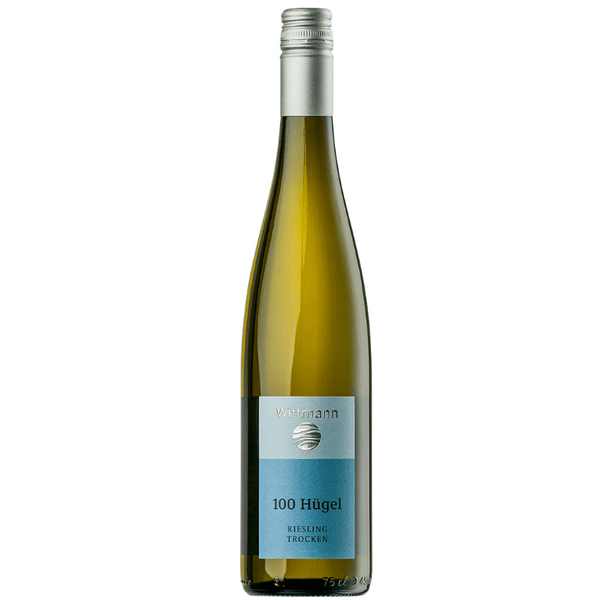
Wittmann - 100 Hügel 2023
A biodynamic riesling full of lightness and freshness straight from Germany
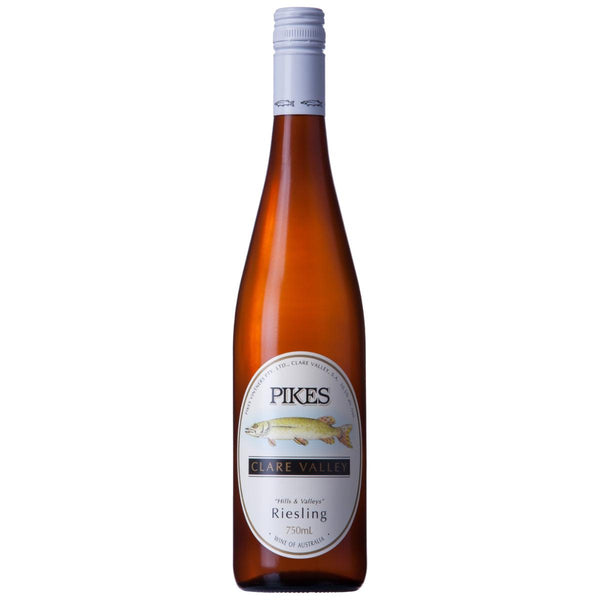
Pikes - Hills & Valleys Riesling 2025
A subtle and classy Riesling with citrus and white fruits.
The great riesling terroirs
This grape ripens slowly and copes with cold better than with heat: it therefore follows the high latitudes and the valleys at altitude. Everywhere, the soil can be read in the glass, and that is what changes the taste from one region to the next.
| Region | Climate and soil | The style in the glass | Usual sugar |
|---|---|---|---|
| Mosel and SaarBlue and red slate, steep slopes | Cool, a regulating river, rock that gives back the heat | Airy, lime, low alcohol, saline finish | The whole scale, from Trocken to sweet |
| Rheinhessen and the Pfalz | Milder and drier, limestone, marl and loess | Ample, yellow fruit, broad and firm palate | Mostly dry |
| Rheingau | South-facing slopes on quartzite, a wide body of water | Ripe apple, dense substance, well-held acidity | Dry, with late harvests |
| Alsace | Sunny and sheltered, granite, sandstone and marl | Round, ripe citrus, straight, powdery finish | Dry, sometimes sweet |
| Wachau and KremstalAustria, gneiss terraces along the Danube | Continental, cold nights, bare primary rock | Peppery, firm citrus, very slender | Dry |
| Clare and Eden Valley | South Australia, hot days, cold nights, quartz | Lime, citrus peel, cutting acidity | Dry |
| Washington and New Zealand | Sheltered continental for one, oceanic for the other | Exotic fruit, supple and generous palate | Dry to off-dry |
The German share forms the heart of this selection: the Mosel and Saar page details the slate hillsides, and the Wines of Germany pillar places each region back on the country’s map.
How the bottle evolves over the years
Acidity and sugar act here as natural preservatives, which gives this white a rare longevity. The wine goes through a quiet phase around its fifth year, then opens up again in a deeper register.
| Age of the wine | Dominant aromas | Dinner's ready |
|---|---|---|
| From the first year to three years | Lime, green apple, white flowers, sometimes a hint of spritz | Oysters, sushi, fresh goat's cheese, fennel salad |
| Three to five years | The fruit rounds out, the wine closes up for a while, the palate tightens | Trout with beurre blanc, poached poultry, leek quiche |
| Five to ten years | Honey, linden, quince, the first trace of petrol | Roast pork, mild Thai cuisine, long-aged Comté |
| Ten to twenty years | Beeswax, saffron, candied orange peel, oily texture | Veal sweetbreads, chicken in cream sauce, aged Gouda |
| Past twenty years, for the rich Prädikat wines | Salted caramel, dried fruit, camphor, acidity still upright | Foie gras, roquefort, or on its own to end the meal |
The famous petrol note comes from a molecule formed by ageing, TDN: it appears faster in sunny vintages and on poor soils, and it stays discreet when the wine has been aged somewhere cool. The sweetest versions also sit in our sweet wines.
A bottle for every mood
Eight ways in, from the everyday dry wine to the bottle for the end of the meal.
Discovering the grape variety for under €16
A dry Rheinhessen wine on limestone, green apple and a saline finish. The simplest glass for grasping the grammar of this grape.
Wittmann 100 Hügel 2023 · €15.90 per bottle, by the case of 6Buy a single bottle
A Saar riesling aged on slate, taut and saline, available by the single bottle. Ideal for tasting before ordering a full case.
Van Volxem Schiefer Riesling 2022 · €21 per bottle, sold individuallyA dry slate wine for the table
Lieser hillsides, decomposed slate, fermentation in stainless steel: the Mosel style in its straightest, cleanest form.
Axel Pauly Purist Riesling 2024 · €19 per bottle, by the case of 6A Kabinett for the aperitif
Red volcanic soil, light in alcohol, a hint of sugar to round off the edges. Serve well chilled with fish rillettes.
Dr. Loosen Urziger Würzgarten Kabinett 2024 · €23.80 per bottle, by the case of 6An off-dry wine for foie gras
Red slate from Erden, berries sorted at overripeness, honey and candied fruit lifted by a lively acidity with every sip.
Dr. Loosen Erdener Treppchen Auslese 2024 · €31.80 per bottle, by the case of 6The top of the sugar scale
Botrytised berries sorted one by one, dense texture and a mouth-watering finish. The dessert bottle that lasts for several decades.
Dr. Loosen Beerenauslese 2018 · €40.80 per bottle, in packs of 3A great dry wine for ageing
Old vines from the Wehlen sundial, ageing in old large casks, mineral depth. The summit of dry Mosel Riesling.
Dr. Loosen Wehlener Sonnenuhr Trocken GG AR 2022 · €55 per bottle, in a pack of 2Go back to the source of the style
The Wehlen estate that set the Mosel benchmark: slow fermentations, sugar kept in check, bottles made to wait.
Estate page · Joh. Jos. Prüm
Why this grape keeps its acidity
Most grape varieties lose their malic acid as the fruit ripens. This one keeps a good share of it, even at full ripeness, because it ripens slowly and late, in regions where the nights stay cold. The grower therefore holds sugar and acidity at the same time, which opens two roads: ferment all the sugar for a dry wine, or stop the fermentation to keep a balance between the two.
The second reason lies in the skin, thin and not very aromatic in itself: the wine is built on structure rather than on varietal perfume. That is what makes the soil so easy to read, saline slate, chalky limestone or powdered granite.
How do you choose
We taste every cuvée before listing it, and with this grape we look at two things: the clarity of the fruit on the attack and the length of the finish. A wine that stops just after the mid-palate stays in the cloakroom, however fine the hillside behind it. The sugar level comes afterwards, from Trocken to the gold capsule.
The Wine Wanderer Team
What we are asked about Riesling
Is a riesling always sweet?
Most of the world’s production is dry today. The word to look for on the label is Trocken, which guarantees a dry wine, and Feinherb or halbtrocken for a discreet off-dry style. Bottles from Alsace, Austria and Australia are dry by default. Sugar remains a stylistic choice, claimed and written on the bottle.
How do you tell a dry from an off-dry wine on the label?
Three clues are enough. Trocken indicates a dry wine, Feinherb or halbtrocken a lightly off-dry one. A harvest designation used on its own, Kabinett or Spätlese for example, indicates on the contrary a wine that keeps some sugar. Finally, the alcohol level tells you something: eight degrees signals an arrested fermentation, twelve degrees a wine fermented all the way.
What do Kabinett, Spätlese, Auslese and Beerenauslese mean?
These words describe the ripeness of the grapes at harvest, and therefore their natural sugar. Kabinett comes from a normal harvest, Spätlese from a later picking, Auslese from a selection of overripe bunches, Beerenauslese from a berry-by-berry selection of botrytised fruit. The Wines of Germany pillar gives the exact grammes.
Why are these bottles often sold in sets or by the case?
The estates we work with ship their cuvées by full case, and keeping that format lets us hold the price as tight as possible. The price shown is always the bottle price, with the sales format beside it. Some cuvées are still available singly, such as the Van Volxem Schiefer Riesling 2022 at €21 a bottle.
How long does a Riesling keep?
Far longer than most whites. A dry wine from good terroir lasts ten years, a Kabinett just as long, an Auslese or a Beerenauslese several decades. Peak maturity arrives at around eight to fifteen years depending on concentration. Many bottles go through a quiet phase between three and five years: let them come out the other side.
Where does the petrol note in old bottles come from?
It comes from a molecule called TDN, which forms slowly in the bottle from precursors present in the grape. Sun in the vintage, low yields and poor soils accentuate it, a cool cellar slows it down. Many enthusiasts look for it: it marks the maturity of a wine that stays lively in every other respect.
At what temperature should these wines be served?
Allow 10–12 °C for a dry wine, and a little cooler, around 8–9 °C, for a Kabinett or an Auslese whose sugar is better kept tight. Sweet wines are served cool as well. Take the bottle out of the fridge a quarter of an hour before sitting down, and the wine will open up in the glass.
Which dishes go with a dry riesling, and then with an off-dry one?
The dry style calls for richness and salt: oysters, smoked salmon, trout with beurre blanc, poached poultry, fresh goat’s cheese. Off-dry takes over as soon as the dish turns spicy or sweet — Thai cooking, poultry in a mild curry, sweet-and-sour pork, duck with fruit. The medium-sweet and sweet wines close the meal with roquefort or foie gras.
Which bottle should I start with?
Take a dry wine at around €20 to set the marker, then a Kabinett to feel what the sugar brings to the freshness: those two glasses are enough to understand the grape. To go to the heart of the style, the Mosel and Saar page brings together the slate hillsides that serve as its world benchmark.