
German wines: slate Riesling and Rhine Pinot Noir
53 bottles, from Mosel Riesling to Baden Pinot NoirAn acidity that keeps the bottle standing for ten years, precise fruit, a light degree of alcohol: Mosel Riesling is recognisable from the first glass. The vines grow here on slate slopes so steep that the work is done by hand, above a river that throws the light back onto the bunches.
The section follows two threads. The whites first, from taut and dry to the sweeter styles for the end of a meal, carried by Joh. Jos. Prüm, Dr. Loosen and Axel Pauly. Then the reds, those southern Pinot Noirs that the label calls Spätburgunder, lighter than a Burgundy and cut out for the table.
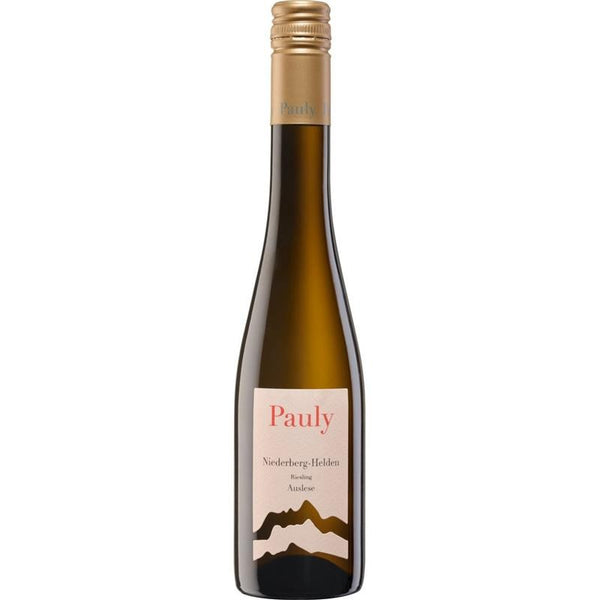
Axel Pauly - Lieserer Niederburg-Helden Riesling Auslese 375ml 2021
A Mosel Auslese where the sweetness of the fruit meets crystalline freshness.
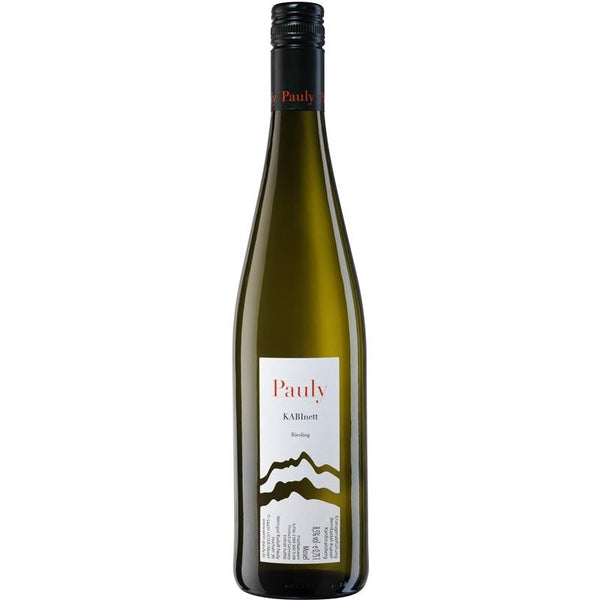
Axel Pauly - Lieserer Niederburg-Helden Riesling Kabinett 2022
An airy, fruity and chiselled Mosel Kabinett. Fine sweetness meets the energy of slate.
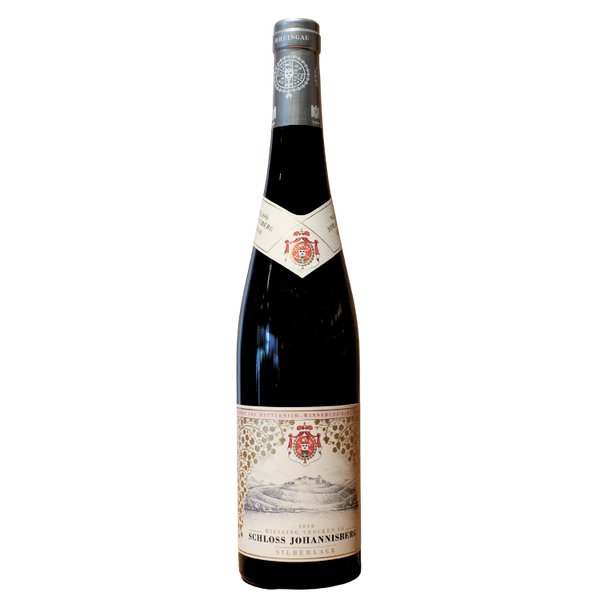
Schloss Johannisberg - Silberlack Trocken GG 2023
A great dry Riesling from the Rheingau: deep, saline and intensely chiselled.
Schloss Johannisberg - Rosalack Auslese 2021
A smooth, chiselled Riesling Auslese, where rich fruit meets the freshness of the Rheingau.
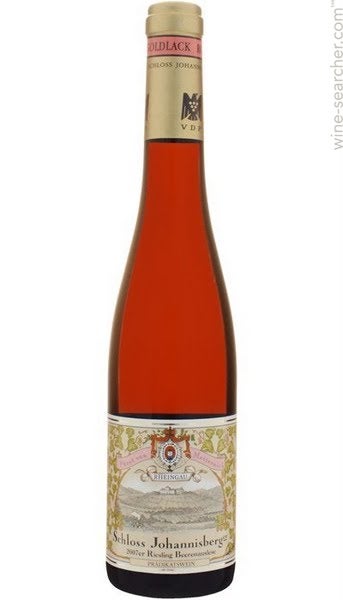
Schloss Johannisberg - Purpurlack BA (37.5cl) 2023
A sumptuous Riesling Beerenauslese, where the richness of candied fruit meets chiselled freshness.
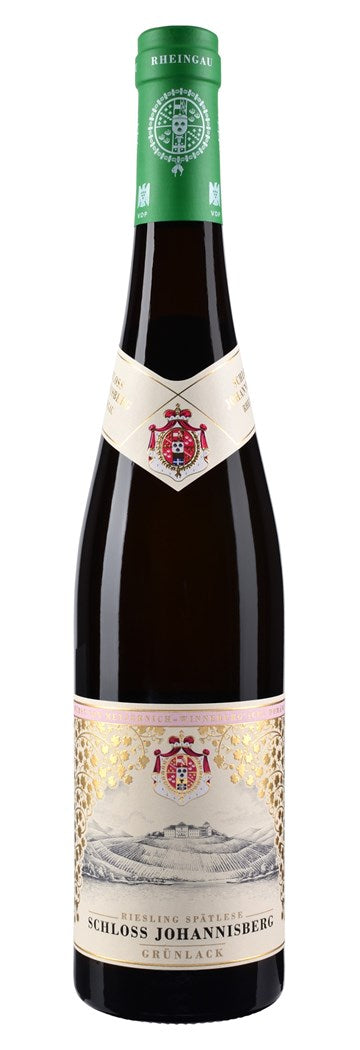
Schloss Johannisberg - Grünlack Spätlese 2022
A medium-sweet, vibrant Riesling, where the sweetness of the fruit meets the mineral brilliance of the Rheingau.
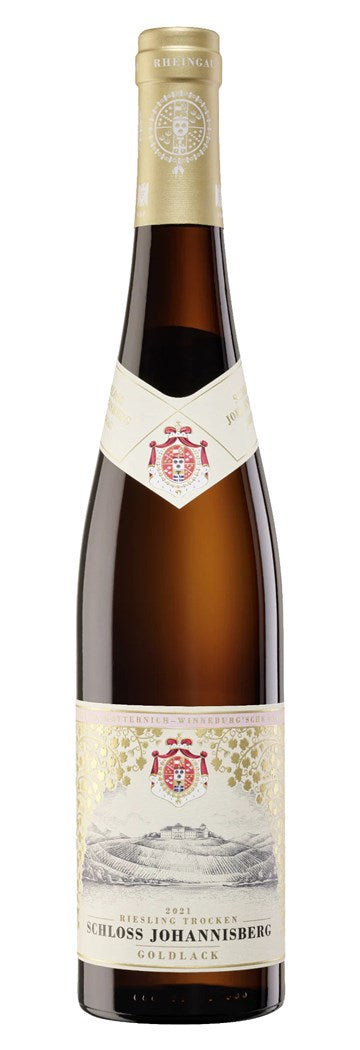
Schloss Johannisberg - Goldlack Trocken 2020
A broad, taut Rheingau Riesling, where ripe fruit meets a saline finish.
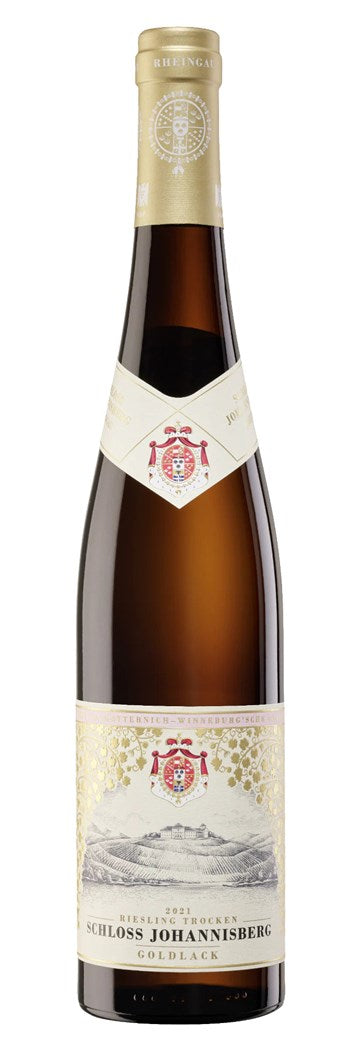
Schloss Johannisberg - Gelblack Trocken 2024
A dry Rheingau Riesling, vibrant and mineral, with a freshness made for the table.
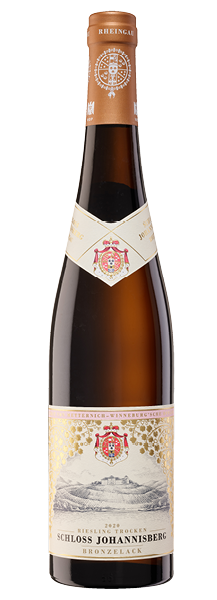
Schloss Johannisberg - Bronzelack Trocken 2021
A dry Riesling from the Rheingau, taut and luminous, where fruit meets saline minerality.
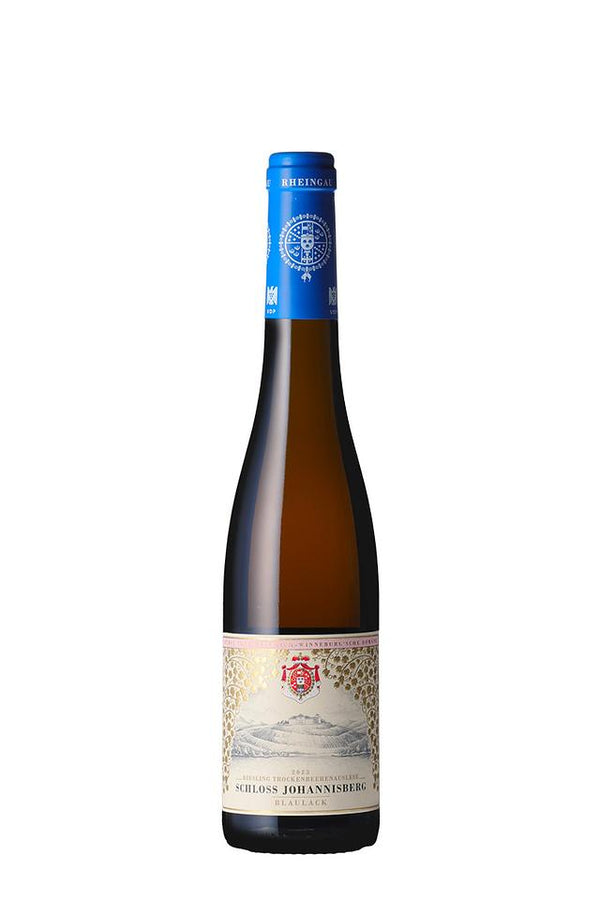
Schloss Johannisberg - Blaulack TBA (37.5cl) 2020
A sweet, concentrated Riesling, carried by remarkable mineral freshness.

Joh Jos Prüm - Zeltinger Sonnenuhr Spätlese 2022
A great Mosel Riesling, pure and crystalline, where the finesse of the sugar is balanced by a vibrant minerality.

Joh Jos Prüm - Zeltinger Sonnenuhr Auslese 2022
A magnificent Mosel Riesling, combining refined sweetness, crystalline tension, and profound minerality.

Joh Jos Prüm - Wehlener Sonnenuhr Spätlese 2022
A superb Mosel Riesling, pure and crystalline, where controlled sweetness meets vibrant freshness.

Joh Jos Prüm - Wehlener Sonnenuhr Kabinett 2022
A great Mosel Riesling, pure and crystalline, where the finesse of the sugar combines with vibrant mineral tension.

Joh Jos Prüm - Wehlener Sonnenuhr Auslese Goldkap 2018
A Mosel Auslese combining aromatic intensity, controlled sweetness and crystalline freshness.
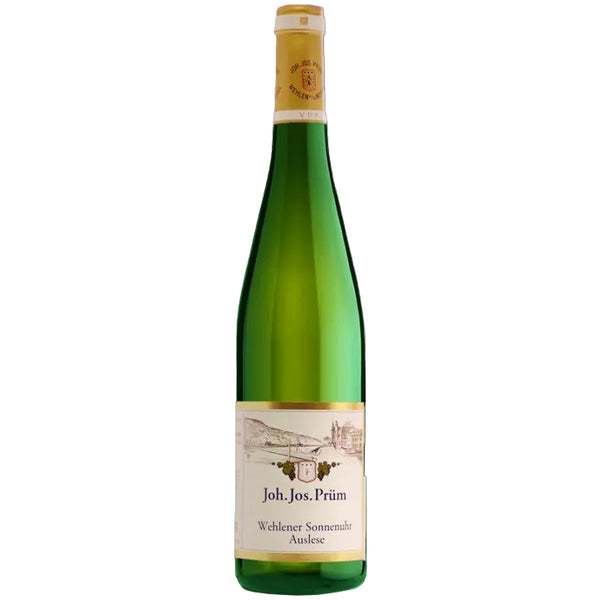
Joh Jos Prüm - Wehlener Sonnenuhr Auslese 2023
A great Moselle Riesling, combining refined sweetness, vibrant freshness, and mineral purity.

Joh Jos Prüm - Graacher Himmelreich Spätlese 2022
A precise and crystalline Moselle Riesling, where controlled sweetness meets vibrant mineral freshness.

Joh Jos Prüm - Graacher Himmelreich Kabinett 2023
A Mosel Riesling of great purity, combining crystalline freshness, controlled sweetness, and mineral depth.

Joh Jos Prüm - Graacher Himmelreich Auslese 2022
A great Moselle Riesling, combining crystalline purity, controlled sweetness, and remarkable mineral tension.

Joh Jos Prüm - G. Himmelreich A. Goldkap 2022
A magnificent Moselle Riesling, pure and crystalline, where the finesse of the slate meets perfectly balanced sweetness.

Joh Jos Prüm - Bernkasteler Badstube Kabinett 2023
A precise and crystalline Moselle Riesling, where the finesse of the Bernkasteler Badstube terroir shines through.

Dr Loosen - Wehlener Sonnenuhr Trocken GG AR 2022
A great dry Mosel Riesling, precise, crystalline, and deeply mineral, from the mythical Wehlener Sonnenuhr hillside.

Dr Loosen - Wehlener Sonnenuhr Spatlese 2023
A magnificent Moselle Riesling, combining crystalline purity, controlled sweetness, and vibrant mineral energy.

Dr Loosen - Urziger Wurzgarten Trocken GG AR 2022
A great dry Mosel Riesling, precise, spicy, and deeply mineral, from the spectacular Ürziger Würzgarten hillside.
Ways into the German shelf
Six ways into this wine country, from your first dry riesling to the end-of-meal bottle.
Taste the style for under twenty euros
A dry Mosel Riesling, lemon and wet stone, raised on blue slate. The most faithful way into the valley's style.
Axel Pauly Generations Riesling 2022 · €18.60 per bottle, by the case of 6A dry wine from a great terroir
Ungrafted century-old vines on the Graach slope, made in foudre: dry riesling in its deepest form.
Dr. Loosen Graacher Domprobst Trocken GG 2023 · €47 per bottle, in a set of 3An off-dry wine for foie gras
Candied fruit, honey and an acidity that refreshes the palate with every sip. The classic counterpoint to a terrine or a Roquefort.
Dr. Loosen Erdener Treppchen Auslese 2024 · €31.80 per bottle, by the case of 6A German red for a dinner
Pinot Noir from the Pfalz, cherry and undergrowth, fine tannin. Serve cool with roast poultry or a mushroom dish.
Friedrich Becker Becker Family Spätburgunder 2019 · €32.60 per bottle, by the case of 6An exceptional bottle to give
The gold capsule from the Mosel's most famous estate, on the sundial slope of Wehlen. Ageing potential counted in decades.
Joh. Jos. Prüm Wehlener Sonnenuhr Auslese Goldkap 2018 · €186 per bottle, sold individuallyFollow the king of grapes
Kabinett, Spätlese, Auslese or a dry wine from a great terroir: the riesling page explains the sugar scale and gathers the bottles, here and elsewhere.
Section page · RieslingFollow the trail of the reds
German pinot noir, from Baden to the Pfalz: light, fresh, easy-drinking reds, to be served at around fifteen degrees.
Section page · Spätburgunder
Where German vines grow
The vineyards occupy the river valleys of the south-west, where water and slope make up for the latitude. Each river gives a style of its own, from the icy Mosel to the almost Mediterranean Palatinate.
| Region | Dominant grape variety | The style | The estates in this section |
|---|---|---|---|
| Mosel and SaarBlue slate, 60-degree slopes | Riesling | Light, taut, floral, often under 9% abv | Joh. Jos. Prüm, Dr. LoosenAxel Pauly, Fritz Haag, Van Volxem |
| Rheinhessen | Riesling | Broader, yellow fruit, saline finish | Wittmann in Westhofen, Dreissigacker in Bechtheim |
| Pfalz, the Palatinate | Riesling and Spätburgunder | Ripe and generous, the mildest climate in the country | Koehler Ruprecht in Kallstadt, Friedrich Becker in Schweigen |
| Baden | Spätburgunder | Supple, fragrant red, across the river from Alsace | Ziereisen in the Markgräflerland, Schieferkopf in the Ortenau |
| Rheingau | Riesling | More substance and body than in the Mosel | Erbach, on the right bank of the Rhine |
The Saar is a tributary valley of the Mosel: its Rieslings, more austere in their youth, are grouped with it on the Mosel and Saar page.
From dry to sweet, what the label tells you
A German label indicates how ripe the grapes were at harvest, known as the Prädikat, and not the final taste. Two words settle the question of sugar: Trocken for a dry wine, Feinherb for an off-dry one.
| Please mention | What you are drinking | Residual sugar | Dinner's ready |
|---|---|---|---|
| Trocken | Clean dry, straight acidity | Up to 9 g/l | White fish, shellfish, fresh goat's cheese |
| Feinherb, halbtrocken | Discreet off-dry, barely perceptible | 10 to 18 g/l | Thai food, mildly curried poultry |
| Kabinett | The lightest of the Prädikat levels, lively and fruity | 20 to 40 g/l | Aperitif, smoked salmon, onion tart |
| Spätlese | Late harvest, riper and rounder fruit | 40 to 80 g/l | Roast pork, sweet-and-sour dishes, Comté |
| Auslese | Selected bunches, honey and candied fruit | 80 to 150 g/l | Foie gras, Roquefort, mirabelle plum tart |
| Beerenauslese | Botrytised berries sorted one by one, dense | Over 150 g/l | Yellow-fruit desserts, at the end of a meal |
The term GG, for Grosses Gewächs, designates a dry wine from a vineyard classified by the VDP, the association of the leading estates: the richness comes from the terroir, the finish stays dry. Wines carrying a sweet Prädikat are found on the Riesling page, which follows the grape variety from dry to sweet.
Why slate makes the difference
The blue stone of the Mosel acts as a radiator. It absorbs the heat of the day, gives it back to the vine during the night and lets the grapes ripen at a latitude where the vine ought to struggle. It also lets the water drain away, which forces the roots to go down a long way, and that constraint comes back in the glass as saline tension.
That is why a German riesling is often eight or nine degrees where a white from the south shows fourteen. The alcohol stays low, the acidity carries the wine, and the ageing potential goes beyond that of many reds.
How do you choose
We taste every cuvée before listing it, and we look for two things on this shelf: the clarity of the fruit and the length of the saline finish. A riesling that falls short after the attack stays in the cloakroom, however fine the label. The rest follows the terroir, from light Kabinett to gold capsule.
The Wine Wanderer Team
What you ask us about German wines
Why are these wines mostly sold in sets or by the case?
The German estates we follow ship their cuvées in full cases, and we keep that format to hold the price down. The price shown on each listing is the price per bottle, and the sales format appears right next to it. A few cuvées are still available as single bottles, notably from Joh. Jos. Prüm and Friedrich Becker.
Is a German riesling always sweet?
Most of the vineyard area today makes dry wine. The word to look for on the label is Trocken, which guarantees a dry wine, or Feinherb for a discreetly off-dry one. The terms Kabinett, Spätlese and Auslese used on their own announce on the contrary a wine that is increasingly sweet, its sugar balancing a high acidity.
What does Spätburgunder mean on a label?
It is the German name for pinot noir, the same grape variety as in Burgundy. It is grown mainly in the south of the country, in Baden and the Pfalz, where it gives light, perfumed reds with silky tannins. Serve them at around fifteen degrees, barely chilled. Our selection is gathered on the Spätburgunder page.
How long can a Mosel Riesling be kept?
Much longer than most whites. The acidity and the sugar protect the wine, so a Kabinett holds for ten years and an Auslese for several decades. The wine often goes through a closed phase around its fifth year, then reopens on the notes of honey, lime blossom and petrol that mark its maturity.
What is the difference between Kabinett, Spätlese and Auslese?
These words indicate how ripe the grapes were at harvest, and therefore their sugar concentration. Kabinett comes from a normal harvest and stays light, Spätlese from a later, riper picking, Auslese from a selection of overripe bunches. The table of label designations sets out the food pairings for each.
Which dishes should you serve with a dry German Riesling?
Its acidity calls for richness and salt: oysters, smoked salmon, trout with beurre blanc, poached chicken, goat's cheese. The broader versions from Rheinhessen and the Palatinate stand up to roast pork or a fish choucroute. Dry Mosel crus also go beautifully with a fry-up of smelt.
Which German wine should you choose as an aperitif?
A Mosel Kabinett fills that role better than anything: low in alcohol, very fresh, with a hint of sugar that rounds off the edges. Served well chilled, it goes with fish rillettes or gougères. To stay dry, an entry-level Riesling from Rheinhessen also does the job very well.
What does GG mean on a bottle?
GG is short for Grosses Gewächs, literally great growth. The term designates a dry wine from a vineyard classified by the VDP, the association of Germany's leading estates, with limited yields and a hand harvest. It is the closest equivalent to a grand cru, applied only to dry wines.
At what temperature should these wines be served?
Allow 10–12 °C for a dry Riesling, and a little cooler, around 8 °C, for a Kabinett or an Auslese whose sugar gains from being tightened up. Spätburgunder is served at 14–16 °C. Take the bottle out of the fridge a quarter of an hour before serving.
Where should I start if I'm new to this wine region?
Take a dry Mosel riesling at around twenty euros a bottle, then a Kabinett to understand what the sugar brings. Those two glasses lay out the grammar of the country. The Mosel and Saar page brings together the heart of the selection, and the Riesling page goes into detail on the grape variety.