
Moscato d'Asti: The five-degree Piedmontese dessert
Four wines in the cellar, from €14.85It's Piedmont's most misunderstood wine. People mistake it for just another sweet sparkling wine, when in fact it relies on subtle effervescence and five percent alcohol, achieved by stopping fermentation before it has consumed all the sugar. What remains in the glass is grape, almost literally.
It is served chilled, with a fruit dessert or blue cheese, and should be consumed within two years. The table below distinguishes it from Asti Spumante and Prosecco, the two wines it is most often confused with.
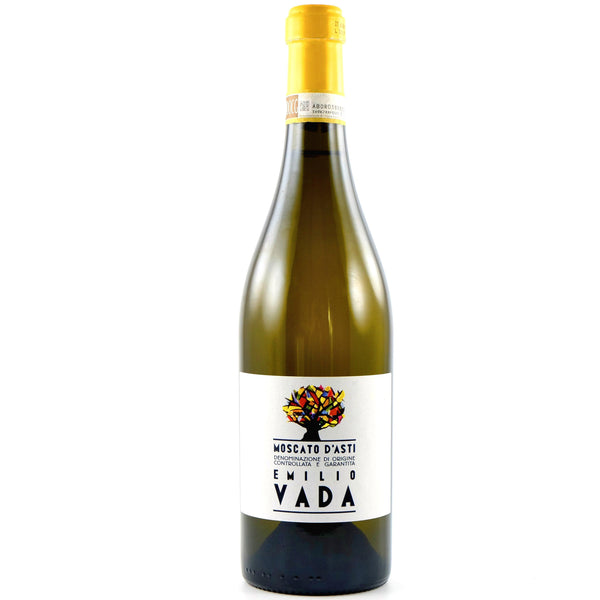
Emilio Vada - Moscato d'Asti 2025
Both fresh and explosive on the palate, this sparkling wine offers a mellow and refreshing effervescence, a real treat!
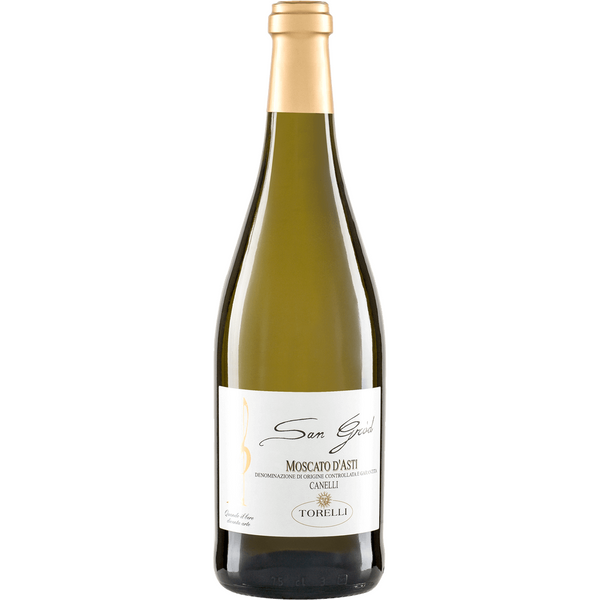
Torelli - Canelli Moscato d'Asti "San Gròd" 2025
A fresh, delicious Moscato d'Asti from organically grown vineyards
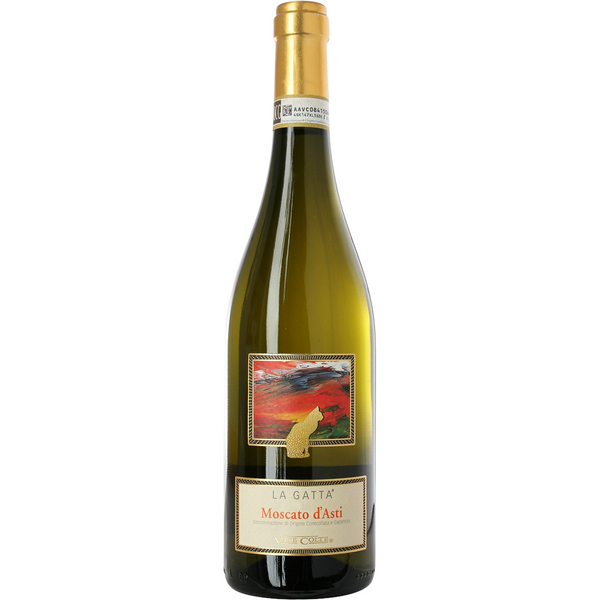
Vite Colte - Moscato d'Asti "La Gatta" 2025
White flowers, lychee and light bubbles: a fresh Moscato d'Asti, never heavy.

La Spinetta - Moscato d'Asti Bricco Quaglia 2025
A fine and airy Moscato d'Asti, where the indulgence of fruit meets a refreshing crispness.

Ceretto - Moscato d'Asti 2025
A gently sparkling, fragrant Moscato d'Asti from the hillsides of Santo Stefano Belbo, both sweet and fresh.
Moscato d'Asti, Asti Spumante, Prosecco: three sparkling wines, three uses
The first two are born from the same grape in the same area, yet are not served at the same time during the meal. The third only shares the country. Here's what truly sets them apart.
| The wine | Degree | The bubble | Taste | When to serve it |
|---|---|---|---|---|
| Moscato d'Asti this department | Around 5 degrees. | Light fizz, under 2.5 bars. | Sweet, fresh grape, white flower, sage. | As a dessert, or on its own at the end of a meal. |
| Asti Spumante Not in a cellar | 7 to 9 degrees. | Firm foam, full pressure. | Sweet too, but more demonstrative. | On a croquembouche, in large volume. |
| Prosecconearby aisle | 11 degrees on average. | Dry foam. | Dry, pear and acacia blossom. | As an appetizer, never as a dessert. |
We do not currently list Asti Spumante. It is shown here because it is the wine with which confusion is most common.
What works for dessert, and the one thing to avoid
Basic rule for a sweet wine: it must be at least as sweet as what it accompanies, otherwise it will seem thin. Only five degrees, so it can be served at the end of a meal without making the evening heavy.
| The pairing | Precisely | Why it works |
|---|---|---|
| Yellow fruit tart | Apricot, peach, plum. | The safest pairing: the wine has the same fruit as the pie. |
| Citrus dessert | Lemon tart, orange salad. | Wine sugar rounds off acidity without eliminating it. |
| Blue cheese | Gorgonzola, Roquefort. | The sweet and salty contrast, the most interesting pairing on the list. |
| Panettone, pandoro | Northern Christmas brioches. | The original Piedmontese pairing, the one this wine exists for. |
| Appetizer | Alone, very cool. | Five degrees: that's the glass you serve to someone who doesn't want to drink. |
| Dark chocolate | To be avoided. | The bitterness of cocoa and the sweetness of wine clash. |
A bottle for every intention
Four wines in the cellar, each with its own style. Here is what each one brings, and where to go if it is not what you are looking for.
The bottle to open
A domain of less than 10 hectares, organic since 1992, producing 80,000 bottles per year.
Torelli San Gròd 2023 · €14.85For the entire table
Hand-picked to preserve the fruit's aroma. The bottle alone is sold out, only the case remains.
Emilio Vada 2025 · €113.14 per 6A single hillside
Bricco Quaglia, in Castagnole delle Lanze, from one of Piedmont's leading estates. Sold by the case of 6.
La Spinetta Bricco Quaglia 2025 · €136.80 per 6The most floral
White flowers, lychee and a light sparkle: a fresh moscato, never heavy. Sold in packs of 3.
Vite Colte La Gatta 2024 · €43.50 per 3The other Italian bubble
Dry rather than sweet, as an aperitif rather than for dessert. The opposite of this section, in short.
Our proseccosStaying in Piedmont
Same region, a completely different register: Nebbiolo, Barbera, Dolcetto.
Our Piedmont winesAll our sparkling wines
Champagne, crémant, prosecco, sparkling wines from around the world.
The bubbles sectionOther sweet wines
Those who finish the meal, from Muscat to passito.
Our sweet winesSee all of Italy
Piedmont, Tuscany, Veneto, Sicily: the Italian section complete.
Our Italian Wines
The wine served to those who say they don't like wine
It has a reputation for being a sugary, uninteresting drink, served lukewarm at the end of family meals. This is unfair, and almost always due to two mistakes: a bottle that's too warm, and a vintage that's too old. Chilled and recent, it offers fresh grape, sage, orange blossom, and an acidity that prevents the sugar from lingering.
It's also the only wine in the cellar that solves a real dining problem: serving something festive to someone who doesn't want to drink alcohol. At five degrees, it's three times less than a red wine. You can pour a glass at the end of a meal without changing the nature of the evening.
How do you choose
On the vintage, first and foremost. We do not keep old bottles of this appellation: after two years, the grape aroma fades and all that remains is the sugar.
And on the sugar retention: a moscato that only offers sugar is drunk in one sip and then left.
The Wine Wanderer Team
What we're being asked about Moscato d'Asti
What is Moscato d'Asti?
A sweet and slightly sparkling white wine from Piedmont, made from Moscato Bianco, or Muscat Blanc à Petits Grains. Its distinctive characteristic comes from a fermentation that is interrupted prematurely: there is still grape sugar in the wine, and the alcohol content stops around five degrees. The appellation has been recognized as DOCG since 1993.
What's the difference with Asti Spumante?
Same grape variety, same production area, two distinct wines. Asti Spumante is a full-bodied sparkling wine, under full pressure, between 7 and 9 degrees. Moscato d'Asti remains subtly sparkling, under 2.5 bars, and has an alcohol content of around five degrees. The latter is savored in small sips with dessert, while the former is served in large volumes.
And what about Prosecco?
They have nothing in common other than their nationality. Prosecco is from Veneto, made from Glera grapes, dry, and 11% alcohol: it's an aperitif wine. This one is from Piedmont, sweet, and 5% alcohol: it's a dessert wine. Confusing them leads to serving the wrong one at the wrong time.
Where is Moscato d'Asti produced?
In southern Piedmont, on the hills of the provinces of Asti, Cuneo and Alessandria. The DOCG covers around fifty municipalities, around Canelli, Santo Stefano Belbo and Castagnole delle Lanze, home of La Spinetta's Bricco Quaglia.
At what temperature should it be served?
Between 6 and 8 degrees, which means well chilled. The sugar seems heavy as soon as the wine warms up, and the muscat aroma, which is the whole point of the bottle, becomes muted. Take it out of the refrigerator just before serving, not before.
Should we keep it?
No, and that's the only real rule here. This wine should be drunk young, within two years of the harvest. It gains nothing from aging and loses its fresh grape aroma, which is its raison d'être. Open the most recent vintage you can find.
What should I serve it with?
Desserts with yellow fruits and citrus, panettone and pandoro to stay in its country of origin, and blue cheeses, which provide the most interesting pairing. Avoid dark chocolate: the bitterness of cocoa and the sweetness of the wine clash. It also drinks very well on its own, as an aperitif.
Is this wine too sweet?
This is the usual criticism, and it almost always comes from a bottle served too warm or too old. Chilled and from a recent vintage, the sweetness is carried by a lively acidity and the bubbles, which lighten it. A good Moscato d'Asti leaves the mouth feeling fresh, not sticky.