
Vins de Suisse : petite arvine, cornalin et fendant
37 bouteilles du Valais, des blancs alpins aux rouges de montagneA handful of grape varieties you rarely taste anywhere else, vines clinging to dry-stone terraces above the Rhône, a harvest drunk almost entirely on the spot: that is what makes this Alpine vineyard so confidential. Barely one per cent of production leaves the country, even though the vine has grown here since Roman times.
The range follows the line of the Valais, the largest Swiss vineyard. The whites first, lively Fendant, saline Petite Arvine, high-altitude Heida. Then the reds, peppery Cornalin, wild Humagne Rouge, mountain Pinot Noir, carried by Chappaz in Fully, the Cave des Amandiers and the Cave Saint-Pierre.

Chappaz - Grain par Grain
Un liquoreux valaisan d’une précision saisissante, entre richesse botrytisée et fraîcheur saline.

Chappaz - Noble Grain
A high-altitude Valaisan sweet wine, combining sun-drenched richness and crystalline alpine freshness.

Chappaz - Complete 2023
A white wine from the Valais terroir with a strong character, where the ripeness of the fruit meets a precise mineral tension.

Chappaz - Syrah Grape 2023
A precise and spicy Valais Syrah with a strong terroir, combining alpine freshness and depth of flavor.

Chappaz - Wedding Grains 2023
A Valais red with character, combining the finesse of the Fully hillsides with a deep and harmonious substance.

Chappaz - Grain Pinot Les Esserts 2023
A precise and profound Valaisan Pinot Noir from the hillsides, where the finesse of the fruit meets the elegance of the terraces of Fully.

Chappaz - Grain Pinot Les Darrhes 2024
A precise and elegant Valaisan Pinot Noir from the hillsides, where the freshness of the mountains meets the depth of the Fully terroir.

Chappaz - Grain Pinot Champ Dury 2023
A precise and silky Valaisan Pinot Noir from the hillsides, which finely expresses the mineral depth of Fully.
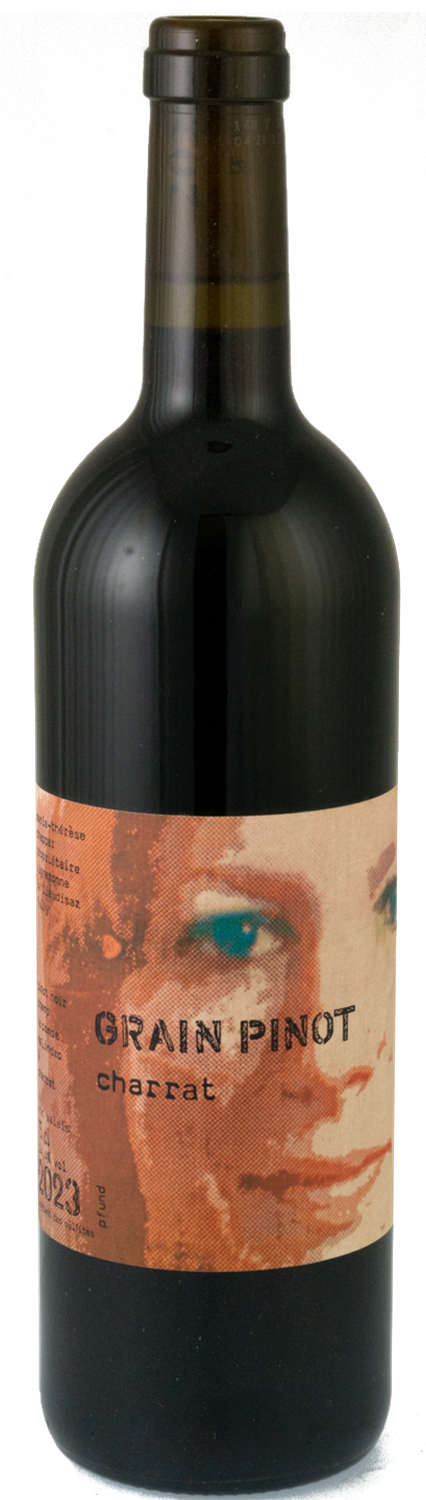
Chappaz - Grain Pinot Charrat 2023
A precise and elegant Pinot Noir from the Valais hillsides, where the purity of the fruit meets the mineral energy of Charrat.

Chappaz - The Little Barn 2023
A juicy and precise Valais red, where alpine freshness meets the lusciousness of the fruit.

Chappaz - Dôle La Liaudisaz 2024
A Dôle from the Valais terroir, gourmet and precise, which combines alpine freshness and charming fruitiness.
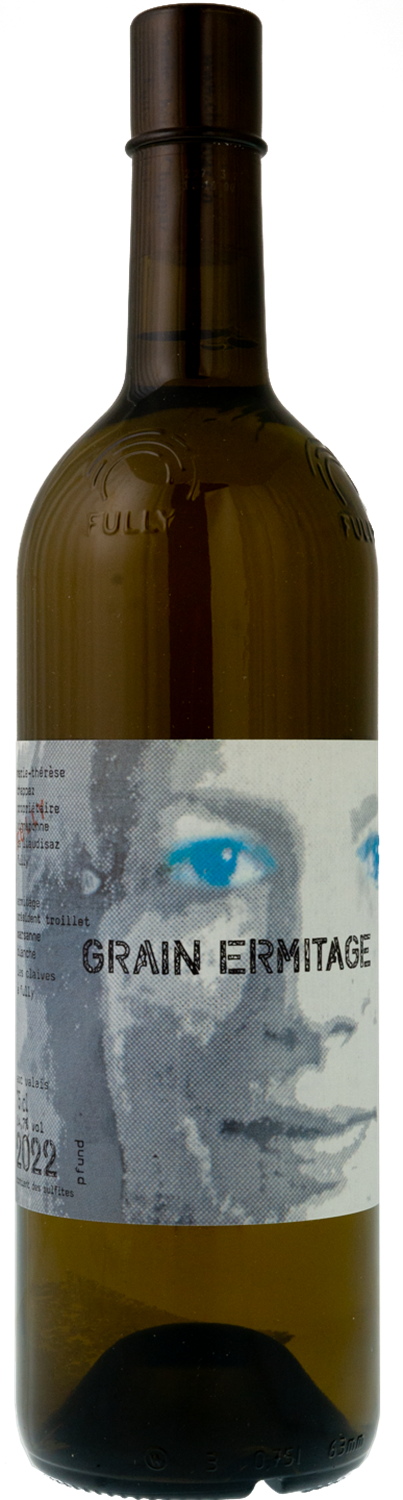
Chappaz - Ermitage Grain 2023
A spacious and mineral Valaisan Hermitage, where the Marsanne expresses all its alpine depth.
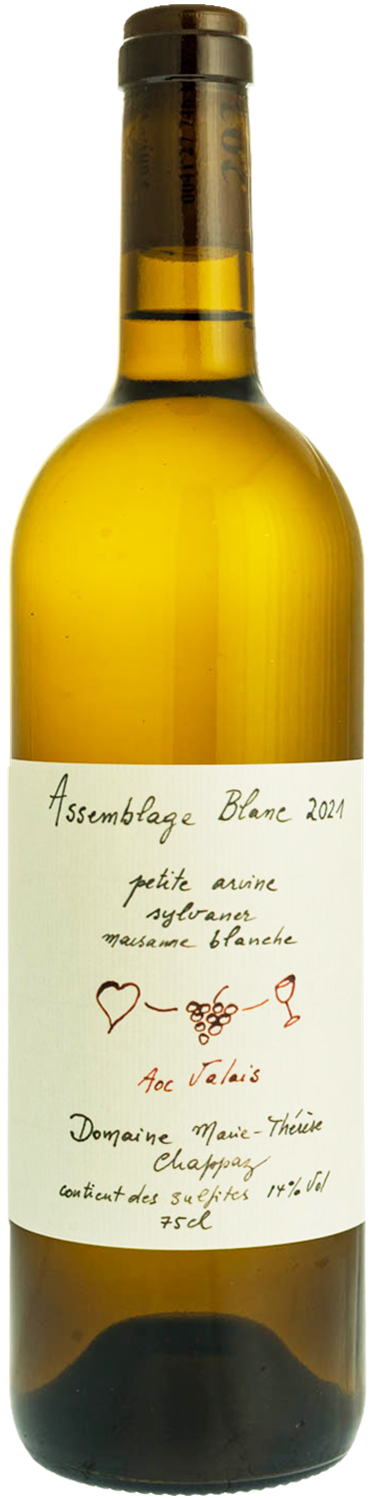
Chappaz - White Blend 2022
A Valais white wine with a strong terroir, combining alpine freshness, mineral precision and aromatic indulgence.
Chappaz - Grain Cinq 2023
A Valais white wine of terroir, taut and precise, where alpine freshness meets the depth of the Fully hillsides.

Chappaz - Grain Arvine de Fully 2023
A crystalline and saline Arvine from Fully, where alpine freshness meets remarkable aromatic depth.

Chappaz - Fendant Coteaux de Plamont 2023
A precise and saline Fendant from the hillside, which finely expresses the minerality of the Plamont terraces.

Chappaz - Fendant La Liaudisaz 2024
A Fendant of the terroir, precise and saline, which finely expresses the freshness of the hillsides of Fully.
Où pousse la vigne helvétique
The vine occupies the best-exposed slopes, along the Rhône, above the great lakes and on into the Alpine valleys of the east. Each canton defends its own grape and its own vocabulary.
| Canton | Cépage roi | Le style | Le repère |
|---|---|---|---|
| Valais le plus grand vignoble du pays | Chasselas, dit fendant | Blancs salins et rouges épicés, sous un climat sec d'altitude | Fully, Saillon et CharratChappaz, Cave des Amandiers, Cave Saint-Pierre |
| Vaud et Lavaux | Chasselas, dit dorin | Blancs légers et floraux, mûris par la lumière du Léman | The terraces of Lavaux, a World Heritage site |
| Genève | Gamay et chasselas | Supple reds and lively whites, at the gates of the city | Satigny, vaste commune viticole du pays |
| Neuchâtel | Pinot noir et chardonnay | Rouges clairs, et l'oeil-de-perdrix, un rosé de pinot | The limestones at the foot of the Jura, by the lake |
| Tessin la Suisse italophone | Merlotplanté après le phylloxéra | Rouges mûrs et charnus, vinifiés parfois en blanc | Sopraceneri et Sottoceneri, de part et d'autre du Ceneri |
| Grisons la Bündner Herrschaft | Pinot noirblauburgunder en allemand | Fine, taut reds, on Alpine scree | Fläsch, Maienfeld et Malans, réchauffés par le foehn |
The country has four official languages, and the name of a grape often changes as you cross a pass. The next table gives the equivalences you need to read a label, and the appellations page lists the names used in the catalogue.
What the Swiss names tell you
Swiss wine vocabulary is local: the same grape goes by three names depending on the canton, and several varieties grow more or less nowhere else.
| Cépage | Son autre nom | In the glass | À table |
|---|---|---|---|
| Chasselas | Fendant en Valais, dorin en pays de Vaud, perlan à Genève | Léger, pomme verte, amande, finale saline | Fondue, raclette, filets de perche |
| Petite arvine | Arvine, tout simplement, propre au Valais | Pamplemousse, citron vert, rhubarbe, pointe salée | Asperges, truite, chèvre frais |
| Cornalin | Rouge du pays, son nom historique | Cerise noire, poivre, tanins serrés | Viandes grillées, viande séchée |
| Humagne rouge | Cornalin d’Aoste, on the other side of the Alps | Baies noires, cuir, caractère rustique | Gibier, daube, fromages affinés |
| Heida | Païen en Valais romand, savagnin blanc en France | Ananas, miel, amande, trame d'altitude | Volaille à la crème, comté |
| Ermitage | Marsanne, as in the Rhône Valley | Ample, miel et abricot, longue garde | Poularde, ris de veau, pâtes pressées |
| Completer | An old Graubünden variety, recorded in the Middle Ages | Acidité mordante, fruits jaunes, matière dense | Poisson en sauce, volaille rôtie |
| Sylvaner | Johannisberg on Valais labels | Fruits blancs mûrs, rondeur, fine amertume | Asperges, fondue, poissons de lac |
Païen also lends itself to ageing under a veil of yeast, in the spirit of the Jura’s vin jaune: the Vin de voile from Christophe Abbet, €176 a bottle sold singly, gives the Valais version of it, on fresh walnut and curry.
A bottle for every mood
Eight ways into this Alpine vineyard, from the fendant for the aperitif to the sweet wine at the end of the meal.
Découvrir le fendant valaisan
Valais chasselas in its most direct form: green apple, almond, a saline finish that calls for fondue.
Cave Saint-Pierre Fendant Du Valais 2022 · 27 € la bouteille, à l'unitéGoûter le blanc emblématique du Valais
Grapefruit, lime and that salinity that is the mark of petite arvine. The canton’s most sought-after grape, at a measured price.
Cave Saint-Pierre Petite Arvine Réserve Des Administrateurs 2022 · €43.40 a bottle, sold singlyA mountain red for the table
Cornalin partly aged in wood, on stony terraces: black cherry, pepper and firm tannins, for grilled meat.
Pierre Elie Carron Cornalin Pietra Plata 2022 · 49,50 € la bouteille, à l'unitéLe rouge le plus sauvage du canton
Baies noires, cuir et terre humide, sur un cépage rare conduit en biodynamie. Le compagnon d'un gibier ou d'une daube.
Cave des Amandiers Humagne Rouge 2022 · €74 a bottle, sold singlyUne grande arvine de Fully
Vieilles vignes en terrasses, biodynamie, agrumes mûrs et salinité marquée. La référence du cépage, sur son terroir d'origine.
Chappaz Grain Arvine de Fully 2023 · 115,50 € la bouteille, à l'unitéLe pinot noir d'altitude
Fruits rouges frais, tanins fins, acidité vive : le pinot valaisan joue la finesse plutôt que la puissance. À servir rafraîchi.
Chappaz Grain Pinot Les Darrhes 2024 · €85.75 a bottle, in lots of 2A sweet wine to end the meal
Botrytised Ermitage from the hillsides of Fully: candied apricot, quince and orange zest, held by an Alpine acidity.
Chappaz Grain Noble · 164 € la bouteille de 37,5 cl, à l'unitéSuivre le pinot noir ailleurs
Burgundy, Germany, Graubünden or Valais: the grape’s own page compares the origins and brings together the bottles in the catalogue.
Page du rayon · Pinot noir
Ce que paie le prix d'une bouteille suisse
The first reaction, faced with a Swiss label, concerns the price. It is explained first of all by geography. In the Valais, the vine grows on terraces held up by dry-stone walls, where mechanisation stops very quickly: everything is done by hand, from pruning to harvest, sometimes with a monorail to carry equipment up the slope.
To that is added an economic fact. Swiss wages are among the highest in Europe, and domestic demand absorbs almost the whole harvest. In exchange, you get grape varieties that few countries grow, viticulture that is often biodynamic and wines of a rare Alpine freshness.
Comment on choisit
We taste every cuvée before listing it in the catalogue. In this range, two criteria settle it: the saline tension on the finish, which is the mark of high-altitude terroirs, and the clarity of the fruit on the reds, sometimes covered over by heavy-handed ageing. We give priority to estates that champion the native grape varieties.
L'équipe du Baroudeur du Vin
What you ask us about the wines of Switzerland
Pourquoi trouve-t-on si peu de vin suisse en France ?
Swiss production remains modest and goes almost entirely to the domestic market: barely one per cent of the bottles crosses the border. The cellars sell their harvest to their local customers and to the country’s restaurants, which leaves very little volume for export.
Why do Swiss wines cost more?
Three factors add up. Terraced vines are worked by hand, which multiplies the hours per hectare. Swiss wages are among the highest in Europe. And the volumes produced remain tiny, which rules out any economy of scale. The price therefore reflects an artisanal way of growing.
Qu'est-ce que le fendant ?
It is the Valais name for chasselas, a discreet white grape that conveys its terroir better than its own aromas. Fendant gives a light wine, on green apple and almond, with a saline finish and a slight prickle. It is drunk young and very cold, with fondue or perch fillets.
Qu'est-ce que la petite arvine ?
A white grape peculiar to the Valais, grown there for centuries. It gives wines that are rich and taut at the same time: grapefruit, lime, rhubarb, and that final salty note that makes it recognisable. It exists as a dry wine, as a barrel-aged version and as a sweet wine from nobly rotted grapes.
Cornalin et humagne rouge, quelle différence ?
Cornalin, once called rouge du pays, gives a dense, peppery wine with tight tannins that asks for a few years’ rest. Humagne rouge is more rustic, on black berries, leather and damp earth. A curiosity of vocabulary: the Valais humagne rouge becomes cornalin in the Aosta Valley.
La syrah pousse-t-elle vraiment en Suisse ?
Yes, on the warmest hillsides of the central Valais, a few dozen kilometres from its original Rhône home. There it gains a peppery, smoky profile, tightened by altitude, with fresher fruit than in the south. The syrah range lets you compare this Alpine version with the other origins.
Pourquoi certaines cuvées partent-elles par lot de deux bouteilles ?
A few estates send us their rarest cuvées in small lots, and we keep that format to hold the price as keen as possible. The price shown on each listing is still the bottle price, with the sales format right beside it. Most of the range can be bought singly.
How good are Swiss pinot noirs?
Pinot noir is the most planted red in the country, from Graubünden to the Valais by way of Neuchâtel. At altitude it gives pale, perfumed wines with fine tannins and lively acidity, closer to a slender Burgundy than to a sun-drenched red. Serve them at around 15 °C.
Combien de temps se gardent ces vins ?
It depends on the grape. A fendant is drunk within its first three years, while its prickle stays lively. A dry petite arvine holds five to ten years and gains in depth. Cornalins and ermitage from good sites go beyond a decade, and the sweet wines are counted in decades.
Par où commencer ?
Start with a fendant to grasp the Alpine style, then a petite arvine, which shows what the Valais does that is most singular in white. A cornalin completes the picture on the red side, with a meat dish. Those three glasses set out the country’s grammar. The white wine page places these whites among the other origins in the catalogue.