
Nero d'Avola: how to get into Sicilian reds
From everyday wine to Vittoria DOCG, starting at €16.90Nero d'Avola is Sicily's most widely planted and easiest-to-approach red grape variety. Ripe dark fruit, licorice, pepper, round tannins: it yields sun-drenched wines that require neither decanting nor cellaring. It's often the first Sicilian bottle one opens.
The island is vast, and the grape expresses itself differently depending on the region. Between the Belice hills in the west, the Madonie mountains in the north, and Vittoria in the southeast, the stylistic difference is clear. The table below outlines each area. For the rest of the island, including white wines and Etna, everything is listed in our Sicilian section.

Castellucci Miano - Nero d'Avola 2024
Magnificent Nero d'Avola, all round and full of fruit. Buonissimo!

Cantine Ermes - Marchese Montefusco Nero d'Avola 2025
An impromptu aperitif? We look further and uncork this delightful Silica wine full of fruit and freshness!

Cantina Cellaro - Usuela Nero d'Avola 2025
A red wine from Sicily with intense character and a marked personality.

Cantina Cellaro - Luma Nero d'Avola 2023
A powerful Sicilian red wine with rich, spicy flavors
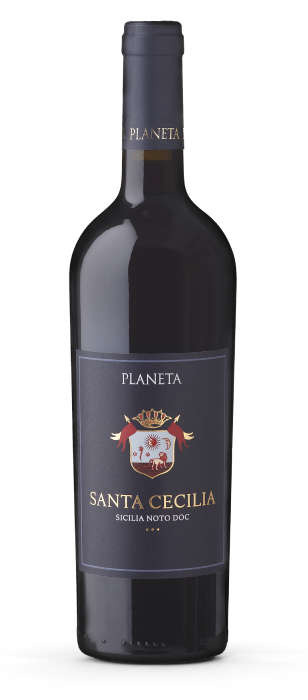
Planeta - Santa Cecilia 2021
A deep, sun-drenched Nero d'Avola, where the freshness of Noto refines a generous body.

Luna Sicana - Nero d'Avola "A Zita cu Zitu" 2019
A Nero d'Avola on the freshness and minerality of the Sicilian terroir

Feudi Del Pisciotto - Cerasuolo Di Vittoria G.Valli Nero d’Avola 2020
Blackberry, pepper and cocoa: Sicilian Nero d'Avola at its most structured.

Nicolo Grippaldi - Nero d’Avola Il Vino Di Pico 2022
Tank-fermented Nero d'Avola, blackberry and pepper: Sicily without oak make-up.
Where Nero d'Avola grows and how the location impacts it
The grape gets its name from Avola, in the southeast of the island, but it is now planted all over Sicily. Two factors have a greater impact on its style than others: altitude and whether or not it is aged in wood.
| Area | Situation | The style | In our cellar |
|---|---|---|---|
| Sambuca di Sicilia south-west | Around Lake Arancio, on south-eastern slopes. The lake tempers the summer heat. | Dark fruit and spice, supple tannins, a touch of oak on the barrel-aged cuvées. | Cellaro Luma Winery 2023 |
| Belice Valley west | Gibellina hills, between 200 and 300 meters, vinification in stainless steel tanks without oak aging. | The lightest register: cherry, raspberry, licorice, a supple palate to drink chilled. | Ermes Marchese Montefusco Winery 2025 |
| Platani Valley Agrigento | Silty, sandy, and stony soils left by the river. Organic farming and indigenous yeasts. | One month of maceration then ten months in barrels: the densest and most structured on the shelf. | Luna Sicana And Zita with Zitu 2019 |
| Madonie Mountains North | Mountain vines grown organically, bright sun during the day and cool breezes at night. | Altitude brings freshness: dark fruits, cocoa, a silky and digestible texture. | Castellucci Miano 2024 |
| Victory southeast | The island's only DOCG, where Nero d'Avola is blended with Frappato. | Lighter and more fragrant than average, centered on cherry, hence the name Cerasuolo. | Feudi del Pisciotto Cerasuolo di Vittoria 2020 |
The Nicolo Grippaldi Il Vino di Pico 2022 is aged in vats, without wood, to keep the fruit intact. It does not claim a more precise area than Sicily.
Nero d'Avola or Etna: two unrelated Sicilian reds
These are the two red wines mentioned when talking about Sicily, and they are often confused. Neither the grape variety, nor the soil, nor the style are similar. One is sunny, the other is mountainous.
| Criterion | Nero d'Avola | Etna Red |
|---|---|---|
| Grape variety | Nero d'Avola, on its own or blended with Frappato in Cerasuolo di Vittoria. | Nerello Mascalese, complemented by a small proportion of Nerello Cappuccio. |
| Terroir | Hills and plateaus across the island, from sea level to a thousand meters. | The slopes of an active volcano, on black sand and ash. |
| Color and texture | Dark color, ample texture, round and coating tannins. | Light-coloured, almost Pinot-like, fine tannins and lively acidity. |
| The nose | Black cherry, plum, blackberry, licorice, pepper, cocoa. | Redcurrant, fresh red fruit, dried herbs, mineral smoke. |
| When to open it | Immediately, without decanting, even with simple dishes. | After a few years. Our wine spent twelve months in vats, then twelve months in bottles. |
| At our place | Seven vintages, from €16.90 a bottle. | Tenuta Monte Ilice 2018, at €29.90, in the Sicilian section. |
Both are found side-by-side, with the Grillo and Catarratto whites, in our Sicilian wines.
A bottle for every intention
The table shows the map. Here are the bottles, and only those that can be shipped today.
The first Nero d'Avola
Six months in French oak, black fruit, spices, and a long finish. Our only vintage available by the bottle only.
Cantina Cellaro Luma 2023 · €16.90Taste the island's only DOCG
Cerasuolo di Vittoria, where the grape meets Frappato. Lighter, more fragrant, more elegant than average.
Feudi del Pisciotto G. Valli 2020 · €29.80Raise your game, no fuss
A partial selection raised in vats to preserve the fruit. The purest expression of the grape variety from our estate.
Nicolo Grippaldi Il Vino di Pico 2022 · €43.80The till for the week
Fifteen days of maceration, four months in stainless steel, no wood. A supple red to be served slightly chilled.
Cantine Ermes Marchese Montefusco 2025 · €51 for 6 bottlesThe hardest-working product in the aisle
Organic, indigenous yeasts, one month of skin maceration, and ten months in barrels. Sold in packs of three.
Luna Sicana A Zita cu Zitu 2019 · €66 for 3The altitude of the Madonie mountains
Hand-picked organic grapes, ten months in neutral oak barrels. Dark fruits, cocoa, a silky and fresh texture.
Castellucci Miano 2024 · €101.40 for 6See all of Sicily
Grillo and Catarratto whites, Etna Rosso, and the island’s other reds all in one place.
Our Sicilian wines, starting from €11.90
A grape variety judged by its bad bottles
Nero d'Avola was long used as a blending grape, shipped in bulk northwards to add colour and body to anonymous blends. This period gave it a reputation as a heavy, hot, undefined red, a reputation that still lingers for many enthusiasts.
What has changed can be summed up in two words: altitude and restraint. The wineries that matter today plant at higher elevations, harvest earlier, and reduce new oak. The result retains the dark fruit and generosity of the South, but regains freshness and a clean finish. Our mountain cuvées, from the Madonie or around Sambuca, come from this school of thought.
How do you choose
On digestibility above all. A Nero d'Avola that's high in alcohol and saturates the palate with the first glass won't be better with the third.
And on the use of oak: this grape doesn't need new barrels to exist, it needs its fruit to be left alone.
The Wine Wanderer team
What we're asked about Nero d'Avola
What is Nero d'Avola?
It is the most widely planted red grape variety in Sicily. Its name comes from the town of Avola, in the southeast of the island. It produces colorful, generous wines with notes of dark fruit, licorice, and pepper, and rounded tannins. It is one of the most approachable Italian reds.
What does a Nero d'Avola taste like?
Black cherry, plum, blackberry and blackcurrant first, then notes of spice, liquorice, tobacco or cocoa depending on the ageing process. The palate is full and supple. High-altitude vintages also retain a frank acidity, which makes the wine more digestible.
What's the difference between this and an Etna wine?
Anything but the island. Etna Rosso is made from Nerello Mascalese on high-altitude volcanic soils: light color, fine tannins, lively acidity. Nero d'Avola is darker, rounder, more sun-drenched. The comparison table above details each point, and our Sicilian section brings the two together.
What is Cerasuolo di Vittoria?
Sicily's only DOCG appellation, in the southeast of the island. It blends Nero d'Avola with Frappato, a lighter and more aromatic grape variety. The resulting wine is lighter, focused on cherry, hence its name. Our Feudi del Pisciotto 2020 is €29.80.
How long does a Nero d'Avola keep?
Three to five years for cuvées vinified in vats, eight to ten for those that have seen barrels and come from old vines. It's not a wine for very long aging, and there's no reason to wait for it: it's designed to be good right away.
At what temperature should it be served, and does it need decanting?
Between 15 and 17 °C, never more, otherwise the alcohol will become too pronounced. Unoaked versions are even better served around 14 °C. Decanting is optional: thirty minutes are sufficient for barrel-aged wines, none is necessary for others.
What should I drink it with?
It pairs well with almost anything off the grill: lamb, beef, grilled vegetables, eggplant. It also stands up to spicy dishes, pasta with ragu, and hard cheeses. The lighter vintages can even be served as an aperitif, chilled.