
Chenin Blanc: born in the Loire, became the Cape's Steen
7 bottles, from €8.90 to €77, mostly South AfricanChenin Blanc comes from the Loire, where it also goes by the name Pineau de la Loire. It was planted at the Cape of Good Hope from the very beginnings of South African wine growing, under the Afrikaans name Steen. It is today the most planted grape variety in South Africa, and the country grows far more of it than France.
This range follows that shift in the centre of gravity: most of the bottles come from the Cape, the others from the Loire, Argentina and Australia. The first table places these origins in relation to one another, the second sorts the styles, from taut dry to sweet.
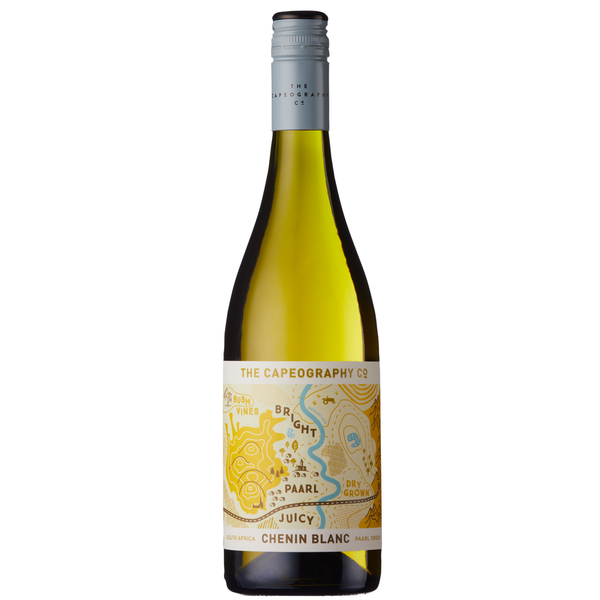
Wildeberg & JD Rossouw - The Capeography Chenin Blanc 2023
A Chenin Blanc built on fruit and the minerality of Paarl's soils

Thistle & Weed - Brandnetel 2022
The 2nd Chenin of the estate, from a single plot in Stellenbosch

Thistle & Weed - Khakibos 2021
A unique blend of 5 white grape varieties, found in the four corners of Cape Town


Riebeek Cellars & Ryno Booysen - Percheron Blanc 2021
A vibrant and aromatic white wine for immediate pleasure

Joostenberg - Chenin Blanc 2019
A South African Chenin blanc with notes of white fruit and the chalky character typical of the Paarl vineyards

Stellenrust - Kleine Rust White 2020
A white full of freshness with intense notes of tropical fruits.
Eight ways into this section
A few estates on their own account for a good part of the range. The rest can be read by region or by budget.
Alheit Vineyards, plot by plot
Chris and Suzaan Alheit seek out the old vineyards of the Cape and bottle them separately. Several of their cuvées are in this range.
From €42 to €63The top of the section
Skerpioen and Skurfberg, two Chenins from very old vines made by Eben Sadie, one born in the Swartland, the other on the arid land of the north, near Citrusdal.
Both at €77Thistle & Weed, minimal intervention
Stéphanie Wiid and Etienne Terblanche make wine from small plots in Stellenbosch and the Swartland, with minimal intervention.
Brandnetel, Khakibos, SprindoringThe word Steen on the label
Franco Lourens makes his Skuinskap from a vineyard planted in 1977 in Piekenierskloof, at around 750 metres above sea level, without irrigation.
Skuinskap €54 per bottle in packs of 2 · Lindi Carien €33.30 in packs of 3The Swartland, land of dry white
Decomposed granite, unirrigated bush vines, dry heat. The region that revived this grape variety in the Cape in the 2000s.
Our Swartland winesUnder €20, where to start
Straightforward dry wines to drink within the year, fermented in tank, without oak. The cheapest way into the grape variety.
From €8.90The whole South African section
The regions, estates and other grape varieties of the Cape, Pinotage and Cinsault included.
South African winesThe sweet side
In the Loire, this grape makes sweet wines for ageing. The Coteaux du Layon from Château de la Roulerie opens up this territory.
Le P'tit Layon 2022 · €29.50
Where it comes from, and what origin changes in the glass
One grape, six addresses. The gap between a bottle at €8.90 and a bottle at €77 comes down to the age of the vines, the yields and the length of ageing, not to the grape variety, which does not change.
| Origin | What it looks like | What we have in the cellar | Admission fee |
|---|---|---|---|
| SwartlandPaardeberg, Riebeek-Kasteel | Dry heat, decomposed granite, unirrigated bush vines. Concentrated dry wines kept straight by their acidity. | Sadie, Alheit, Paulus Wine Co, David & Nadia, Equinox, Thistle & Weed. | €29To Maike and the Rest 2022 |
| Stellenboschand the Bottelary Hills | Closer to the ocean and the mountains, with cool nights. The fruit keeps its liveliness and the finish stays saline. | Simonsig, Thistle & Weed, False Bay, Stellenrust, Alheit, Lourens Family. | €33.30 per bottleLindi Carien 2022, in packs of 3 |
| Hemel-en-Aarde and Bot Riveraround Walker Bay | The coolest corner of the Cape, a few kilometres from the coast. Slow ripening, cutting acidity. | Creation, and a share of the grapes that make up Alheit's Cartology. | €27.90Creation Cool Climate 2022 |
| Elsewhere in the Western Cape Paarl, Tulbagh, Piekenierskloof | Pockets of altitude and old plots outside the well-known areas. For equal quality, prices are gentler here. | Savage, Joostenberg, Wildeberg, Rijk's, Lourens Family. | €8.90The Capeography 2023 |
| LoireCoteaux du Layon | The birthplace of the grape variety, where it is called Pineau de la Loire. This is where it makes its sweet wines, from overripe grapes. | Château de la Roulerie, the only sweet wine in the section. | €29.50 Le P'tit Layon 2022 |
| Argentina Río Negro, in Patagonia | Ungrafted vines planted in the late 1960s, a dry and very bright climate. Fermentation on the skins. | Matías Riccitelli, at the Allen site, between the Andes and the Atlantic. | €58 per bottle Old Vine From Patagonia 2024, in packs of 2 |
Outside this classification: the MMAD, born on the sands of Blewitt Springs, at €38, and the Revancha Primera 2020, at €24 a bottle, by the case of 6.
From taut and dry to lusciously sweet: what a single grape can do
Few white grape varieties cover such a range. It comes from an acidity that does not collapse at ripeness: the winemaker chooses where to stop, and the bottle stays balanced.
| Style | How it is made | In the glass | A bottle from the section |
|---|---|---|---|
| Crisp and dry, made in tank to drink within two years | Spontaneous fermentation in stainless-steel tank, no oak, an extended rest on fine lees. | Green apple, pear, citrus, a clean, saline finish. The grape without make-up. | False Bay Slow Chenin Blanc 2022 · €10.90 per bottle, by the case of 6 |
| Dry, from old vines, aged in oak unirrigated bush vines | Whole-bunch pressing, native yeasts, twelve to eighteen months on the lees in old, well-used barrels. | Quince, beeswax, orange blossom, a dense texture held together by acidity. This is where ageing potential begins. | Alheit Fire by Night 2023 · €63 |
| Dry and textured, concrete or clay | Clay amphorae and concrete eggs: slow micro-oxygenation, without the taste of oak. | The fruit stays clean, the palate gains volume and a slightly chalky grain. | Riccitelli Old Vine From Patagonia 2024 · €58 per bottle, in packs of 2 |
| Chenin-led blend Sémillon, Viognier, Verdelho | Chenin provides the acidity and the backbone, the other grape varieties bring perfume and flesh. | Broader than a single-varietal wine, often more immediate on opening. | Alheit Cartology 2023 · €45 |
| Loire sweet wine Coteaux du Layon | Grapes picked overripe, fermentation stopped before all the sugar is consumed. | Peach, candied quince, honey. The sugar is there, but the acidity stops the bottle from going to sleep. | Château de la Roulerie 2022 · €29.50 |
| Sparkling wine base Cap Classique, Crémant de Loire | Early harvest to keep acidity high, then a second fermentation in bottle. | This is one of the grape variety's historic roles, on both sides of the equator. | No bottles in this range |
Serving temperatures: 10 to 12 °C for a tank-fermented dry wine, 12 to 14 °C for a dry old-vine wine aged in barrel, which stays closed if served too cold, 9 °C for a sweet wine.
An acidity that holds right to the end of ripening
Most white grapes lose their acidity as they ripen: the longer you wait for aromatic ripeness, the flatter the wine becomes. Chenin does not work that way. It keeps high acidity right through to overripeness, which gives the winemaker a rare freedom: pick early for a taut dry wine, push on for a dry wine with substance, or go as far as shrivelled grapes for a sweet wine that will last for decades.
This is also what explains its long-standing poor reputation. In the Cape, Steen served for generations as a volume grape, planted en masse, sold by the litre or distilled. The vines that remain from that era, bush-trained and unirrigated, have become the raw material of the generation that rebuilt the reputation of South African wine. The country's least regarded grape variety has given it its most sought-after whites.
Good to know before opening
A dry old-vine wine benefits from thirty minutes in a decanter, or simply from being served less cold than you might think. At 8 °C it gives nothing, at 13 °C it opens up.
The Old Vine Certified seal, on some Cape labels, guarantees a plot over thirty-five years old and displays its planting year.
The Wine Wanderer Team
What we are asked about Chenin Blanc
Chenin Blanc: a French or South African grape?
Both, in that order. It was born in the Loire Valley, where it is also called Pineau de la Loire, and there it makes Vouvray, Savennières, Montlouis and the sweet wines of the Layon. It was planted in the Cape from the very beginnings of South African winegrowing, and the country now grows more of it than France. This range reflects that balance: it is overwhelmingly South African.
Why does South Africa grow more of it than France?
For a rather unromantic reason: for a long time it served as an all-purpose grape, including for distillation and bulk whites. So it was planted everywhere, over large areas, whereas in the Loire it remains confined to a small number of appellations. Some of these vines have since been pulled up, but Chenin remains the most widely planted grape variety in South Africa, whites and reds combined.
What does Steen mean?
It is the Afrikaans name for Chenin Blanc, still used in the Cape and sometimes printed on the label: Lourens Family Wines' Skuinskap Steen bears it in full. Steen and Chenin are indeed the same grape, but the South African wine industry took a long time to obtain ampelographic proof of it, which explains why the local word has survived.
A Cape Chenin and a Vouvray: what is the difference?
Climate first: the Cape is warmer and drier, the Loire cooler and more humid. A South African dry wine is generally riper and broader, with stone fruit and candied citrus, and a saline finish. A dry Vouvray is straighter and sharper, with apple and lime blossom over a chalky background. The second difference, decisive when buying: in the Loire the vintage often decides the sugar level, and a Vouvray can be dry, off-dry or medium-sweet under the same appellation name. In the Cape, dry is the rule.
What does an old vine bring?
Naturally low yields, deep roots that find water on their own, and a consistency from one year to the next that young vines lack. On the Cape's decomposed granite, these unirrigated bush vines give concentrated juice without heaviness. The Old Vine Certified seal, run by South Africa's Old Vine Project, is reserved for plots over thirty-five years old and shows the planting year on the bottle. Eben Sadie's Skurfberg comes from vines around 90 years old, and Alheit's Fire by Night from plantings dating from 1972 and 1985.
Dry or sweet: how can you tell before opening?
The origin answers the question in almost every case. A South African Chenin is dry, unless the back label says otherwise. A Coteaux du Layon, a Bonnezeaux or a Quarts-de-Chaume are sweet by definition. It is Vouvray and Montlouis that force you to read the label, since they exist in all three versions. In this range, the only sweet wine is the Coteaux du Layon from Château de la Roulerie, at €29.50.
Which dish with a Chenin Blanc?
A tank-fermented dry wine handles the aperitif, oysters, fish starters and fresh goat's cheese. A dry old-vine wine aged in oak needs more substance opposite it: fish in cream sauce, roast poultry, sweetbreads, mild curry, and more generally spicy food where the wine takes the heat without fading. The sweet wine goes with foie gras, Roquefort and yellow-fruit tarts.
What budget should you allow?
The range starts at €8.90 with The Capeography from Wildeberg & JD Rossouw, and climbs to €77 for the Eben Sadie cuvées. Under €20, you will find frank dry wines to drink within the year, such as False Bay's Slow Chenin Blanc, at €10.90 a bottle by the case of 6. Between €30 and €45 you enter the single-plot old-vine cuvées: that is where this grape variety gives the most for the price paid.
Does it age well?
A tank-fermented dry wine is drunk within two or three years; it gains nothing from the cellar. A dry old-vine wine aged on the lees easily keeps for eight to ten years, and Sadie's Skurfberg is drunk over the decade following its harvest. The sweet Loire wine is the most patient of the three. This longevity comes entirely from the acidity of the grape, not from sugar or oak.
At what temperature should it be served?
Between 10 and 12 °C for a tank-fermented dry wine. Between 12 and 14 °C for a dry old-vine wine aged in barrel, which seems thin and closed if it comes straight out of the fridge. Around 9 °C for a sweet wine, which would feel heavy any warmer. With the denser cuvées, half an hour in a decanter transforms the bottle.