
Montepulciano: a grape variety from Abruzzo, a town in Tuscany
From Montepulciano d'Abruzzo to Vino Nobile, starting from €11.90Two wines bear this name without any relation. Montepulciano d'Abruzzo is made from the Montepulciano grape, on the Adriatic coast. Vino Nobile di Montepulciano is a Tuscan wine made from Sangiovese, where Montepulciano refers to a town, not a grape. This is one of the most persistent confusions in the Italian wine industry.
This section contains both, plus an Argentine blend in which the grape is used as a supplement. The first table untangles the three cases in one line each. Abruzzo wines start at €11.90, Tenuta Trerose's Vino Nobile is €33.50.
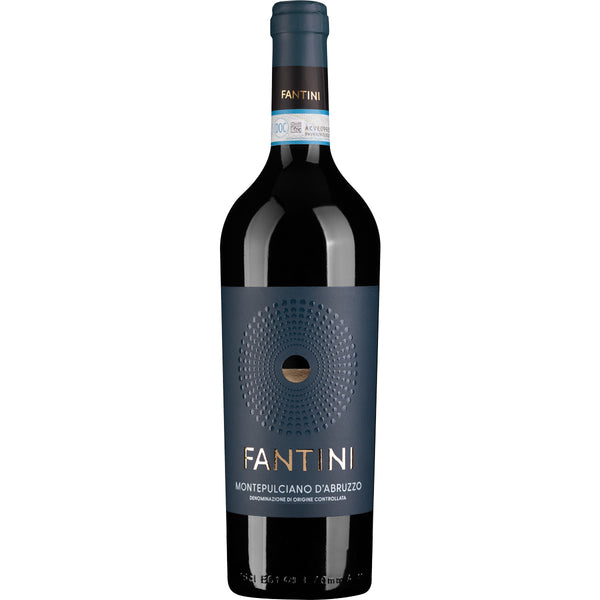
Fantini - Montepulciano d'Abruzzo 2025
A dense, fruity and balanced wine, with a marked typicality of Abruzzo
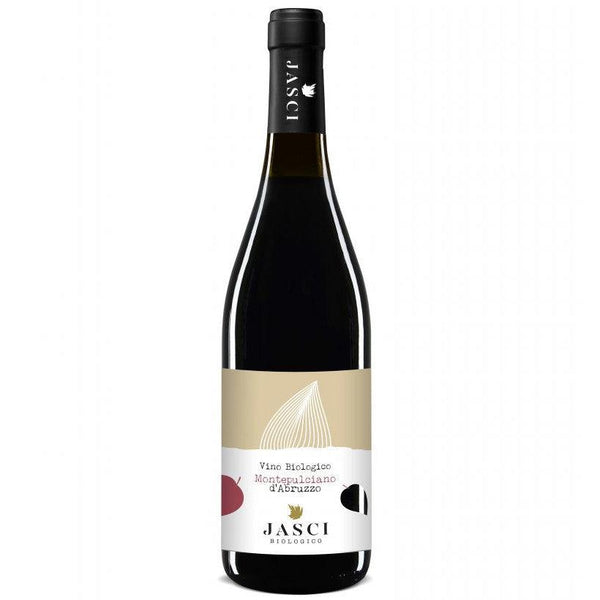
Jasci - Montepulciano 2023
A concentrate of red fruits and sweet spices in this cuvée dedicated to pleasure.

Caelum - Blend Icono 2020
An exceptional blended wine, combining power, complexity and balance
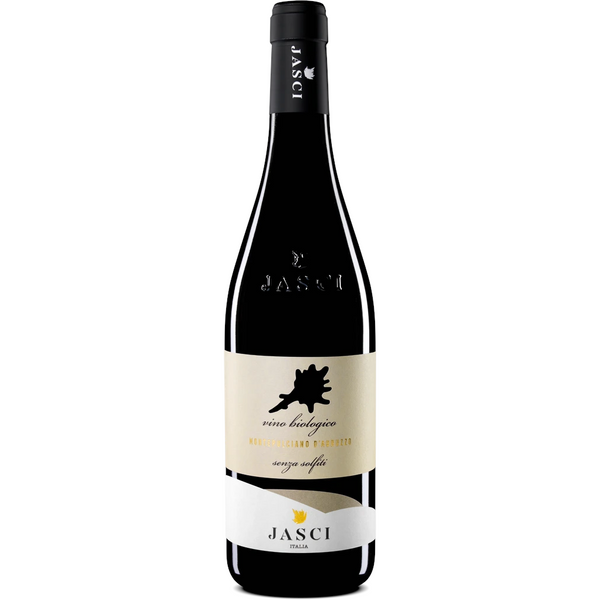
Jasci - Montepulciano sans soufre 2023
A concentrate of red fruits and sweet spices in this cuvée dedicated to pleasure.
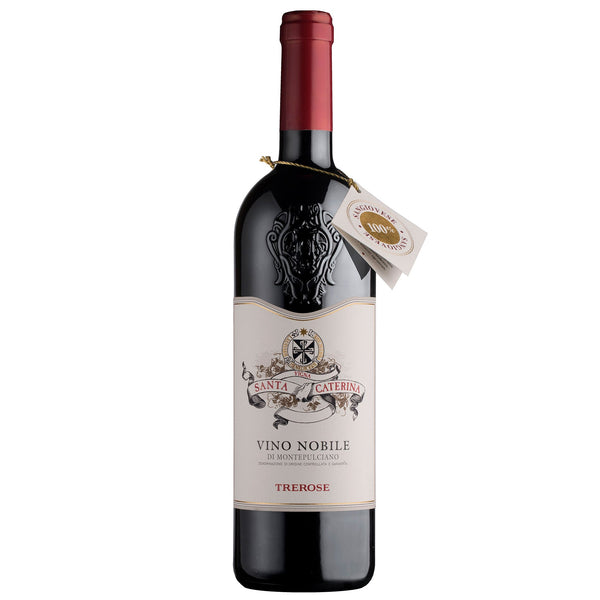
Tenuta Trerose - Vino Nobile di Montepulciano Santa Caterina 2022
Vino Nobile di Montepulciano in the Santa Caterina version, black cherry, tobacco and leather.

Jasci - Cerasuolo d'Abruzzo 2025
An organic rosé from the hills of Vasto, made from montepulciano, bursting with cherry and strawberry.

Jasci - Domino Montepulciano d'Abruzzo Riserva 2021
An organic riserva from Vasto, a powerful barrique-aged montepulciano, between black fruit and liquorice.
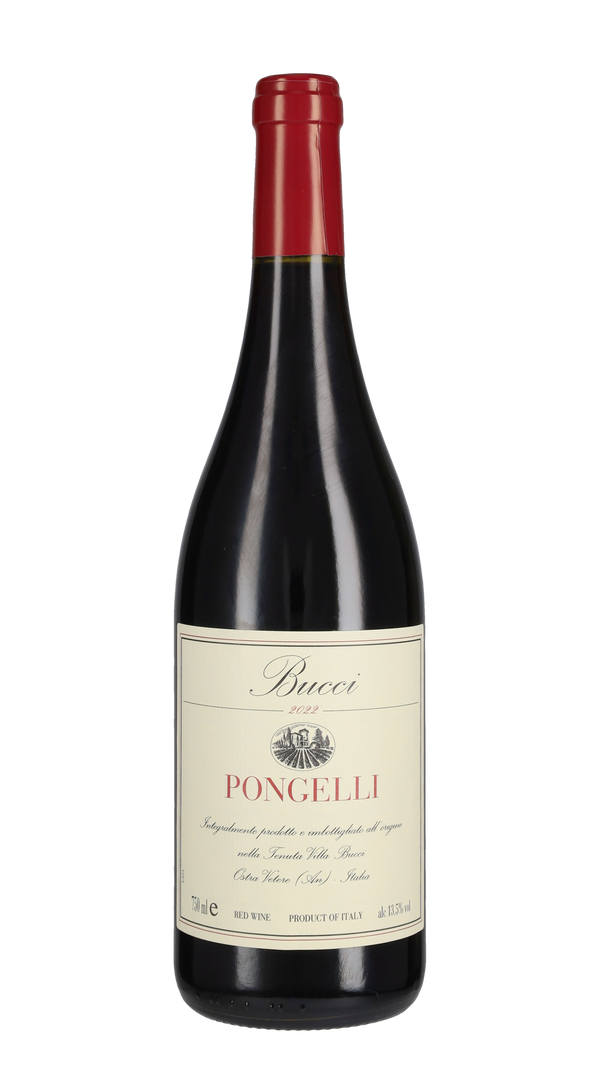
Villa Bucci - Rosso Vieilles Vignes 2013
An old-vine Rosso Piceno, deep and elegant. The freshness of the Marche in the service of real complexity.
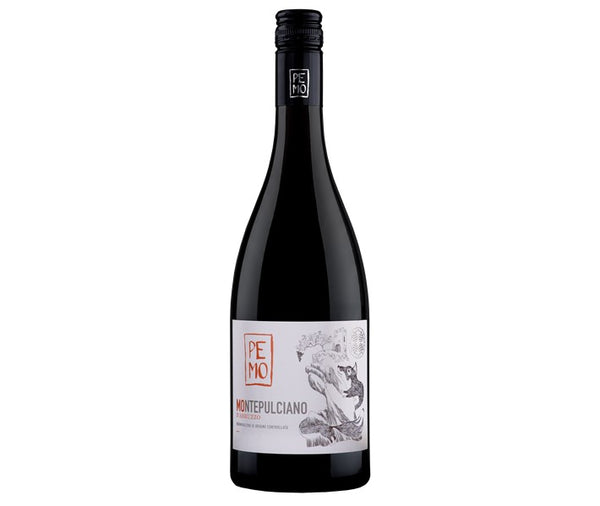
The Wine People - Pemo Montepulciano d'Abruzzo 2023
A juicy and approachable Montepulciano d'Abruzzo, made for the table and immediate enjoyment.
Montepulciano d'Abruzzo or Vino Nobile: which do you have in hand?
The word appears on three very different types of labels. The rule is simple: when it is followed by “d'Abruzzo”, it names the grape variety. When it follows “Vino Nobile di”, it names a town in Tuscany.
| On the label | Where | The grape variety | In our cellar |
|---|---|---|---|
| Montepulciano d'Abruzzo a grape variety | Abruzzo, between the Adriatic and the Gran Sasso massif, on clay-limestone hills. | Montepulciano, the most common red variety in the region. | Fantini 2024, Jasci 2022, Jasci sulfite-free 2021 |
| Vino Nobile di Montepulciano a city | Tuscany, around the town of Montepulciano, southeast of Siena. | Sangiovese in large majority, supplemented by Tuscan grape varieties. Not a drop of Montepulciano. | Tenuta Trerose Santa Caterina 2020 |
| Montepulciano outside Italy a supplement | Luján de Cuyo, Mendoza, from clay-limestone soils at 1,000 meters above sea level. | Montepulciano complements Malbec, the two Cabernets, and Syrah. | Caelum Blend Icon 2020 |
The surefire shortcut: if the word “Abruzzo” appears on the label, you've got the grape variety. Otherwise, you're in Tuscany, with Sangiovese.
Which dish for which bottle
Montepulciano d'Abruzzo has a frank acidity and smooth tannins, making it an everyday red rather than a wine for a special occasion. The other two foreign wines in this section are playing in a different league, with more body.
| The dish | Why it works | The bottle |
|---|---|---|
| Pizza, tomato pasta, ragu | The acidity of the grape stands up to the tomato and its melted tannins don't overpower anything. | Fantini Montepulciano d'Abruzzo 2024 |
| Appetizer, cold cuts, soft cheeses | Served at around 14°C, this is a refreshing red wine, with notes of redcurrant and strawberry. | Jasci Montepulciano 2022 |
| Grilled vegetables, eggplant, vegetarian dishes | With no added sulfites, the wine gains fruit purity and avoids vegetal notes. | Jasci Montepulciano Sulphur-Free 2021 |
| Roasted poultry, white meats | Enough substance to accompany, not enough tannin to overpower the fruit. | Fantini Montepulciano d'Abruzzo 2024 |
| Grilled beef, pressed cheeses | What's needed here is structure and wood: Tuscan Sangiovese takes over. | Tenuta Trerose Vino Nobile 2020 |
| Game, slow-cooked dishes | Five grape varieties and twenty months in French oak barrels: the most full-bodied on the shelf. | Caelum Blend Icon 2020 |
A Montepulciano d'Abruzzo should be served chilled, between 14 and 16 °C. Vino Nobile requires two degrees more and benefits from an hour in a decanter.
A bottle for every intention
The table removes all doubt. Here are the bottles, and only those that can be shipped today.
Everyday red
Fifteen days of maceration, a short time in stainless steel tanks. Red fruits, melted tannins, fresh finish. Also sold in packs of six.
Fantini Montepulciano d'Abruzzo 2024 · €11.90A magnum for the table
Organic, hand-harvested, natural yeasts. The 1.5L format, enough to serve a table of eight without having to open another bottle.
Jasci Montepulciano 2022 · €28 per magnumNo added sulfites
Same estate, same organic work, bottled with no added sulfites. Pure fruit, in a six-bottle case.
Jasci Montepulciano Sulphur-Free 2021 · €84 for 6The Tuscan who bears this name
Tenuta Trerose’s Vino Nobile: Sangiovese aged in barrels, with notes of black cherry. Nothing like the wines from Abruzzo.
Tenuta Trerose Santa Caterina 2020 · €33.50The Argentine exception
A blend from Mendoza at 1,000 meters, where the varietal is joined by Malbec, Cabernets, and Syrah. Twenty months in French oak.
Caelum Blend Icono 2020 · €42The grape of Vino Nobile
If Tuscan wine is what you're looking for, it's Sangiovese you should follow, not the name of the town.
Our sangiovesesSee all of Italy
Abruzzo, Tuscany, Piedmont, Sicily, Puglia: the complete Italian section, region by region.
Our Italian Wines
The weekday wine we're too quick to judge
Montepulciano d'Abruzzo suffers from its abundance. It fills pizzeria menus, often sells for less than bottled water in restaurants, and many conclude that there's nothing to expect from it. The name it shares with a Tuscan cru doesn't help: one thinks they're buying the former, but drinks the latter, and the disappointment shifts camps.
Taken for what it is, it's one of Italy's best value-for-money wines. A fruity red, with a crisp acidity, smooth tannins, best served chilled, and that complements everyday cooking without ever overpowering it. Organic wineries, like Jasci in this aisle, show that it can also have precision.
How do you choose
On freshness. A heavy and warm Montepulciano missed its mark: this wine must remain digestible down to the last glass.
And on the clarity of the label. We prefer estates that state where their vines grow rather than those that rely on homonymy.
The Baroudeur du Vin team
What we are asked about Montepulciano
Are Montepulciano d'Abruzzo and Vino Nobile di Montepulciano the same wine?
No, and they are unrelated. The first is produced in Abruzzo from the Montepulciano grape variety. The second comes from Tuscany, around the town of Montepulciano, and is made with Sangiovese. Two regions, two grapes, two styles, and two price ranges.
How to tell them apart on a label?
Look for the word "Abruzzo". If it follows the name Montepulciano, it is the grape variety and the wine comes from Abruzzo. If you read "Vino Nobile di Montepulciano", you are in Tuscany, drinking Sangiovese. The region mentioned on the back label confirms this in a second.
What does a Montepulciano d'Abruzzo taste like?
A generous red and black fruit: wild strawberry, plum, blackberry, morello cherry, with notes of vanilla or sweet spices depending on the aging process. The palate is round, the acidity is fresh, and the tannins are melted. It is a supple red, not a wine of structure.
Should we decant it or let it age?
Neither in most cases. These wines are aged in vats and meant to be drunk within three to five years. Serve them directly at 14 or 16°C. Tuscan Vino Nobile, on the other hand, can be decanted for an hour and aged for a few years in the cellar.
What does a wine with no added sulfites offer?
No sulphites are added at bottling. The fruit comes through livelier and more direct, at the price of greater sensitivity to heat and transport. Keep the bottle cool and drink it within two days of opening. Our Jasci 2021 is sold in cases of six.
Why an Argentinian wine in this section?
Because the grape variety is part of its blend. Caelum's Blend Icono comes from Mendoza and brings together Malbec, Cabernet Franc, Cabernet Sauvignon, Syrah and Montepulciano, with twenty months in barrels. It is not an Italian wine; it is another interpretation of the grape.
Why such a price difference on the same page?
Because three unrelated wines coexist there. A Montepulciano d'Abruzzo starts at €11.90 here: it's a high-volume wine, produced over a wide region. The Tuscan Vino Nobile is €33.50, from a much smaller area and with longer aging. The difference lies in the origin, not the quality of the work.