
Valpolicella: Classico, Superiore, Ripasso, what each designation adds
From fresh grape harvest to Ripasso, starting from €14.90Valpolicella is the largest red wine appellation in Verona, and the one that is most quickly judged. The light red wine served by the carafe in pizzerias does indeed come from there, but it only occupies the bottom rung of a rather high ladder.
Three words appear on the label, and each one signifies something precise. Classico designates the historical zone, Superiore requires twelve months in the cellar, and Ripasso indicates a second fermentation on the pomace. The table below places the four levels side-by-side, with the entry price and the ideal serving time.
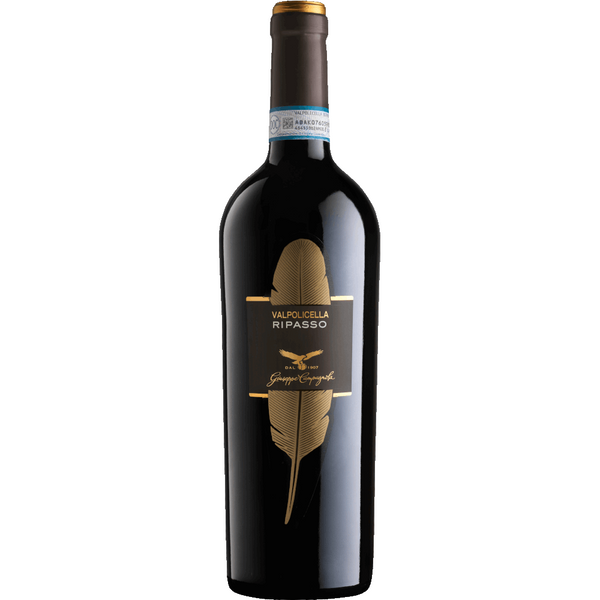
Campagnola - Piuma Valpolicella Ripasso 2019
A round and charming Valpolicella Ripasso
The four rungs of the ladder, from light to dense
Here, the label doesn't state the vintage or the grape variety: it indicates the location, the aging period, or the method. These mentions accumulate, which is what makes the aisle difficult to read from a distance.
| The mention | What it imposes | In the glass, and when to serve it | In our cellar |
|---|---|---|---|
| Valpolicella unmentioned | Fresh harvest, no aging imposed. The appellation covers all the hills north of Verona. | Cherry, bitter almond, light tannin. Serve around 15°C, drink within two or three years. | Bertani Valpantena 2023€21.40 |
| Classic the historic district | The five original communes, northwest of Verona. This is a place mention: it does not require specific breeding or degree. | Even light profile, with more tension and definition. The best place to judge the grape variety. | Zeni Valpolicella Classico 2024€14.90 |
| Superior twelve months in a wine cellar | A higher minimum degree and at least one year of aging before release for sale. | More body, a firm tannin. We're moving from an aperitif wine to a dinner wine. Serve around 16°C. | Buglioni L'imperfetto 2023€138 for 6 |
| Ripasso on the grounds | The wine is re-fermented on the pomace of a recently drained Amarone. | A little more alcohol, dried fruit and body. Braised meats, mature cheeses, around 16°C. | Villa Girardi Bure Alto 2020, Zeni Marogne 2023€24.90 and €25 |
The mentions accumulate: Villa Girardi is classico, superiore and ripasso all at once. Two wines, however, fall outside this scale because they are made from dried grapes: recioto, which remains sweet, and amarone, which has its own section.
Five valley homes, and what they signify
The appellation is vast, and price differences are considerable. Looking at the producer's name before the mention remains the surest way to know what you are buying.
| The field | Where and what he works on | In our cellar |
|---|---|---|
| Zeni since 1870 | Five generations settled near Verona. The Vigne Alte range covers the entire spectrum, from classico to recioto. | Classico 2024, Ripasso Marogne 2023, Recioto 2022from €14.90 to €55 |
| Bertani Valpantena | A Veronese house founded in the 19th century, located in the Valpantena valley, which it features on its labels. | Valpolicella Valpantena 2023, Ripasso 2022€21.40 and €27 |
| Girardi Villa Valpolicella Classica | In the heart of the historic area. The estate mainly uses passerillage and fermentation on lees. | Ripasso Classico Superiore Bure Alto 2020€24.90 |
| Buglioni two-stage harvest | A superiore assembled from grapes harvested in September and the same grapes dried until November. | L'Imperfetto 2023, sold at the register€138 for 6 |
| Giuseppe Quintarelli Negrar | Pergola-trained vines, long macerations, aging in large oak casks for years. The most sought-after estate in the valley, and the most expensive. | Primofiore 2023, Ca del Merlo 2017, Classico Superiore 2017, Rosso del Bepi 2016from €100.60 to €234 |
At Quintarelli, the range goes up to €562 with Alzero, a passito Cabernet, and the estate also produces a white wine, the Bianco Secco 2024, available only in lots of 2 at €130.40. The Campagnola Piuma Ripasso 2019 and the Zeni Cruino 2019 are temporarily out of stock.
A bottle for every moment
The tables give the theory. Here are the bottles, and only those that can be shipped today.
A first valpolicella
The Classico sans maquillage range: fresh cherry, light tannin, to be served around 15°C. Also available in a pack of three, for €38.70.
Zeni Classico 2024 · €14.90The Valpantena Valley
The same light register, on the valley neighboring the historical area, signed by a great house from Verona.
Bertani Valpantena 2023 · €21.40Understanding Ripasso
Classic, superiore, and ripasso all at once: the three designations combined on a single label, for under €25.
Villa Girardi Bure Alto 2020 · €24.90The perfectly ironed look
Volume and dried fruit, without trying to imitate Amarone. Our go-to wine for meat in sauce and game.
Zeni Marogne 2023 · €25A historic home to revisit
Straighter and tighter than the average for the style, with the barrel aging to match. Decant for half an hour.
Bertani Ripasso 2022 · €27Six bottles for entertaining
A superior wine, half from September harvest, half from grapes dried until November. Sold only by the case.
Buglioni L'imperfetto 2023 · €138 per 6Entering Quintarelli's world
The most accessible wine from the Negrar estate: Corvina and Corvinone complemented by Cabernet, hand-picked.
Quintarelli Primofiore 2023 · €100.60The sweet version of the valley
Three months of raisining and a fermentation stopped along the way. A sweet red wine, with candied fruit and black cherry notes.
Zeni Recioto Vigne Alte 2022 · €55Switch to Amarone
The top bar: raisins dried for three to four months, dry and dense wine. A dedicated section, starting from €27.90.
Our Amarone
The valley is judged by its first rung
Valpolicella has a reputation as a unremarkable red wine, served chilled and drunk unthinkingly. This comes from a real fact: the appellation produces a lot, and some of this volume arrives in France at prices that preclude any high expectations. The shortcut is quickly taken, and it has persisted for thirty years.
However, the scale exists, and it is easy to understand. Between a classico from a fresh vintage at €14.90 and a superiore aged twelve months, there is the difference that separates an aperitif wine from a meal wine. Between this superiore and a ripasso, there are the amarone pomace, meaning more alcohol and dried fruit. Three bottles are enough to be convinced, and they all cost under €30.
How do you choose
First, regarding drinkability. A successful Valpolicella is for drinking, not contemplating: crisp acidity, fine tannins, contained alcohol.
Regarding Ripasso wines, we discard those that try to copy Amarone. The repassing process should add depth, not a caricature of power.
The Wine Wanderer Team
What we're being asked about Valpolicella
What is Valpolicella?
A red wine from Veneto, produced in the hills north of Verona. It is based on Corvina, almost always accompanied by Rondinella, sometimes by Corvinone and Molinara. The appellation is broad: it ranges from light red wine consumed within the year to the superiore for meals. Details of the grape varieties are on our Corvina page.
What does Classico mean on the label?
That the grapes come from the historical zone, five communes northwest of Verona: Negrar, Marano, Fumane, Sant'Ambrogio and San Pietro in Cariano. This is a place name, nothing more, it does not impose any additional aging or degree. The Valpantena, a neighboring valley to the east, has the same right to register its name, as Bertani does.
Superior, what does that add?
A higher minimum degree and at least twelve months of aging before sale. Concretely, the wine has more depth and more present tannins: it goes from being an aperitif wine to a meal wine. Our Buglioni L'imperfetto takes this logic further by blending fresh grapes and the same grapes dried until November.
What is the ripasso method?
Once the Amarone has been drained, its pomace remains rich in sugar and matter. A pre-made Valpolicella is added, a second fermentation begins, and the wine gains in alcohol content, body, and notes of dried fruit. This technique is ancient, but it only became widespread in the 1970s. It is used for three of our cuvées, priced between €24.90 and €27.
What does this have to do with Amarone?
The same vineyard and the same grape, but a different treatment. Amarone is made from bunches dried for three to four months on racks, which gives it 15 to 16 degrees of alcohol and an unparalleled concentration. An Amarone della Valpolicella is never sold as a Valpolicella: it is a distinct appellation, with its own section in our store, starting from €27.90.
At what temperature should it be served, and does it need decanting?
Valpolicella without specific mention and Valpolicella Classico should be served chilled, around 15 °C, without decanting: it's their freshness that is sought after. Superiore and Ripasso prefer 16 °C and half an hour of aeration. Served too warm, these two lose their vibrancy and seem heavy.
How long does it keep?
Two to three years for a freshly harvested Valpolicella, that's when it's at its most straightforward. Five to eight years for a superiore or a ripasso, even longer for estates that age their wines for extended periods: Quintarelli's 2017 Classico Superiore is still in great shape. None of these bottles require aging; they are released ready to drink.
Which bottle should I start with?
With the Zeni Classico 2024 at €14.90, which showcases the grape variety without artifice. Then with the Villa Girardi Bure Alto 2020 at €24.90, to appreciate what amarone pomace brings. Ten euros separate the two, and the whole point of this page lies in that difference.