
Brunello di Montalcino: The Sangiovese That Waits Five Years
From Rosso to single-vineyard, from €29.70On the Montalcino hill, south of Siena, Sangiovese produces its densest and slowest wine. The appellation requires one hundred percent of the grape variety and five years of aging and rest before any sale. This is the longest delay an Italian winemaker is willing to impose on himself.
The most useful point to understand before buying is not the brunello itself, but its younger sibling. The Rosso di Montalcino comes from the same hills and is released four years earlier, at €29.70 in our store, while the single-vineyard crus of Pieve Santa Restituta go up to €294. The first table places the two appellations side by side.
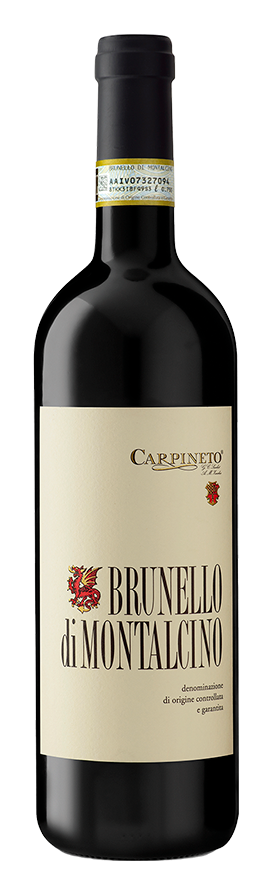
Carpineto - Brunello di Montalcino 2021
A Brunello from some of the highest-altitude vineyards in Montalcino, aged three years in large foudres.

Tricerchi - Brunello di Montalcino DOCG AD1441 2019
The flagship cuvée of Castello Tricerchi, a Brunello with great ageing potential born from the castle's finest vineyards.
Rosso, Brunello, Riserva: what each level entails
The three appellations come from the same hillsides and the same grape variety. What separates them is a single variable: the number of years the estate is willing to wait before cashing in. Each level adds structure and delays the moment of opening.
| The appellation | What is imposed | When to open it | In our cellar |
|---|---|---|---|
| Rosso di Montalcino Document | 100% Sangiovese, from the Brunello area. Available for sale from September of the year following the harvest. | Starting now, and for up to five or six years. One hour in a decanter is plenty. | Argiano 2022, €29.70 |
| Brunello di Montalcino DOCG | 100% Sangiovese. Five years of aging and resting before release, including a minimum of two years in barrel. | Eight to ten years after the vintage for maximum enjoyment. Sooner, decant two hours. | Tricerchi 2018, €65 |
| Reserve a duration, not a grade | Six years before release, on a selection that the estate deems capable of aging. | Fifteen years and more, no rush. This is the bottle you lay down and forget about. | Gianni Brunelli Riserva 2019, €198 |
| Vine Name Vigna del Lago, Sugarille | Not a mention of specifications, but a named vineyard which the estate vinifies and bottles separately. | Like a Brunello, with an extra degree of patience. The tannic grain is tighter. | Val di Suga Vigna del Lago 2019, €111 |
Sangiovese plays a whole different tune further north, over a much larger area and with four superimposed mentions: see our Chianti wines.
The domains of the hill, and what they signify for us
Montalcino is a small area, and the difference between two bottles from the same vintage primarily comes down to the hand that made them. Here are the five wineries present in our cellar, what they offer, and which cuvée to start with.
| The field | What sets it apart | What we offer | From |
|---|---|---|---|
| Argiano | The only one in the cellar to offer both appellations of the hill. | The 2022 Rosso and 2019 Brunello, from the same slopes. The most telling comparison on the shelf. | €29.70 his Brunello at €78 |
| Val di Suga | Three vintages with us, all from 2019. | The estate's brunello, then two single-vineyard wines: Poggio al Granchio at €105.40 and Vigna del Lago at €111. | €71.60 |
| Tricerchi | One wine, a 2018 that's already ready. | The lowest entry in the appellation for us, on a vintage that has finished its bottle aging. | €65 |
| Gianni Brunelli | The only one to make a Riserva in our cellar. | A 2020 to enjoy now, a 2019 Riserva at €198 for the cellar. Two ways to appreciate the same estate. | €115 |
| Pieve Santa Restituta | Two single-vineyard wines, both from 2018. | Rennina at €270 and Sugarille at €294, vinified separately. The top end of the range. | €270 |
All our producers, region by region, are listed on the wineries page.
Which bottle should we open
The tables give the theory. Here are the bottles, and only those that can be shipped today.
Start with the youngest
Rosso di Montalcino comes from the same vines as Brunello, but four years earlier. The best way to taste the hill without waiting.
Argiano Rosso 2022 · €29.70A first brunello
A 2018 delivered to your door, without the price tag of a collector's vintage. The gentlest entry into the appellation.
Tricerchi 2018 · €65Estate Brunello
The blend of plots that make up this wine, the broadest interpretation of the 2019 vintage. Decant for two hours.
Val di Suga 2019 · €71.60Compare the two appellations
Argiano's Brunello alongside its Rosso: same hillsides, same craftsmanship, four years apart. The most instructive exercise in the aisle.
Argiano Brunello 2019 · €78Go down to the plot
Poggio al Granchio, an isolated vineyard whose grapes are vinified separately. What it loses in breadth, it gains in definition.
Poggio al Granchio 2019 · €105.40A winemaker's estate
Small estate, limited production, a 2020 that still needs a few years or a generous decanting.
Gianni Brunelli 2020 · €115A flat bottle
Six years of aging are required before sale, and enough to last fifteen more years. To offer, or to forget in your cellar.
Gianni Brunelli Riserva 2019 · €198The cellar summit
Sugarille, a single vineyard from Pieve Santa Restituta in 2018. Density and length, for a grand meal or a special occasion.
Sugarille 2018 · €294Head back towards Chianti
The same grape variety north of Siena, over a much larger area and with four mentions to untangle. From €15.50.
Our chiantis
Rosso di Montalcino is not a failed Brunello
It is often presented as a by-product, the wine from grapes that didn't make the cut. This is a short-sighted view. The Rosso comes from the same grape variety and the same hillsides, with only one fundamental difference: it is sold after one year instead of five. At Argiano, the two wines are released four years apart, and the younger one costs €29.70 while the older one demands €78.
What time adds is real, no one disputes that. The tannins soften, the aromas shift from fresh fruit to leather and undergrowth, the finish lengthens. But this time comes at a cost, and you then have to continue waiting at home. Opening a Brunello as soon as it's released is like paying for cellaring and then not using it. If the bottle is for Friday, take the Rosso.
How do you choose
On freshness, never on concentration alone. Montalcino is hot, and a Brunello that has lost its acidity becomes heavy long before it has finished aging.
And on the wood: the barrel must carry the wine, not cover it. A vanilla nose in the first glass is a bad sign for the decade to come.
The Wine Wanderer team
What we are asked about Brunello
What's the difference between a Brunello and a Rosso di Montalcino?
The grape variety and the area are identical: 100% Sangiovese from the Montalcino hill. What changes is the time imposed before sale. Rosso can be released in September of the year following the harvest, while Brunello waits five years. Rosso can therefore be drunk immediately and costs significantly less; Brunello requires cellar aging. It's not a hierarchy of quality, it's a difference in timing.
Which grape variety is used in a Brunello?
Sangiovese, and only Sangiovese, 100%. The local clone is called Sangiovese grosso, and brunello is simply the nickname given to it by the winemakers of Montalcino. No other grape variety is allowed, which makes the appellation particularly clear: any difference between two bottles comes from the location, the vintage, and the winemaker's touch.
How long can you keep a Brunello?
Allow eight to ten years after harvest for a classic vintage, fifteen to twenty for a Riserva or single-vineyard wine. The five years imposed before sale are just a start: the bottle arrives at your home still young. Our vintages range from 2018 to 2020, with the 2018s being closest to their drinking window.
Should you decant a Brunello?
Yes, and generously, as long as the bottle is less than ten years old. Two hours in a decanter will soften the tannins and unlock a nose that is often closed upon opening. Beyond fifteen years, change your method: delicate serving, a wide glass, and let the wine open up in the glass rather than in a container that would exhaust it.
What does the "Riserva" designation change?
It imposes six years before release instead of five. This is a duration requirement, not a classification: an unmentioned bottle can surpass a neighboring Riserva. It mainly indicates that the estate has set aside a selection it deems capable of long aging. Our Gianni Brunelli Riserva 2019 is the only one in the cellar in this case.
What does a vineyard name on the label mean?
That the estate has vinified and bottled a separate plot instead of blending it with the rest. This is not a regulatory mention like Riserva; it is a choice made by the producer. Vigna del Lago, Poggio al Granchio, Rennina, or Sugarille thus refer to specific vineyards. The wine gains in definition what it loses in breadth.
What to serve with a Brunello?
For rich, hearty dishes like feathered game, wild boar, seven-hour lamb, rib of beef, porcini mushroom risotto, or very mature pecorino, serve around 17°C. For a softer Rosso di Montalcino, a simple grilled meat or pasta with ragù will suffice.
Brunello or Chianti, which to choose?
It depends on the time frame. Brunello is the same grape pushed to its extreme, with an entry price of €29.70 for the Rosso and €65 for the appellation itself, and it requires patience. Chianti starts at €15.50 and is ready to drink within the year. For a weeknight meal, the choice is quickly made: our Chianti selection, where the hierarchy of mentions is explained in detail.