
Pinot Noir wine: eleven origins, one grape variety
234 bottles, from €11.50 to €330.00The section brings together Pinot Noirs from eleven countries, from €11.50 to €330.00, with a median of €49.90. France comes first, with cuvées that are all from Burgundy, ahead of the United States, New Zealand, Argentina, Australia, South Africa and Chile. Switzerland, Germany, Italy and Austria bring up the rear.
The first table compares six major origins, with what their climate does to the wine and the price range in our cellar. The second explains what each price tier really buys, from the fruit-driven cuvée at €12.50 to grand cru plots. Two points before choosing: a good part of the section is sold individually and the rest in packs, and a few bottles are sparkling wines in which Pinot Noir is part of the blend. The Burgundies are gathered in the Burgundy section.

Bousquet - Brut Charmat
An organic high-altitude sparkling wine from Gualtallary, fresh and fruity, with fine bubbles and crisp acidity.

DuMOL - Estate Vineyard Pinot Noir 2023
A single-vineyard Pinot Noir, dark and intense, with black fruit, hibiscus and oriental spices.
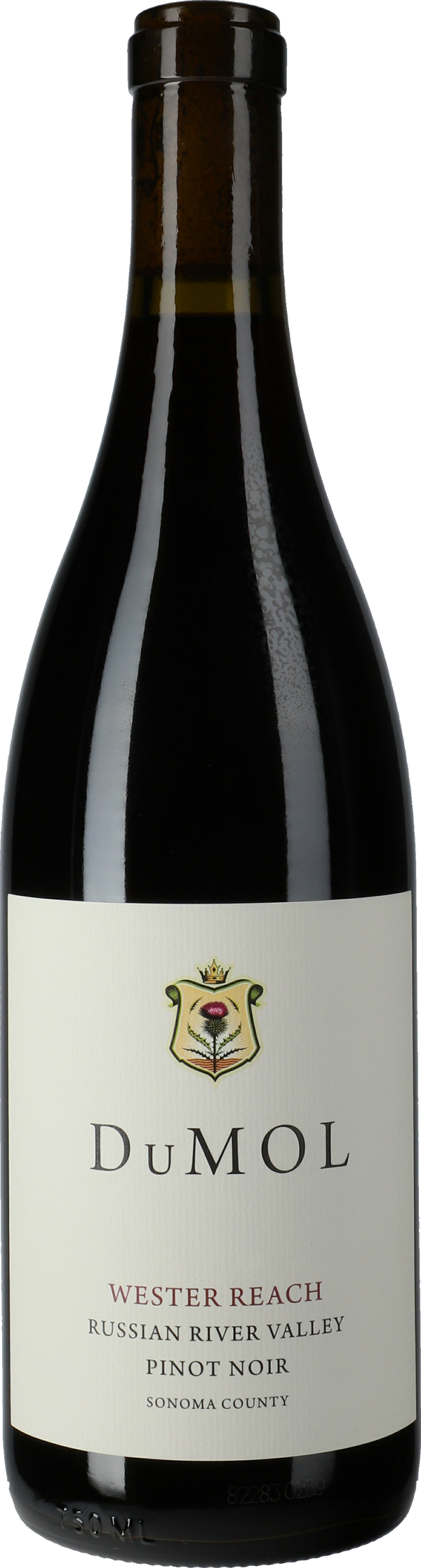
DuMOL - Wester Reach Pinot Noir 2023
A Pinot Noir from the Russian River Valley, fragrant and energetic, between cherry, wild blackberry and spice.
Sonoma-Cutrer - Russian River Valley Pinot Noir 2022
A Pinot Noir from the Russian River Valley, all finesse, between red fruit, spice and black tea.

Kosta Browne - Sta. Rita Hills Pinot Noir 2022
A Pinot Noir from the Sta. Rita Hills, between bramble flowers, strawberry and spice, with an elegant structure.
Kosta Browne - Russian River Valley Pinot Noir 2022
A Pinot Noir from the Russian River Valley, rich in black fruit and enlivened by lovely freshness.

Kosta Browne - Sonoma Coast Pinot Noir 2022
A Pinot Noir from the Sonoma Coast, driven by Pacific freshness and deep red fruit.

Domaine Quenard & Fils - Sansoufrir Rouge
A Savoie red with no added sulphites, light and easy to drink, with lovely aromas of redcurrant and blueberry.

Domaine de Sainte Marie - Côtes du Jura Pinot Noir 2022
A Jura Pinot Noir from long maceration: Burgundian fruit marked by the freshness of the Jura.

Domaine du Four Bassot - Coteaux Bourguignons Pinot Noir 2024
A crunchy, indulgent Coteaux Bourguignons, bursting with red fruit: a true wine for sharing with friends.

Domaine Jeannin-Naltet - Mercurey Vieilles Vignes 2024
An expressive, supple Mercurey, with smooth raspberry and cherry fruit, from old vines.

Domaine Simon Gaudet - Corton Grand Cru Les Grandes Lolières 2020
A dense, precise Corton Grand Cru from sixty-year-old vines, between liquorice, aniseed and mocha.

Domaine Simon Gaudet - Santenay Les Bras 2023
An elegant red Santenay, where violet, raspberry and gingerbread rest on silky tannins.

Domaine Simon Gaudet - Bourgogne Hautes-Côtes de Beaune Au Paradis 2023
A fresh, dynamic red Hautes-Côtes de Beaune, with tangy, crunchy small red berries.

Domaine Simon Gaudet - Bourgogne Pinot Noir Altis 2023
A crunchy, indulgent Bourgogne Pinot Noir from high-trained vines, all raspberry and cherry.

Domaine Parent - Corton Grand Cru Les Renardes 2023
A powerful, fleshy Corton Grand Cru, with black fruit and wild mushrooms, of great persistence.

Domaine Parent - Pommard 1er Cru Les Épenots 2022
A great Pommard premier cru, dense and fine, where violet meets cherry and raspberry.

Domaine Parent - Pommard 1er Cru Les Chaponnières 2022
A generous Pommard premier cru, with fleshy raspberry and cherry fruit underlined by liquorice.

Domaine Parent - Pommard 1er Cru Les Argillières 2022
A delicate, seductive Pommard premier cru, with notes of spice and stone fruit.

Domaine Parent - Pommard 1er Cru Les Chanlins 2022
A sensual, racy Pommard premier cru, with black fruit lifted by a floral and mineral touch.

Domaine Parent - Pommard Croix Blanche 2022
A lieu-dit Pommard with a ruby colour, where wild cherry and blackcurrant combine power and finesse.

Domaine Parent - Monthélie 1er Cru Les Champs Fulliot 2022
An indulgent, fresh Monthélie premier cru, with vibrant fruit and round tannins.

Domaine Jacques Cacheux & Fils - Échézeaux Grand Cru 2022
An Échézeaux grand cru from the Orveaux and Cruots climats, aged in new barrels, deep, silky and mineral.

Domaine Jacques Cacheux & Fils - Nuits-Saint-Georges Au Bas de Combe 2022
A Nuits-Saint-Georges from the border with Vosne-Romanée, floral and fresh, with round, silky tannins.

Caves Bailly-Lapierre - Irancy 2022
A crunchy, moreish Irancy with vibrant red fruit, born on the limestone slopes of the Auxerrois.

Torresella - Prosecco Rosé Brut
A Prosecco rosé of Glera and Pinot Noir, with fine bubbles and notes of flowers, citrus and red fruit.

Thiénot - Champagne Brut Rosé
A tender, indulgent Champagne rosé with vibrant red fruit and lively, fresh bubbles.

Thiénot - Champagne Vintage 2015
A 2015 vintage dominated by Pinot Noir, rich and fine, matured for seven years in the Thiénot cellars.

Thiénot - Champagne Brut
The signature brut from the Reims house of Thiénot, fresh and fruity, carried by lively, fine bubbles.
Blaise Duboux - Dézaley Grand Cru AOC Cuvée Z Pinot Noir 2022
A rare Pinot Noir from Dézaley, born on three terraces facing Lake Geneva, with spicy small red fruits.

Bruno Landauer - Ruster Urbarial Selection 2022
Bruno Landauer's prestige red cuvée from Rust: Zweigelt, Merlot and Pinot Noir, with body and finesse.

Dorrance - Pinot Noir 2023
A Cape Pinot Noir vinified the French way, with whole berries: black fruit, pepper and taut freshness.
The same grape under six climates
Pinot Noir is thin-skinned, ripens early and copes poorly with heat: it is the red grape variety that most faithfully expresses where it grows. The product pages for these bottles all say the same thing under different names: a source of coolness that slows ripening. It may be the ocean in Marlborough and Walker Bay, altitude in Gualtallary, the shadow of a volcano and glacial streams in Chile, or simply latitude in Burgundy. The table sets six origins side by side, with the actual price range and a benchmark bottle.
| Origin | What the climate does to the wine | In our cellar | A reference bottle |
|---|---|---|---|
| BurgundyRully, Mercurey, Savigny, Volnay, Nuits-Saint-Georges | Continental climate and short summers. Ripeness is just achieved; the wine plays on fresh cherry and tension rather than power. Prices follow the hierarchy of appellations, from regional to grand cru. | From €19.90 to €199.90, median €39.90 | Cachat-Ocquidant, Bourgogne Pinot Noir, €21.00 |
| California and OregonMonterey, Sonoma Coast, Russian River, Willamette Valley | Valleys open to the Pacific. Sea breezes and wide day-night temperature swings give riper fruit and a round texture, on well-drained gravel and alluvial deposits. | From €16.50 to €129.60, median €91.90 | Calera, Pinot Noir, €39.60 |
| New ZealandMarlborough, Martinborough, Bannockburn | Cool maritime climate, Pacific winds and wide temperature swings, on gravels and silts from ancient river terraces. Clean red fruit, lively acidity, fine tannins. | From €18.00 to €156.00, median €53.10 | Clos Henri, Waimaunga Pinot Noir, €45.00 |
| South AfricaHemel-en-Aarde, Walker Bay, Elgin | The cold bays of the South Atlantic, complemented by the high-altitude slopes of Elgin. Clay-shale soils and decomposed sandstone, retained acidity and a tight palate. | From €18.50 to €184.00, median €49.90 | Creation, Pinot Noir, €30.40 |
| Chile and ArgentinaMaule, Talinay, Uco Valley, Patagonia | Two ways of seeking out the cold: the limestone coast of Talinay and the shadow of the volcano in Maule on the Chilean side, Andean altitude on the Argentinian side, up to nearly 1,500 metres in Gualtallary. | From €11.50 to €330.00, Chilean median €22.15 | Matetic, El Viejo del Valle, €12.50 |
| AustraliaMornington Peninsula, Yarra Valley, Murray Darling | The Southern Ocean on the Mornington Peninsula, the Bass Strait in the Yarra Valley. Clay-silt soils with volcanic influences, long ripening, ripe fruit without heaviness. | From €11.50 to €85.00, sold in packs | Ten Minutes by Tractor, 10X Pinot Noir, sold in packs |
Four countries complete the section with nine bottles. Switzerland offers four cuvées from the Valais, from the terraces of Fully held up by dry-stone walls, from €85.75 to €133.00. Germany has three, from the Pfalz to southern Baden, where limestone and marl dominate, from €19.90 to €84.00. Austria contributes a red blending Zweigelt, Blaufränkisch and Pinot Noir, Italy a vintage prosecco rosé in which Pinot accompanies Glera, at €13.90.
Six sections to choose by origin
These six sections cover most of the list. The Australian cuvées, sold in packs, and the Swiss, German, Italian and Austrian bottles complete it. For each, availability as single bottles is shown, to avoid surprises when you reach your basket.
Burgundy
From €19.90 to €199.90, with a median of €39.90. It is the easiest section to read, from regional appellation to grand cru, and virtually all its bottles are available individually.
From €19.90 to €199.90United States
From Monterey to the Willamette Valley, from €16.50 to €129.60. The median rises to €91.90, the highest in the section, with Cristom, Calera and Au Bon Climat as the most represented estates.
From €16.50 to €129.60New Zealand
From Marlborough, Martinborough and Bannockburn, from €18.00 to €156.00. Felton Road, Blank Canvas and Escarpment are the best represented, and some of the bottles are available individually.
From €18.00 to €156.00South Africa
From €18.50 to €184.00, with most cuvées from the Hemel-en-Aarde valley. Crystallum and Creation are the best represented, from the Pinot at €30.40 to Bouchard Finlayson's Tête de Cuvée at €184.00.
From €18.50 to €184.00Chili
From €11.50 to €79.90, with a median of €22.15. This is the entry point to the section, with a good share of cuvées under €20.00, between the limestone coast of Talinay and the Andean valleys.
From €11.50 to €79.90Argentina
From €15.50 to €330.00, between the high-altitude vineyards of the Uco Valley and Patagonia. Domaine Nico is the best represented, with the most expensive cuvée in the whole section.
From €15.50 to €330.00
Four price levels, and what they really buy
The median of the section is €49.90, and two bottles out of three are between €20.00 and €80.00. What the price buys is not primarily the country but the degree of selection: a cuvée blended from a wide area or a named plot, the sorting, the proportion of whole-bunch fruit, the length of barrel ageing. Here is what each level brings.
| Level | What the prize pays for | In our cellar | A reference bottle |
|---|---|---|---|
| Under €20 Upfront fruit, to drink within two years | Varietal cuvées made in tanks, destemmed, with little or no oak. Here Pinot gives raspberry, cherry and supple tannins. No ageing required. | Mostly Chilean and Argentine cuvées, some available individually. | Santa Rita, Secret Reserve Pinot Noir, €13.80 |
| €20 to €40 The place starts to speak | You move from the brand to the terroir: regional Burgundies and entry-level villages, coastal cuvées from South Africa and Chile. Often hand-harvested, partly barrel-aged, three to five years' ageing potential. | Most bottles available individually | Creation, Pinot Noir, €30.40 |
| €40 to €80 The heart of the section | Burgundy villages and premiers crus, named plots from the New World. Hand sorting, native yeasts, a share of whole bunches, twelve months or more in barrel. Five to ten years' ageing potential. | The largest tier, with many bottles available individually | Hamilton Russell, Pinot Noir, €55.00 |
| €80 and above Plots, monopoles and grands crus | Massal selections, ungrafted vines, lieux-dits that carry their name alone. These wines are closed in their youth and call for patience or a decanter. | From €84.00 to €330.00, mostly available individually | Felton Road, Block 3 Pinot Noir, €112.00 |
Price does not follow country the way you might imagine. The Burgundy median is €39.90, that of the American bottles €91.90, and New Zealand's €53.10. The most affordable origin is Chile, with a median of €22.15 and seven bottles under €20.00.
Burgundy no longer has a monopoly in this cellar
Burgundy accounts for less than a third of the section. The rest comes from ten other countries, six of which offer a substantial range. The grape variety left its home region long ago; our cellar simply reflects that.
There remains the received idea that a New World Pinot offers at €40.00 what a Burgundy charges double for. The prices here say the opposite. The Burgundy median is €39.90, New Zealand's €53.10, the United States' €91.90. Felton Road cuvées start at €69.00, most Cristom wines are €96.00 or more, while a Volnay from Domaine Vaudoisey costs €46.00 and its Pommard €57.00.
What has changed is that the comparison is now made at equal price rather than at half price. For €30.40, the Creation Pinot comes from the Hemel-en-Aarde slopes cooled by the South Atlantic, against a Chorey-lès-Beaune from Domaine Cachat-Ocquidant at €35.00. For €45.00, the Waimaunga from Clos Henri compares directly with the Volnay mentioned above. Burgundy's advantage now lies in the clarity of its appellations, and in availability, since virtually all Burgundies can be bought individually, whereas wines from elsewhere are more often sold in packs.
Three figures before deciding
Less than a third: Burgundy's share of the section, against cuvées from ten other countries.
€39.90 versus €91.90: the median for Burgundy against that of the United States. The most expensive bottle in the section, at €330.00, is Argentine.
Single bottles: Burgundy offers almost all of its wines this way, whereas other origins are more often sold in packs.
The Wine Wanderer Team
What we are asked most often
Why does the same grape variety give such different wines from one country to another?
Pinot Noir is thin-skinned and ripens early: it records the slightest difference in temperature, exposure and soil. In this section, freshness comes from the ocean in Marlborough and Walker Bay, from altitude in Gualtallary where the vines grow at almost 1,500 metres, from a volcano and glacial streams in Chile, and from latitude alone in Burgundy. These different sources of coolness give acidities and textures that are nothing alike, even at comparable ripeness.
Which origin should you start with when discovering this grape?
Through Chile, which shows the lowest median in this section at €22.15 and seven bottles under €20.00. The El Viejo del Valle by Matetic and Guillaume Letang at €12.50, from vines of 40 to 60 years old in the Andes, can be bought singly, as can the Santa Rita Secret Reserve at €13.80. A regional burgundy at around €21.00 then provides the European point of comparison.
Why do prices range from €11.50 to €330.00?
Because the section mixes cuvées blended from a wide area with hand-harvested named plots. The price pays for the degree of selection: yields, sorting, ungrafted vines, the proportion of whole bunches, the length of barrel ageing. The most expensive bottle, Le Paradis from Domaine Nico at €330.00, comes from plots in Gualtallary at almost 1,500 metres of altitude. The median of the section is still €49.90.
What can you get for under €20?
Eighteen bottles are under €20.00, but only five can be bought singly: the El Viejo del Valle at €12.50, the Santa Rita Secret Reserve at €13.80, the rosé prosecco from Sutto at €13.90, the Chacra la Papay from Malma at €16.50 and the Hautes-Côtes de Nuits Coup de Foudre from Domaine Bonnardot at €19.90. The other thirteen are only offered by the pack.
Are all bottles sold individually?
A good part of the section, yes. Burgundy is the best served, with almost all its bottles available individually, whereas the Australian cuvées are sold only in packs. The American, New Zealand, Chilean, South African and Argentine wines are split between the two options. Each product page shows the packaging available.
At €50, should you choose a Burgundy or a New World Pinot?
Both hold their own at this price level, and the choice comes down to style. Between €45.00 and €55.00, our cellar offers the Waimaunga from Clos Henri at €45.00, the Hamilton Russell at €55.00 and the Volnay from Domaine Vaudoisey at €46.00. The first two play on tension and clean red fruit, the third on restraint and tannin.
What dishes should I serve with Pinot Noir?
It is the most versatile red at the table, because it brings acidity and little tannin. In this section, some cuvées are recommended with beef, with lamb and with white meat. Cheeses follow, with pairings for pressed cheeses and soft cheeses, and many bottles go with grilled vegetables. Some are even recommended with a spicy dish, which few reds can handle.
At what temperature should it be served, and should it be decanted?
At 14–16 °C, cooler than most reds: above that, the alcohol takes over and the fruit fades. Bottles under €20.00, made in tanks to be drunk young, do not need decanting. Single-plot cuvées above €80.00, often closed in their youth, benefit from half an hour in a decanter or being opened in advance.
How long does a Pinot Noir keep?
It depends on the price tier. Cuvées under €20.00 are drunk within two years, those from €20.00 to €40.00 generally keep three to five years, and single-plot wines above that, aged twelve months or more in barrel, keep five to ten years. As Pinot Noir has little tannin, it is its acidity that carries it over time, not its structure.
Why are there sparkling wines and blends in this section?
Because Pinot Noir is also used as a blending grape. Four bottles in the section are sparkling wines in which it plays a supporting role: a vintage Sutto prosecco rosé blended with Glera, a Methode Cap Classique from Groot Constantia, an extra brut from Caelum and a brut nature rosé from Otronia. Two reds are also blends, one Argentine with Malbec and Bonarda, the other Austrian with Zweigelt and Blaufränkisch. The other 182 bottles are varietal Pinot Noirs.