
Rhône Valley wines: Syrah in the north, Grenache in the south
13 bottles, from everyday Côtes du Rhône to single plots of Côte-RôtieA peppery Syrah from a granite slope, a Grenache blend ripened on galets roulés (rounded pebbles), a white made from Roussanne or Clairette: these are the three families of wine people come here for. The river links two vineyards that differ in every way. In the north, narrow slopes, a temperate climate and a single red grape variety, Syrah. In the south, Mediterranean light, the mistral and the art of blending around Grenache.
The selection runs from everyday Côtes du Rhône to single plots of Côte-Rôtie and the great cuvées of Châteauneuf-du-Pape, by way of Saint-Joseph, Crozes-Hermitage, Gigondas, Vacqueyras and Cairanne.

Domaine de Longue-Toque - Gigondas Les Vignes Blanches 2023
One of the very first white Gigondas, born in 2023 in the heart of the Dentelles de Montmirail, fresh and satiny.

Domaine Mucyn - Saint-Joseph Les Carats 2024
A pure Roussanne from Saint-Joseph, organic: fresh apricot, great elegance and a saline finish.
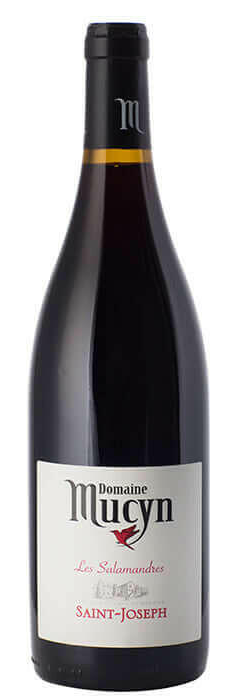
Domaine Mucyn - Saint-Joseph Les Salamandres 2023
A dense, peppery organic Saint-Joseph, with black fruit and violet, structured by fine tannins.

E. Guigal - Côte-Rôtie La Landonne
The most massive of Guigal's "La Las": a pure Syrah from the Côte Brune, built for very long ageing.

E. Guigal - Côte-Rôtie La Mouline
Guigal's silkiest Côte-Rôtie, born of hundred-year-old vines in an amphitheatre on the Côte Blonde.

E. Guigal - Côte-Rôtie La Turque
Between Côte Brune power and Côte Blonde grace, Guigal's spicy and elegant Côte-Rôtie.
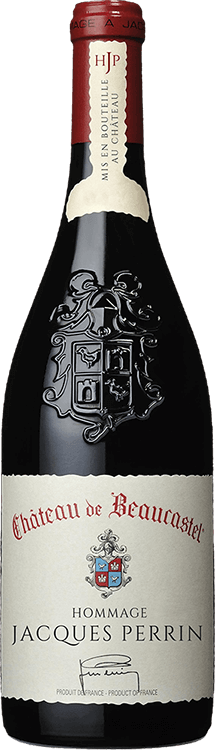
Château de Beaucastel - Hommage à Jacques Perrin
Beaucastel's cult cuvée, dominated by old-vine Mourvèdre and produced only in great vintages.

Domaine Les Sibu - Vacqueyras 2024
An organic Vacqueyras with hints of garrigue and pepper, full and structured, with surprising freshness.

Domaine Les Sibu - Gigondas 2023
An organic Gigondas from old vines, ample and firmly structured, between ripe fruit, black olive and liquorice.

Domaine de Longue-Toque - Cairanne 2020
A generous Cairanne from the Garrigues sector, between Burlat cherry, vanilla and white pepper.
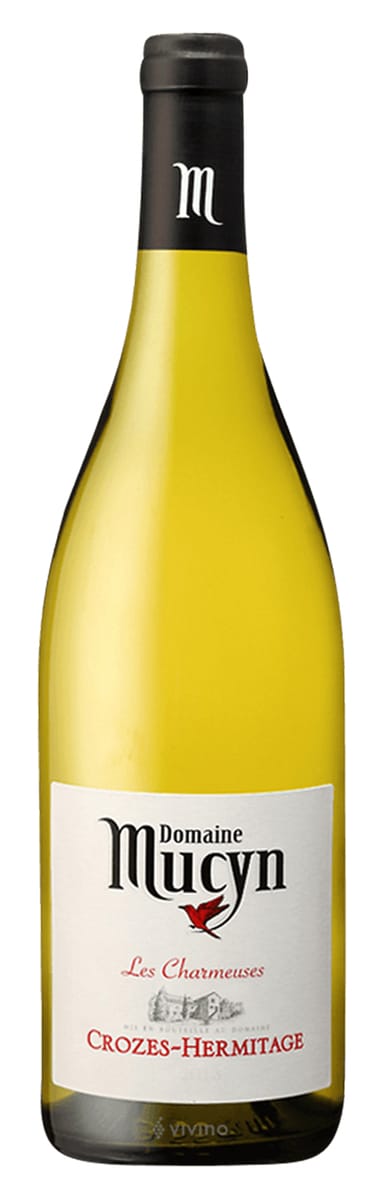
Domaine Mucyn - Crozes-Hermitage Les Charmeuses 2023
An organic white Crozes-Hermitage, floral and rich, between hawthorn, apricot and toasted dried fruit.

Domaine Mucyn - Crozes-Hermitage Les Entrecoeurs 2023
An organic Syrah from old vines, aged in tank for purity of fruit: juicy, peppery and mineral.

Château d'Aigueville - Côtes du Rhône 2023
An organic white Côtes-du-Rhône from the Massif d'Uchaux, fresh, taut and mineral, with notes of apricot and lime.
North and south, appellation by appellation
The north lines up its crus on slopes of granite, gneiss and schist, with Syrah as the only red grape variety. The south opens out into terraces of pebbles, limestone and sand, where Grenache is blended with Syrah and Mourvèdre.
| Denomination | Location and recognition | Soils and grape varieties | To taste |
|---|---|---|---|
| Côte-Rôtie | North, right bank, around Ampuis. AOC in 1940, 342 ha, vines between 180 and 325 m | Mica schist in the north, gneiss in the south. Syrah, with up to 20% Viognier | La Turque 2018E. Guigal, €526.00 a bottle |
| Saint-Joseph | North, right bank, over around 50 km. AOC in 1956, 1,504 ha | Mostly granite, soft gneiss in the south. Syrah for reds, Marsanne and Roussanne for whites | Les Salamandres 2023Domaine Mucyn, €34.80 a bottle, sold singly |
| Crozes-Hermitage | North, left bank, around Tain-l'Hermitage. AOC in 1937, extended in 1952, 2,139 ha | Galets roulés and red clay, loess over granite. Syrah for reds, Marsanne and Roussanne for whites | Les Entrecoeurs 2023Domaine Mucyn, €27.60 a bottle, by the case of 6 |
| Châteauneuf-du-Pape | South, five communes in the Vaucluse. AOC by decree of 15 May 1936 | Galets roulés mixed with red clay, sand and sandstone. Grenache, Mourvèdre, Syrah and supporting varieties | Hommage à Jacques PerrinChâteau de Beaucastel, from €466.00 a bottle (2016) |
| Gigondas | South, at the foot of the Dentelles de Montmirail. Cru in 1971, 1,184 ha | Limestone, marl, sand and red clay terraces. Grenache Noir, Syrah, Mourvèdre; Clairette for whites | Gigondas 2023Domaine Les Sibu, €27.00 a bottle, by the case of 6 |
| Vacqueyras | South, communes of Vacqueyras and Sarrians. Cru in 1990, 1,421 ha | Terraces of sandy clay and pebbles. Grenache Noir, Syrah, Mourvèdre | Vacqueyras 2024Domaine Les Sibu, €21.00 a bottle, by the case of 6 |
| Cairanne | South, northern Vaucluse. Cru since 29 June 2016, 886 ha | Terraces of the Aygues, limestone slopes, stony garrigue. Grenache, Syrah, Mourvèdre | Cairanne 2020Domaine de Longue-Toque, €19.60 a bottle, by the case of 6 |
| Côtes du Rhône | Regional appellation, on both sides of the river, 26,777 ha | Varied soils, from calcareous sandstone to pebbles. Grenache and Syrah for reds; Clairette, Viognier, Roussanne for whites | Côtes du Rhône 2023Château d'Aigueville, white, €11.60 a bottle, by the case of 6 |
Areas in production in 2025, figures from the trade body. Grenache Noir (32,379 ha) and Syrah (22,189 ha) are the two leading grape varieties in the vineyard.
Ageing, food and budget by style of wine
Once you have placed the appellation, it remains to choose according to the occasion: a white to open within the year, a Syrah for the next five winters or a cellar bottle to wait ten years for.
| Style | Ageing | Dinner's ready | Buying pointer |
|---|---|---|---|
| Southern white, Clairette and Viognier, aged in concrete tank | 1 to 5 years | Grilled fish, olive oil cookingSee white fish pairings | Côtes du Rhône 2023Château d'Aigueville, €11.60 a bottle, by the case of 6 |
| Northern white, Marsanne and Roussanne | 1 to 5 years | Poultry in a cream sauce, vealSee white meat pairings | Les Charmeuses 2023Crozes-Hermitage, Domaine Mucyn, €27.60 a bottle, by the case of 6 |
| White Gigondas, mostly Clairette, aged in demi-muids | 5 to 10 years | Fish in sauce, mature cheesesSee pressed cheese pairings | Les Vignes Blanches 2023Domaine de Longue-Toque, €33.90 a bottle, sold singly |
| Northern Syrah, from the slopes | 5 to 10 years | Grilled cut of beef, duck breastSee beef pairings | Les Salamandres 2023Saint-Joseph, Domaine Mucyn, €34.80 a bottle, sold singly |
| Southern blend dominated by Grenache | 5 to 10 years | Leg of lamb with herbs, Provençal daubeSee lamb pairings | Vacqueyras 2024Domaine Les Sibu, €21.00 a bottle, by the case of 6 |
| Single-plot Côte-Rôtie, 40 months in new barrels | 10 years and more | Feathered game, hare, black truffleSee game pairings | La Landonne 2018E. Guigal, €511.00 a bottle |
| Châteauneuf-du-Pape dominated by Mourvèdre | 10 years and more | Civet, long-braised beef, cooking with mild spices | Hommage à Jacques PerrinChâteau de Beaucastel, from €466.00 a bottle (2016), from €744.00 a magnum |
Serve the reds between 16 and 18 °C and the whites at around 11 to 13 °C. A young Syrah from the north benefits from an hour in the decanter.
A bottle for every mood
Start from the occasion or the budget, and the bottle follows.
The everyday white
Clairette, Viognier, Grenache Blanc and Bourboulenc from the Massif d'Uchaux, organic, aged in concrete tank: apricot, lime, a fresh, mineral finish.
Côtes du Rhône 2023, Château d'Aigueville, €11.60 a bottle, by the case of 6A southern cru at a gentle price
Grenache, Mourvèdre and Syrah from the Garrigues sector, aged for eleven months, eight of them in oak casks: Burlat cherry, white pepper, rounded tannins.
Cairanne 2020, Domaine de Longue-Toque, €19.60 a bottle, by the case of 6Northern Syrah to start with
Organic vines more than 40 years old, destemmed grapes, ageing in stainless-steel tank: a juicy Syrah, between blackberry, black olive and pepper.
Crozes-Hermitage Les Entrecoeurs 2023, Domaine Mucyn, €27.60 a bottle, by the case of 6A pure Roussanne from the slopes
Organic white Saint-Joseph, from granite terraces on the right bank: yellow peach, lime blossom, a clean palate and a saline finish.
Saint-Joseph Les Carats 2024, Domaine Mucyn, €33.90 a bottle, sold singlyA Côte-Rôtie for the cellar
Vines around a hundred years old in an amphitheatre on the Côte Blonde, Syrah interplanted with Viognier, 40 months in new barrels: raspberry, violet, a silky feel.
Côte-Rôtie La Mouline 2018, E. Guigal, €586.00 a bottleA Châteauneuf in large format
Old organic Mourvèdre vines on galets roulés, aged in foudre. Several vintages, from 2005 to 2021, in bottle, magnum, jéroboam or impériale.
Hommage à Jacques Perrin, Château de Beaucastel, from €466.00 a bottle (2016), from €744.00 a magnumSyrah in other climates
The grape of the northern slopes, to compare with its versions from Australia, South Africa or the Americas, brought together in a single section.
Grenache, the grape of the south
From the Vaucluse to Spain, where it is called Garnacha: all our bottles of Grenache, to take Gigondas, Vacqueyras and Cairanne further.
Regional, villages, crus: the Rhône pyramid
The hierarchy of appellations reads like a pyramid with four levels. At the base, the regional Côtes du Rhône appellation covers 26,777 hectares in production in 2025, on both sides of the river. Above it, Côtes du Rhône Villages (8,019 hectares) follows stricter production rules. Among these, 21 named villages are entitled to add their geographical name to the label: this is the third level, the one where a terroir begins to put its signature on the wine.
At the top, the 18 crus carry their place name alone, eight in the north and ten in the south. A village gets there after a long journey: Gigondas led the way in 1971, Vacqueyras followed in 1990, Cairanne in 2016. The cru guarantees an origin and a set of rules; the winemaker does the rest. A carefully made Côtes du Rhône from the slopes, such as the white from Domaine de Fontbonau, grown at 350 metres altitude and aged in amphorae and foudres, shows that a modest level can carry real ambition. So read the appellation to place the style, then the estate to choose the bottle.
Viognier in the Syrah
In Côte-Rôtie, the rules allow up to 20% Viognier, a white grape variety, vinified with the Syrah. Three plots from E. Guigal show the range: La Mouline, on the pale gneiss of the Côte Blonde, has 11%; La Turque, on the Côte Brune, 7%; La Landonne, on schist rich in iron oxides, is a pure Syrah. All three spend 40 months in new oak barrels. Viognier brings floral perfume and roundness; Syrah alone brings power.
The Wine Wanderer Team
What we are asked about the Rhône Valley
What is the difference between the northern Rhône and the southern Rhône?
The north grows Syrah, the only red grape, on slopes of granite, gneiss and schist, in a temperate climate: peppery, taut wines with fine tannins. The south blends Grenache, Syrah and Mourvèdre on galets roulés (rounded pebbles), limestone and sand, in a Mediterranean climate swept by the mistral: generous wines with notes of garrigue. The northern crus cover 4,631 hectares, out of the vineyard's 60,223.
What are the appellations of the Rhône Valley?
The vineyard has four levels: Côtes du Rhône, Côtes du Rhône Villages, Villages with a geographical name, then 18 crus. In the north: Côte-Rôtie, Condrieu, Château-Grillet, Saint-Joseph, Crozes-Hermitage, Hermitage, Cornas and Saint-Péray. In the south: Châteauneuf-du-Pape, Gigondas, Vacqueyras, Cairanne, Rasteau, Vinsobres, Beaumes-de-Venise, Lirac, Tavel and Laudun. Neighbouring appellations complete the map, such as Ventoux, Luberon or Costières de Nîmes. To compare with other regions, see the French wines section.
Which Rhône Valley wine should I start with?
Start with one wine from each side. In the south, the Cairanne 2020 from Domaine de Longue-Toque (€19.60 a bottle, by the case of 6) or the Vacqueyras 2024 from Domaine Les Sibu (€21.00 a bottle, by the case of 6) show Grenache in a blend. In the north, the Crozes-Hermitage Les Entrecoeurs 2023 from Domaine Mucyn (€27.60 a bottle, by the case of 6) gives a pure Syrah, aged in tank, with clean, peppery fruit.
What is the best Côte-Rôtie?
It all depends on the style you are looking for, because the appellation has two faces. The Côte Blonde gives perfumed, silky wines: La Mouline 2018 from E. Guigal, €586.00 a bottle. The Côte Brune gives dense wines built for the cellar: La Landonne 2018, pure Syrah, €511.00 a bottle. La Turque 2018, €526.00 a bottle, has something of both. These three plots, nicknamed the “La La” wines, are among the benchmarks of the appellation.
Côte Brune or Côte Blonde: what is the difference?
They are the two historic slopes of Côte-Rôtie, in Ampuis. The Côte Brune, to the north, lies on mica schist and dark clays rich in iron oxides: Syrah gains power and firm tannins there. The Côte Blonde, to the south, lies on gneiss with pale, siliceous soils: the wines gain in finesse there, all the more so as Viognier is often interplanted with the Syrah.
How long should you keep a Rhône Valley wine?
From one to more than ten years, depending on the level. The whites from Côtes du Rhône, Crozes-Hermitage and Saint-Joseph are for drinking within five years. The reds from Crozes-Hermitage, Saint-Joseph, Cairanne, Vacqueyras and Gigondas open up between five and ten years, as does white Gigondas. Single-plot Côte-Rôtie and the great cuvées of Châteauneuf-du-Pape need ten years in the cellar and more, with the bottle lying down, away from light.
What food goes with a Côte-Rôtie or a northern Syrah?
Northern Syrah likes red meat and smoky flavours. A young Crozes-Hermitage or Saint-Joseph goes with a grilled cut of beef, a duck breast or a terrine. A ten-year-old Côte-Rôtie, with notes of violet, smoked bacon and pepper, calls for game birds, hare or a black truffle dish. Serve it between 16 and 18 °C, after an hour in the decanter for a recent vintage.
What food goes with a Gigondas, a Vacqueyras or a Châteauneuf-du-Pape?
The southern blends go with slow-cooked dishes and garrigue herbs. A Vacqueyras or a Cairanne suits a leg of lamb with herbs, lamb chops or a Provençal daube. A Gigondas with a few years of age stands up to braised beef or a mature cheese. A great cuvée of Châteauneuf-du-Pape dominated by Mourvèdre, spicier and gamier, is best kept for a civet or a long-cooked dish.
Does the Rhône Valley produce white wines?
Yes, whites account for around 13% of 2025 volumes. In the north, Marsanne and Roussanne give full-bodied wines, such as the Saint-Joseph Les Carats 2024 from Domaine Mucyn (€33.90 a bottle). In the south, Clairette, Grenache Blanc, Bourboulenc and Viognier dominate. Gigondas has produced white wine since the 2023 vintage, with at least 70% Clairette: Les Vignes Blanches 2023 from Domaine de Longue-Toque is one of them, at €33.90 a bottle.
Which grape varieties go into a Châteauneuf-du-Pape?
The appellation, recognised by decree on 15 May 1936, permits thirteen traditional grape varieties, eighteen counting their colour variants. Grenache Noir most often dominates, with Syrah and Mourvèdre. Some estates reverse the proportion: Hommage à Jacques Perrin, from Château de Beaucastel, blends 60% Mourvèdre, 20% Grenache and 20% Syrah, from old vines on galets roulés (rounded pebbles), aged for around a year in oak foudres.
Why are some wines sold by the case of 6?
Several growers' wines ship by the case of 6 bottles of 75 cl, and we always show the price per bottle. The white Côtes du Rhône from Château d'Aigueville works out at €11.60 a bottle, the Gigondas 2023 from Domaine Les Sibu at €27.00, the Côtes du Rhône Blanc 2023 from Domaine de Fontbonau at €33.80. The two Saint-Joseph wines from Domaine Mucyn and the great cuvées are bought singly. The format is shown on each product page.
Where can I buy a Côte-Rôtie or a Châteauneuf-du-Pape for ageing, including in magnum?
Right here, singly. The three single-plot Côte-Rôtie wines from E. Guigal are offered in the 2018 vintage, from €511.00 to €586.00 a bottle. Hommage à Jacques Perrin, from Château de Beaucastel, is available in several vintages, from 2005 to 2021: from €466.00 a bottle (2016), from €744.00 a magnum, and also in 3-litre jéroboam and 6-litre impériale. Each bottle travels secured in reinforced packaging.