
Armenian wines: the oldest vineyard in the world
4 Armenian wine in the cellar, Areni Noir aged in karas jarsThe oldest known winery lies asleep in a cave of the Caucasus, at Areni: a carved press, vats hollowed straight into the ground and grape pips dated to around six thousand years old, brought to light in 2007. The country that shelters it still grows the vine on its volcanic plateaux, between 1,000 and 1,700 metres of altitude.
Here you will find what you need to understand this vineyard before tasting it: Areni Noir, a high-altitude red of cherry and pepper, the whites of Voskehat and Kangun, and the karas, that buried clay jar where the wine has rested since the Bronze Age.

Zorah - Karasi 2022
A unique and complex wine aged in Armenian amphora with spices and black fruits.

Gevorkian - Amphora red 2021
A round and silky red wine, refined by traditional Armenian aging in amphorae

Arewine - Karmir Rouge 2022
Ripe cherry, vanilla and sweet spice, a barrel-aged Armenian red that embraces its depth.
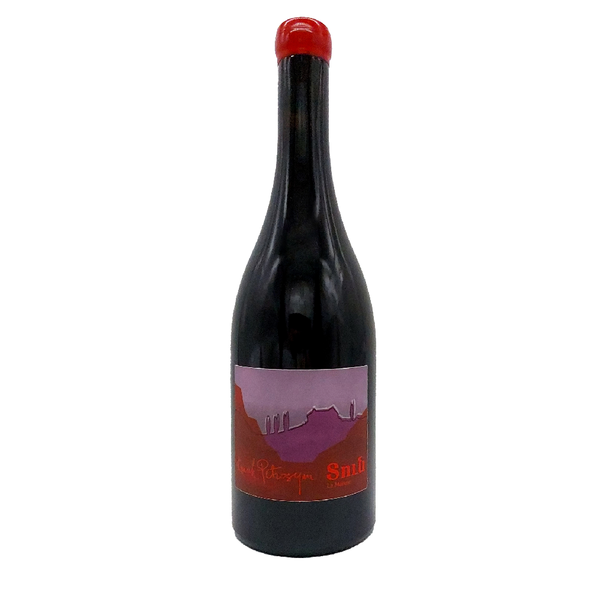
Arewine - Toun Rouge 2021
Blackcurrant, dark chocolate and dry stone: an Armenian red built on tannins made for ageing.
Where Armenian vines grow
The vineyard sits on high volcanic plateaus, squeezed between Mount Aragats and the Iranian border. Altitude plays the role of a cool climate there: scorching days, cold nights, and grapes that ripen slowly while keeping their acidity.
| Region | Altitude and soils | Grape varieties | The style |
|---|---|---|---|
| Vayots Dzor South-east of the country, around the village of Areni | 1,400 to 1,700 m, volcanic tuff and limestone | Areni NoirThe grape variety's section | A fine, fresh red, cherry, pomegranate, white pepper |
| Aragatsotn Southern slopes of Mount Aragats | 1,000 to 1,600 m, basalt and pumice | Voskehat, Kangun, Areni Noir | Straight, salty whites, slender reds |
| Armavir and the Ararat plain Araks valley, at the foot of the volcano | 800 to 1,100 m, alluvium and sands | Kangun, Rkatsiteli, Haghtanak | Riper, rounder wines, the historic home of brandy |
| Tavush North-east, wooded and humid valleys | 700 to 1,100 m, brown forest soils | Local varieties, whites for the most part | Supple, fruity style, small family productions |
| Syunik The far south, gorges and terraces | 900 to 1,500 m, schists and volcanic scree | Areni Noir, Khndoghni | Dense, spicy reds, plots of old vines |
The beating heart is still Vayots Dzor, where the Areni-1 cave yielded its Neolithic cellar and where the finest Areni Noir grows. The vines there are often ungrafted: phylloxera stopped far lower down, in the plains.
The Armenian grape varieties and their reference points
The country counts several hundred varieties, only a handful of which travel beyond its borders. Here are the names you will read on the labels, each with a familiar reference point to place it by taste.
| Grape variety | Colour | The familiar reference | In the glass |
|---|---|---|---|
| Areni NoirThe grape variety's section | Red | Between a cool-climate Pinot Noir and a lighter Nebbiolo | Cherry, pomegranate, pepper, fine tannin, lively acidity |
| Voskehat | White | The king of the country's whites, in the spirit of a dry Chenin | Apple, quince, acacia, a broad, salty palate |
| Kangun | White | A cross born in the Soviet era, in the register of a Pinot Blanc | Pear, white flowers, a light, refreshing finish |
| Khndoghni Also called Sireni | Red | Thick skin and dense colour, like a Carignan from the south of France | Blackberry, liquorice, sweet spices, compact texture |
| Haghtanak | Red | A modern, deeply coloured cross, close to an Alicante | Black fruit, firm tannin, used mainly in blends |
| Milagh | Red | A rare variety from the south, kept alive by a handful of winemakers | Tangy red fruit, light body, a supporting role to Areni |
Voskehat and Kangun hold the whites, Areni Noir signs the reds and also gives pale rosés. Vinified with its skins, Voskehat joins the family of orange wines, a practice the karas established here thousands of years ago.
Where to start with this vineyard
One bottle to open, and the neighbouring ranges to follow the trail further.
Taste Areni Noir aged in jars
Long maceration in concrete tanks, then twelve months in buried karas. Black fruit, spices and a powdery tannin that is the hallmark of the Vayots Dzor style.
Zorah Karasi 2022 · €33.90 per bottle, by the case of 6Follow the country's king grape
The red grape of Armenia, never grafted and adapted over millennia to high altitudes. The grape variety page sets out its styles and its pairings.
Areni Noir sectionRediscovering the taste of the jars
Maceration of the white grapes on their skins, the very method of the Armenian karas. Amber, tannic whites, built for the table.
Orange wines sectionThe region's other ancient vineyard
Assyrtiko from Santorini, Xinomavro from Naoussa: Greece shares with Armenia both endemic varieties and a winegrowing history that reaches very far back.
Section · Greek winesCarry on with rare grape varieties
Furmint, Hárslevelű, Kékfrankos: Hungary too grows varieties of its own, from the taut dry wines of Tokaj to the light, peppery reds of the north.
Wines of Hungary sectionReds to serve cool
Areni belongs to that family of light reds, fine tannin and lively acidity, that you give a quarter of an hour somewhere cool before opening.
Section · Light red wineExplore the rare vineyards
The origins you rarely meet on a shelf, unexpected grape varieties and high-altitude vines, gathered in one range to browse at random.
Wines of the world section
The karas, ancestor of the amphorae back in fashion
A karas is a clay jar of several hundred litres, buried up to its neck in the floor of the cellar. The earth holds the temperature steady, the ovoid shape keeps the wine moving slowly on its lees, and the porosity of the clay lets in just the right amount of air. The method is attested in Armenia since the Bronze Age, long before the barrel.
Neighbouring Georgia answers with the qvevri, Spain with the tinaja, Rome with the dolium. Everything that so-called natural winemaking has been rediscovering for twenty years, from long macerations to orange wines, passes through these vessels. An Areni aged in karas keeps a straight fruit and a powdery tannin, very recognisable in the glass.
How do you choose
We taste every cuvée before listing it, and this vineyard calls for patience: volumes stay small and deliveries arrive in dribs and drabs. Two points decide it for us. Freshness first, because the altitude has to be heard in the glass, as acidity and clear fruit. Then the hand of the oak, which we prefer discreet: Areni deserves to be listened to.
The Wine Wanderer Team
What you ask us about the wines of Armenia
Why is it called the oldest vineyard in the world?
In 2007, archaeologists excavated the Areni-1 cave, in Vayots Dzor. They found a clay press, a vat hollowed into the ground, cups and thousands of pips of domesticated grapes. The whole set was dated to around six thousand years old, which makes it the oldest winemaking facility ever identified.
What is a karas?
A clay jar of several hundred litres, buried up to its neck in the floor of the cellar. The wine ferments or ages there at a steady temperature, against a slightly porous wall that lets a breath of air filter through. The word gives its name to the Karasi cuvée, literally coming from a jar.
What does Areni Noir taste like?
A red lighter than you would imagine, built on cherry, pomegranate and a touch of white pepper. The tannin stays fine, the acidity lively, and the finish keeps a trace of warm stone that comes from the volcanic soils. Serve it at around 16 °C: it gains a great deal from being chilled before the meal.
What are the white grape varieties of the country?
Voskehat takes the lead role, often called the king of Armenian whites: apple, quince, acacia blossom and a broad palate held by salt. Kangun, a cross developed in the Soviet era, gives lighter, more thirst-quenching whites. Both take very well to skin maceration.
What does an ungrafted vine mean?
A vine planted on its own roots, grown as it is without being grafted onto American rootstock. Phylloxera, which ravaged Europe in the nineteenth century, stopped at the foot of these high plateaus. Many Armenian plots are therefore thirty to sixty years old on their original roots, which remains extremely rare worldwide.
Why does altitude matter so much here?
The vines grow between 1,000 and 1,700 metres, on volcanic soils. At that height the sun beats down by day and the temperature drops at night. The grapes then ripen slowly, keep their acidity and develop precise aromas. That is what gives these reds their freshness, despite an often generous alcohol level.
Are these bottles sold individually or by the case?
It depends on the packaging each estate uses. The cuvée available online, the Zorah Karasi 2022, is ordered by the case of six, at €33.90 a bottle. The price shown is always the price per bottle, with the sales format given right beside it on the wine's page.
Which dishes go with an Armenian wine?
The cooking of the country gives the answer: lamb skewers, smoked aubergines, dolma, pilaf with dried apricots. Beyond that repertoire, Areni Noir goes very well with duck and fruit, a tagine or grilled meats with herbs. Voskehat whites succeed on oily fish and sheep's cheeses.
Why does this vineyard remain so little known?
During the Soviet period Armenia was given over to brandy, while neighbouring Georgia kept the wine. The vines went on growing, but table wine production stayed local. The revival starts in the two thousands, carried by a handful of estates that have returned to the native grape varieties.
Which bottle should I start with?
With an Areni Noir aged in karas: it is the most direct shortcut to what this country does that is truly its own, a fresh high-altitude red marked by clay. Allow €33.90 a bottle for the Zorah Karasi. The Areni Noir page then takes the discovery further.