
Creation: six grape varieties on a single Upper Hemel-en-Aarde slope
8 cuvées, from €19.90 to €119.80Creation was founded in the early 2000s by Jean-Claude and Carolyn Martin, he a Swiss winemaker who settled in the Cape. The estate is located in the Upper Hemel-en-Aarde Valley, the upper part of the valley: altitude, a cool climate, and ripening that takes its time. The house has become known for its work on food and wine pairings, to the point that tastings there are built around the plate.
What is striking about the range is its breadth. Pinot Noir, Chardonnay, Chenin, Viognier, a Sauvignon-Sémillon blend: few Cape estates cover so many registers from a single terroir, and Viognier remains a rarity on a national scale. Eight cuvées, three price levels, one address. The tables below first give the range and its prices, then what each grape variety gives in the glass and at the table.

Creation - Pinot Noir 2024
Cool-climate Pinot Noir, cherry and raspberry on a silky texture.

Creation - Viognier 2024
Cool-climate Viognier, apricot and white flowers on an unctuous palate.

Creation - Chenin Blanc Cool Climate 2022
A Chenin produced on the cool soils of the east coast of the Cape

Creation - Sauvignon Blanc Semillon 2024
Sauvignon and Sémillon blended in Hemel-en-Aarde, lively with citrus and creamy from the lees.
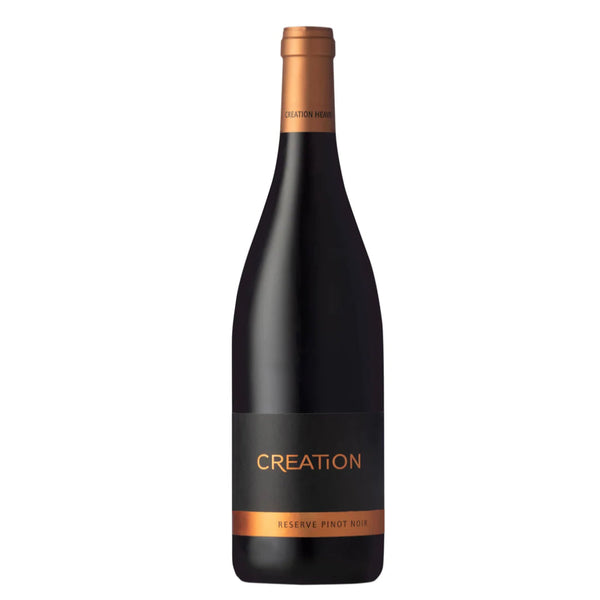
Creation - Pinot Noir Reserve 2021
A selection of the estate's best vines: ripe black fruit and fine minerality.

Creation - Chardonnay Reserve 2021
A selection of the best plots in Hemel-en-Aarde: toasted oak, almond and freshness.

Creation - Chardonnay 2020
Chardonnay from Hemel-en-Aarde, green apple and brioche carried by a fine minerality.
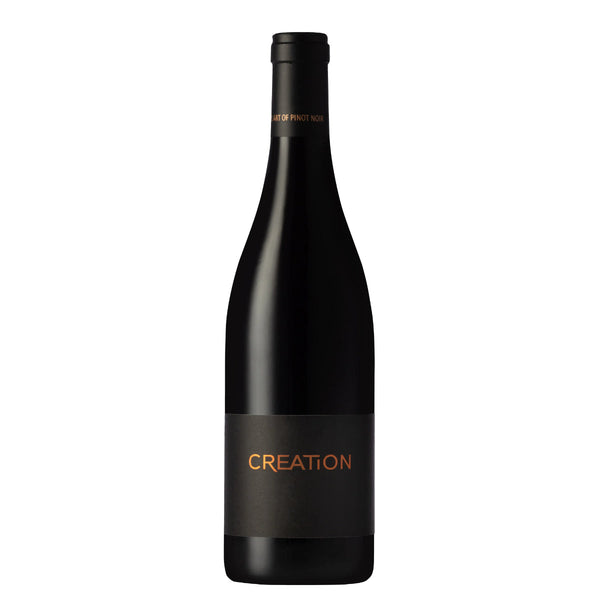
Creation - The Art Of Pinot Noir 2022
The estate's flagship Pinot Noir cuvée, ripe cherry, violet and a discreet smokiness.
Which bottle to start the range with
Eight cuvées, from the Viognier at €19.90 to the great Pinot Noir. You can come in at any tier: the house style, precise and fresh, shows from the very first bottle.
Viognier, a rarity at the Cape
White flowers, apricot, peach, sweet spices. A smooth texture held together by the freshness of altitude. It is the estate's most affordable wine.
Viognier 2022 · €19.90The white for meals
Sauvignon Blanc and Sémillon blended, aged on fine lees. Citrus and white-fleshed fruit, buttery roundness, a mineral edge.
Sauvignon Blanc Sémillon 2024 · €21Understanding the valley's Chardonnay
Green apple, lemon, peach, vanilla and brioche. Barrel ageing gives roundness, the cool climate keeps the acidity.
Chardonnay 2020 · €25.90A cool-climate Chenin
Green apple, pear, white flowers, citrus and honey. Lively acidity and minerality: a take on Chenin far removed from the sun-drenched versions.
Chenin Blanc Cool Climate 2022 · €27.90The house Pinot Noir
Cherry, raspberry, forest floor, sweet spices, vanilla and smoke from the barrel. Silky tannins, balanced acidity. The grape on which the estate was built.
Pinot Noir 2022 · €30.40A step up in white
A selection of the best plots, ageing marked by toasted oak. White-fleshed fruit, citrus, almond, fine minerality.
Chardonnay Reserve 2021 · €52A step up in red
Ripe black and red fruit, floral and spicy touches, vanilla and tobacco. Elegant structure and long finish, built for ageing.
Pinot Noir Reserve 2021 · €56The estate's pinnacle
A meticulous selection of the best Pinot Noir grapes. Cherry, raspberry, violet, forest floor, spices, well-integrated oak. Fine tannins, lingering finish.
The Art Of Pinot Noir 2020 · €119.80
The catalogue reads in three tiers
Two entry-level wines under €21, three core-range cuvées between €25.90 and €30.40, two Reserves at around €52 and €56, then The Art Of Pinot Noir. The hierarchy is clear, and it comes down to grape selection and ambition in the ageing.
| Vintage | Tier | The wine | Price |
|---|---|---|---|
| The Art Of Pinot Noir2020 | The pinnacle | Red. A selection of the estate's best Pinot Noir grapes, carefully aged in oak barrels. Fine tannins, integrated acidity, lingering finish. | €119.80 |
| Pinot Noir Reserve2021 | The Reserves | Red. A selection of the best vines, carefully aged in barrel. Elegant structure, fine tannins, vibrant acidity, strong ageing potential. | €56 |
| Chardonnay Reserve2021 | The Reserves | White. Grapes from the best plots, ageing marked by toasted oak. Round on the palate, lingering finish, ages well. | €52 |
| Pinot Noir2022 | The core of the range | Red. Aged in oak barrels. Silky tannins and balanced acidity, bringing freshness and length without weighing down the texture. | €30.40 |
| Chenin Blanc Cool Climate2022 | The core of the range | White. Cool-climate vines. A balance between lively acidity and aromatic richness, with the minerality that altitude brings. | €27.90 |
| Chardonnay2020 | The core of the range | White. Aged in oak barrels for roundness and complexity, with natural freshness preserved. Long, flavoursome finish. | €25.90 |
| Sauvignon Blanc Sémillon2024 | The entry-level wines | White. A blend from the estate's best plots, aged on fine lees. Good acidity, silky texture, expressive finish. | €21 |
| Viognier2022 | The entry-level wines | White. Careful winemaking to preserve the floral character, careful ageing for texture. Rich and unctuous, held together by freshness. | €19.90 |
Pinot Noir takes three of the eight rows, at €30.40, €56 and €119.80. It is the estate's common thread, and the best way to measure what a stricter selection in the vineyard changes.
Nose and plate, cuvée by cuvée
Creation builds its reputation on food pairings. This table takes the range the other way, from least to most expensive, and gives for each bottle the grape variety, what you find on the nose, and the dish the estate points it towards.
| Vintage | Grape variety | On the nose | Dinner's ready |
|---|---|---|---|
| Viognier2022 | Viognier | White flowers, apricot, peach, sweet spices. An intense nose, smooth palate and long finish. | Mild curry, seafood in a creamy sauce, soft cheeses. |
| Sauvignon Blanc Sémillon2024 | Sauvignon Blanc and Sémillon | Citrus and white-fleshed fruit, white flowers, a buttery nuance, creamy lees notes and a mineral edge. | Seafood, grilled fish, mixed salads. |
| Chardonnay2020 | Chardonnay | Green apple, lemon, peach, with touches of vanilla and brioche and a hint of minerality. | Fish in cream sauce, roast poultry, warm seafood. |
| Chenin Blanc Cool Climate2022 | Chenin | Green apple, pear, white flowers, with hints of citrus and honey and a clean minerality. | Grilled fish, poultry, fresh goat's cheeses. |
| Pinot Noir2022 | Pinot Noir | Cherry, raspberry, forest floor, sweet spices and a mineral touch, with vanilla and smoke from the barrel. | Roast duck, mushroom dishes, soft cheeses. |
| Chardonnay Reserve2021 | Chardonnay | White-fleshed fruit, citrus, floral nuances, toasted oak, vanilla and almond over a mineral background. | Grilled spiny lobster, fish in rich sauce, aged cheeses. |
| Pinot Noir Reserve2021 | Pinot Noir | Ripe black and red fruit, floral and spicy touches, fine minerality, vanilla and tobacco. | Game birds, truffle dishes, aged cheeses. |
| The Art Of Pinot Noir2020 | Pinot Noir | Ripe cherry and raspberry, violet, forest floor, spices, with delicate touches of vanilla and smoke. | Roast duck, game birds, fine meats in sauce. |
Six varieties in all, including a Viognier that few Cape estates work with. All come from the same hillside: the differences in profile come from the grape variety and the ageing, not from a change of terroir.
A single slope, six varieties, no dispersion
The usual rule is that an estate focuses on two or three grape varieties and drops the rest. Creation does the opposite and gets away with it, because the common factor is not the variety but the place: the upper part of Hemel-en-Aarde, at altitude, with a long ripening cycle. This freshness benefits Chenin as much as Viognier, Sauvignon as much as Pinot Noir.
The real test lies at the bottom of the range. An estate is judged by its entry-level wine, not by its prestige cuvée. At €19.90 and €21, the two whites stand tall, with precision and length. That is what makes everything above them credible, right up to The Art Of Pinot Noir.
What altitude changes
Slower ripening. The grapes take longer to ripen, and the aromas develop without the sugar running away. Hence fresh wines in a hot country.
Acidity that cannot be added back. It is naturally present, which explains how well the whites hold up both in the cellar and at the table.
A clear-cut Viognier. Elsewhere, the grape quickly turns opulent. Here it keeps its floral character and its apricot without becoming heavy, and it is one of the few in the Cape.
The Wine Wanderer Team
What we are asked about the Creation estate
Where is the Creation estate?
In the Upper Hemel-en-Aarde Valley, the highest and coolest part of the Hemel-en-Aarde valley, south of Cape Town in South Africa. Altitude and the cool climate lengthen the ripening period there. The other bottles from this area are grouped in our Hemel-en-Aarde range.
Who founded Creation?
Jean-Claude and Carolyn Martin, in the early 2000s. Jean-Claude Martin is a Swiss winemaker who settled in the Cape. The estate then made a name for itself with food and wine pairings, building its tastings around the plate rather than the glass alone.
How does the estate's range work?
On three levels. The entry-level wines, Viognier at €19.90 and a Sauvignon-Sémillon blend at €21. The core range, Chardonnay at €25.90, Chenin at €27.90 and Pinot Noir at €30.40. Then the two Reserves, Chardonnay at €52 and Pinot Noir at €56, and finally The Art Of Pinot Noir at €119.80.
Which bottle should I start with?
With the Viognier at €19.90 if you are looking for an aromatic white, or the Sauvignon Blanc Sémillon at €21 if you want it drier and livelier. In red, the Pinot Noir at €30.40 gives the house style without going as far as the Reserves.
Why a Viognier in South Africa?
Because it is rare, and because the place lends itself to it. Few Cape houses work with this grape variety. In a cool, high-altitude climate, it keeps its white flowers, apricot and peach without tipping into the heavy opulence it is often criticised for. At €19.90, it is also the estate's cheapest way in.
What is the difference between the Pinot Noir and its Reserve version?
Selection and ageing. The Pinot Noir at €30.40 plays on silky tannins and immediate balance. The Pinot Noir Reserve at €56 comes from a selection of the best vines, with longer barrel ageing that brings notes of vanilla and tobacco, a denser structure and markedly greater ageing potential.
What is The Art Of Pinot Noir?
The estate's top cuvée, at €119.80. It comes from a meticulous selection of the best Pinot Noir grapes from the hillside, with precise barrel ageing. Cherry, raspberry, violet, forest floor, spices, fine tannins and integrated acidity. It is the wine with which the house measures itself against the benchmarks of the grape variety.
Is this Chenin similar to a Loire Chenin?
It shares their profile, lively acidity and apple and pear fruit, with a minerality shaped by the cool climate. The difference lies in the Cape sun, which gives a little more flesh and a hint of honey. It is a good point of comparison if you already follow our Chenin range.
Which food pairings with these wines?
The estate clearly points its cuvées in specific directions. The entry-level whites towards seafood, grilled fish and salads. The Chardonnay towards fish in cream sauce or roast poultry, the Chardonnay Reserve towards grilled lobster and mature cheeses. The Pinot Noirs towards roast duck and mushrooms, then feathered game and truffle for the Reserve. The pairing table gives the details cuvée by cuvée.
How long should these bottles be kept?
The entry-level and core-range wines can be drunk now, while still keeping for a few years in the cellar. The two Reserves and The Art Of Pinot Noir are built to develop and gain in complexity over time. Serve the whites between 10 and 12 °C, the Pinot Noirs at around 15 °C.