
Spätburgunder : le pinot noir allemand face à la Bourgogne
5 bouteilles, du rouge léger au vin de parcelle élevé en barriqueA pale red, discreet tannin, crunchy cherry and a freshness that calls for the next glass: that is probably what you are looking for when you open a bottle of pinot noir, and Germany now delivers a very convincing version of it. The country is the world’s third largest producer of the grape.
Warmer summers have changed the game. The grape now ripens fully in the south of the country, in Baden, in the Pfalz and on the slate of the Ahr. Styles run from the light red served cool to the single-plot wine aged in barrel, cut out for the cellar.

Koehler Ruprecht Saumagen - Spätburgunder Dry 2020
A delicious and nervous German Pinot Noir, with notes of forest fruits

Ziereisen - Tschuppen 2023
A beautiful expression of Pinot Noir full of elegance and flavors!
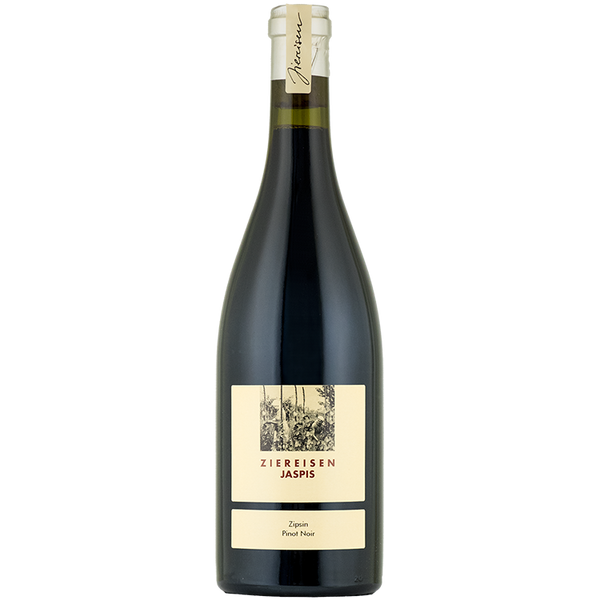
Ziereisen - Jaspis Zipsin Pinot Noir 2021
A Pinot Noir from a limestone terroir, precise and elegant, where the finesse of the fruit meets a deep and digestible structure.

Friedrich Becker - Kammerberg Spätburgunder 2018
A great Spätburgunder from limestone terroir, combining finesse, depth and aromatic precision.

Friedrich Becker - Becker Family Pinot Noir 2019
A precise and elegant Spätburgunder, where Schweigen's limestone soil imparts a finely structured red wine.
Où mûrit le pinot noir allemand
The grape occupies the south and the sheltered valleys, where the season stays long enough to bring the berry to full ripeness. Each terroir stamps its own style, from the supple, perfumed red to the firm, smoky wine.
| Région | Climat et sol | Le profil du vin | À table |
|---|---|---|---|
| Markgräflerland, sud de BadenEfringen-Kirchen, face à l'Alsace | Doux et sec, calcaire et marne | Fruit rouge précis, tanin fin, acidité droite | Volaille rôtie, champignons, charcuterie fine |
| Kaiserstuhl, Baden | Sol volcanique et loess, le coin le plus chaud du vignoble | Robe soutenue, fruit noir, texture ample | Duck breast, lamb with herbs, pork chop |
| Südpfalz, PalatinatSchweigen, à cheval sur la frontière | Calcaire actif, marne et argiles légères | Cerise, sous-bois, structure serrée et longue | Pigeon, ris de veau, morilles |
| Mittelhaardt, Palatinat | Coloured sandstone and limestone, a very mild climate | Rondeur mûre, épices douces, finale saline | Canard, porc rôti, munster jeune |
| Ahr | Ardoise et grauwacke, vallée étroite et encaissée | Fumé, poivre, tanin serré, grande fraîcheur | Gibier à plume, betterave, lentilles |
| Assmannshausen, Rheingau | Quartzite rouge, berceau historique du cépage | Style classique, tanin ferme, longue garde | Bœuf braisé, fromages affinés |
These are the same limestone soils that made the reputation of the Côte d’Or. Burgundy remains the grape’s benchmark, and Germany offers a fresher reading of it, often lighter in alcohol and more affordable.
Reference points for temperature, decanting and cellaring
These reds are better served cool, a notch below a bordeaux: their perfume opens between 13 and 16 °C. A quarter of an hour in the fridge before the meal is enough in most cases.
| Type de cuvée | Température | Aération | Garde après la récolte |
|---|---|---|---|
| Rouge léger élevé en cuve | 13 degrés | Service direct | 2 à 4 ans |
| Cuvée de domaine en fût usagé | 14 degrés | Vingt minutes d'ouverture | 4 à 8 ans |
| Parcelle calcaire élevée en barrique | 15 degrés | Une heure de carafe | 5 à 10 ans |
| Grosses Gewächs de grand lieu-dit | 16 degrés | Carafe large, une bonne heure | 10 ans et plus |
| Spätburgunder d'ardoise, style de l'Ahr | 14 degrés | Trente minutes de carafe | 5 à 12 ans |
| Weissherbst, le rosé issu du cépage | 10 degrés | Service direct | 1 à 3 ans |
Recent vintages are already a pleasure to drink, while the single-plot cuvées deserve patience. The full range, whites included, can be browsed from the wines of Germany page.
Par quelle bouteille commencer
From the midweek red to the single plot worth cellaring, here are four ways into this style and three neighbouring leads.
Commencer par un rouge de semaine
Mûre, graphite, cerise et myrtille épicées, vingt mois en fûts usagés et levures indigènes : un pinot noir droit, digeste, à servir frais.
Ziereisen Tschuppen 2023 · 21 € la bouteille, par caisse de 6A dinner red cut out for the table
Calcaire de Schweigen, à cheval sur la frontière alsacienne, malolactique et élevage en fûts de chêne : fruit précis, tanin fin, garde de cinq à dix ans.
Friedrich Becker Becker Family Spätburgunder 2019 · 32,60 € la bouteille, par caisse de 6Monter d'un cran vers le terroir
Coteaux calcaires et marneux d'Efringen-Kirchen, grappes entières et extractions douces : un pinot élancé et profond, qui tiendra dix ans en cave.
Ziereisen Jaspis Zipsin Pinot Noir 2021 · 84 € la bouteille, par lot de 2Une grande bouteille à coucher en cave
Le lieu-dit Kammerberg, posé sur la frontière franco-allemande, vinifié en cuves ouvertes et pigeages doux. Finesse, profondeur, et plus de dix ans devant lui.
Friedrich Becker Kammerberg Spätburgunder 2018 · 140 € la bouteille, à l'unitéComparing with the French benchmark
Le même cépage sur calcaire, en version bourguignonne. Mettez deux verres côte à côte, l'exercice apprend davantage qu'une longue explication.
Rayon voisin · Vins de BourgogneChercher un rouge peu tannique
The light reds in the catalogue, from every country, for summer meals, vegetable dishes and cool serving.
Rayon voisin · Vins rouges légersVoir tout le vignoble allemand
Le pilier du rayon : rieslings de Moselle, échelle de sucre expliquée et rouges du sud, réunis sur une même page.
Page du rayon · Vins d'Allemagne
Pourquoi ce rouge évoque un bourgogne
Pinot noir reached Germany in the Middle Ages, carried by the same Cistercian abbeys that planted the Côte d’Or. There it found cousin soils, limestone in the south of the Pfalz, marl in Baden, and a higher latitude that preserves acidity.
For a long time that freshness gave pale, short reds, often sweetened. Two developments changed everything: warmer summers, which bring the berry to full ripeness, and a generation of growers who had spent time in Burgundy and brought back partial destemming, native yeasts and the three-hundred-litre barrel. The result tastes like a Burgundy village wine, at a lower degree of alcohol and a more measured price.
Comment on choisit
We taste every cuvée before listing it, and with these reds we look for two things: fineness of tannin and clarity of red fruit. A pinot noir that forces extraction or new oak stays in the cloakroom, however fine the label. We give priority to ageing in used barrels, which lets the fruit speak. The rest follows the terroir.
L'équipe du Baroudeur du Vin
Ce qu'on nous demande sur le spätburgunder
Spätburgunder and pinot noir: are they the same grape?
Yes, word for word: spätburgunder means late Burgundian, and refers to exactly the pinot noir of the Côte d’Or. The German name is a reminder that the berry ripens late in the season. Some labels carry the words Pinot Noir directly, particularly at estates that export, such as Ziereisen in the south of Baden.
Pourquoi ces bouteilles partent-elles par caisse ou par lot ?
The German estates we work with ship their cuvées by full case, and we keep that format to hold the price keen. The price shown on each listing is the bottle price, with the sales format right beside it. The Kammerberg from Friedrich Becker, though, can be bought singly, at €140 a bottle.
Is a spätburgunder sweet?
Serious German reds are dry, and the label confirms it with the word Trocken. The Prädikat mentions, Kabinett, Spätlese or Auslese, describe the ripeness of the grapes at harvest, not the final taste: a Spätlese Trocken is therefore still a dry wine. Residual sugar belongs above all to the whites on the Riesling page.
Combien de temps se garde un pinot noir allemand ?
Allow two to four years for a light cuvée aged in tank, five to ten years for an estate cuvée aged in barrel, longer for a classified plot. The Becker Family and the Jaspis Zipsin hold five to ten years, the Kammerberg goes beyond a decade. Mosel rieslings live longer still.
What temperature should they be served at?
Between 13 and 16 °C depending on the density of the cuvée, a notch below a southern red. Served too warm, this grape loses its perfume and leaves the alcohol to the fore. A quarter of an hour in the fridge before the meal is enough, and the reference table gives the exact range for each style.
What is the difference from a red Burgundy?
Same grape, same family of limestone soils, but a higher latitude: the acidity stays livelier, the alcohol lower, the tannic frame finer. Red fruit dominates, the oak stays discreet, the finish gains in salinity. At comparable quality, the German price is often half as much.
Which dishes go with them?
Their light tannin and their freshness make them easy table wines: roast poultry, duck, pigeon, veal with mushrooms, fine charcuterie. The slate versions from the Ahr stand up to feathered game. On the vegetable side, think of pan-fried ceps, roast beetroot and lentils with bacon.
Faut-il carafer ces rouges ?
A light cuvée can be drunk as soon as it is opened. A single-plot wine aged in barrel gains from an hour in a decanter, which unfolds the spice and softens the frame. For an older bottle, prefer a long opening to a brutal decanting: mature pinot noir gives up its perfume gently, then holds for several hours in the glass.
Par quelle bouteille commencer ?
Start with the Tschuppen from Ziereisen, at €21 a bottle by the case of 6: straight fruit, fine tannin, the style in its most readable form. Then move on to the Becker Family, at €32.60 a bottle, to measure the depth and length that the limestone of Schweigen brings.