
Kanonkop: the range of the Cape's first growth, in three tiers
7 bottles, from €18.50 to €264Kanonkop sits on the slopes of the Simonsberg, in the Simonsberg-Stellenbosch ward, north of the town of Stellenbosch. The estate built its reputation as a Cape first growth on two wines: the Paul Sauer, a blend of Bordeaux grape varieties that is among the most decorated reds in the country, and the Black Label, a Pinotage from bush vines planted in the 1950s.
What matters here is knowing how to read the range. It has three tiers: the two Kadette wines at €18.50, the Estate Pinotage at €51.80, then the two flagship wines. The first table sets out this hierarchy and the prices, the second what justifies it in the vineyard and the cellar.
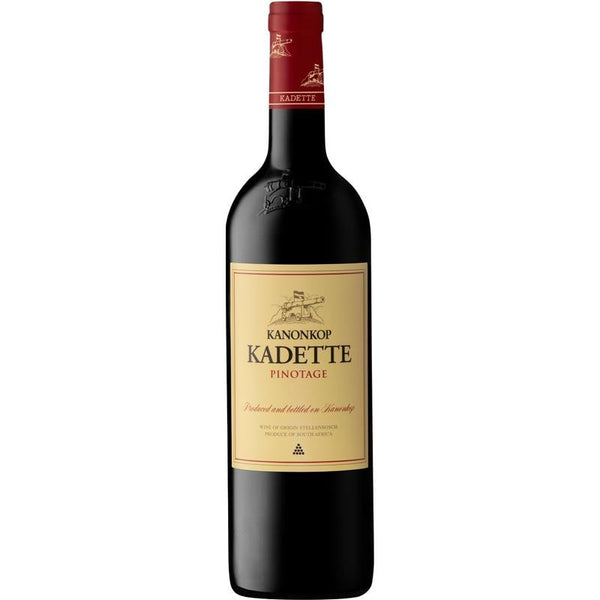
Kanonkop Wine Estate - Kadette Pinotage 2024
A wine that embodies the generous and structured expression of Stellenbosch Pinotage, combining ripe fruit, roundness and spices.
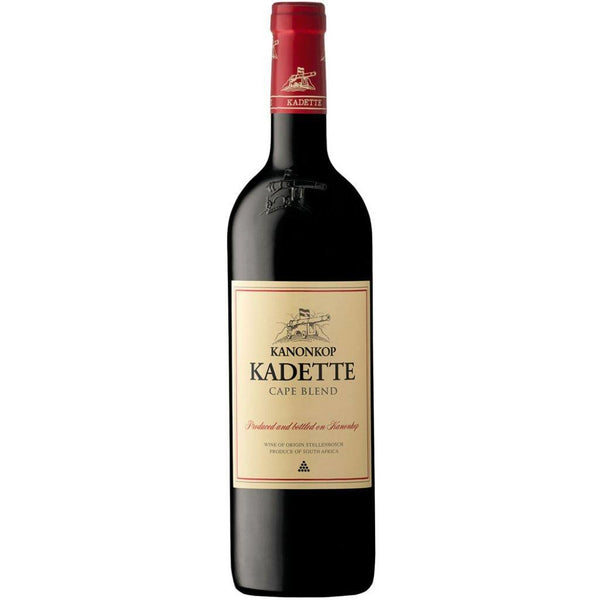
Kanonkop Wine Estate - Kadette Cape Blend 2024
A precise and generous Cape Blend, which marries the soul of Pinotage with the elegance of Bordeaux grape varieties.
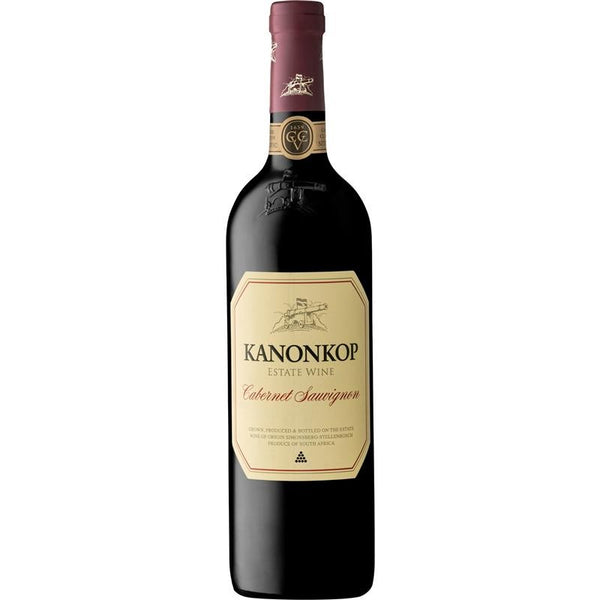
Kanonkop Wine Estate - Estate Cabernet Sauvignon 2019
A deep, classy Simonsberg Cabernet Sauvignon. Fresh black fruit meets a refined tannic structure.
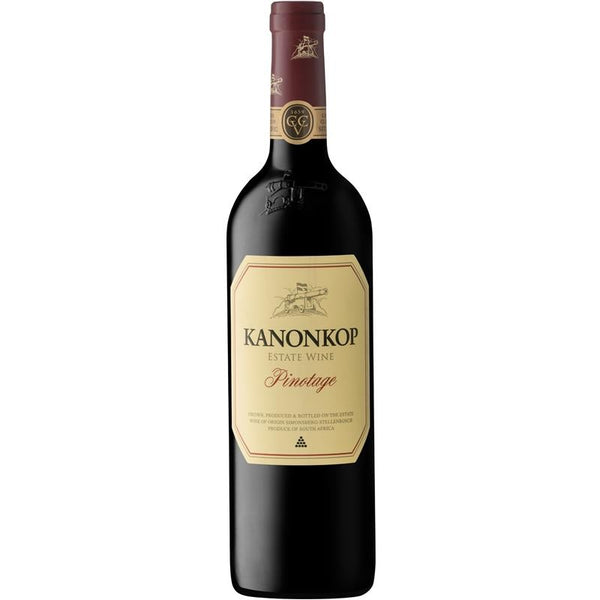
Kanonkop Wine Estate - Estate Cellar Release Pinotage 2015
A deep and structured Pinotage from Stellenbosch, combining aromatic intensity and elegant texture.

Kanonkop Wine Estate - Black Label Pinotage 2022
A powerful and precise Pinotage of the terroir, which intensely expresses the signature of Simonsberg.
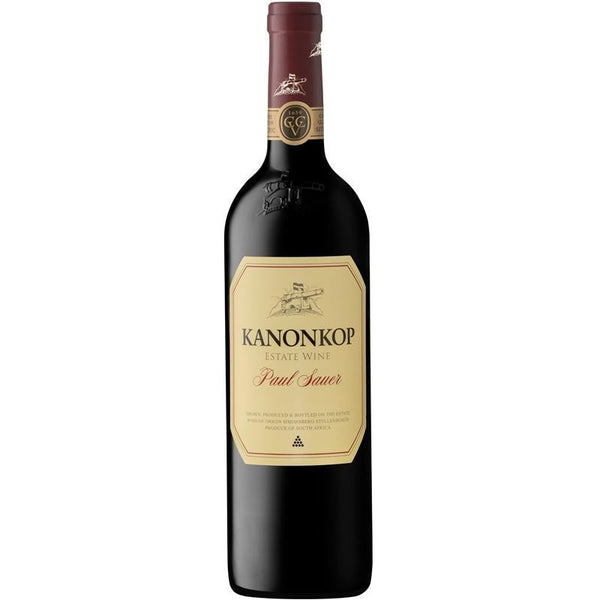
Kanonkop Wine Estate - Paul Sauer 2021
A great Bordeaux blend from Simonsberg, combining aromatic depth, precision and elegant texture.

Kanonkop Wine Estate - Estate Pinotage 2023
A deep and structured Pinotage that accurately expresses the personality of Simonsberg.
Which wine to start with at Kanonkop
The tables below explain the logic of the range. Here are the ways in, depending on what you are looking for: a first bottle, a gift, a pinnacle, or simply a budget.
A first bottle from the estate
The entry-level Pinotage, fruity and supple, fermented in open tanks like the house's great wines. The best value, and a way to learn the grape variety.
Kadette Pinotage 2024 · €18.50Understanding the Cape blend
Pinotage topped up with Bordeaux varieties, twelve months in second- and third-fill French barrels. The quintessential South African formula, at the same price as its neighbour.
Kadette Cape Blend 2022 · €18.50The estate Pinotage
Low-yielding bush vines on the Simonsberg, open fermenters, ageing in barrels with a significant share of new oak. The tier where the grape variety changes scale.
Estate Pinotage 2022 · €51.80The bottle to give
Cabernet Sauvignon, Cabernet Franc and Merlot, long ageing in French barriques. A red for ageing that speaks to those who know Bordeaux as much as to those discovering the Cape.
Paul Sauer 2021 · €75The summit of the house
Pinotage from vines planted in the 1950s, malolactic in barrique and extended ageing. The most expensive bottle in our South African cellar.
Black Label Pinotage 2022 · €264Stay under €20
The two Kadette wines, filtered in one click. Two reds from the same estate, two interpretations of Pinotage, no compromise on the winemaking.
Budget under controlFollow the grape elsewhere
A cross of Pinot Noir and Cinsault born in South Africa, Pinotage reads very differently depending on the hands that work it.
Our Pinotage sectionWiden to the region
Stellenbosch remains the heart of the Cape's structured reds. The other estates we follow there, gathered on one page.
Stellenbosch wines
Three tiers, from Kadette to Black Label
At Kanonkop, the price tells you something. The two Kadette wines form the entry level and share the same price, the Estate Pinotage stands alone in the middle, and the two flagship wines vie for the top with two opposing ideas of a great red: the Bordeaux blend on one side, the South African grape variety on the other.
| Vintage | The tier | The wine | Price |
|---|---|---|---|
| Kadette Pinotage2024 | The entry point | Fruity red. Plum, black cherry, soft tannins. A Pinotage to drink in its first few years, without waiting. | €18.50 |
| Kadette Cape Blend2022 | The entry point | Fruity, spicy red. Pinotage provides the backbone, the Bordeaux grape varieties bring the structure. | €18.50 |
| Estate Pinotage2022 | The estate wine | Red for ageing. Denser and longer than the Kadette wines, with the house's tannin grain. | €51.80 |
| Paul Sauer2021 | The flagship wines | Tannic red. Blackcurrant, cedar, integrated oak. The Bordeaux blend that made the estate's reputation. | €75.00 |
| Black Label Pinotage2022 | The flagship wines | Red for very long ageing. Ripe black plum, cherry, concentration and precise tannins. | €264.00 |
Abrie Beeslaar also makes a wine under his own name, the Beeslaar Pinotage, sold for €66 in our cellar. It is his personal project, separate from the estate's range, so it does not appear in this table.
What separates an entry-level wine from a flagship
The soil is almost the same from one cuvée to the next: decomposed granite on the slopes of the Simonsberg. What changes is the age of the vines, the strictness of the sorting and the share of new oak. The table sets these three variables side by side, cuvée by cuvée.
| Vintage | Grape varieties | The location and the ground | The vines | The cellar |
|---|---|---|---|---|
| Kadette Pinotage2024 | Pinotage | Well-drained slopes of weathered granite in the Western Cape. Hot summers, nights cooled by the Atlantic. | Controlled yields, harvest at optimal ripeness. | Fermentation in traditional open fermenters, often concrete, followed by malolactic fermentation. |
| Kadette Cape Blend2022 | Pinotage and Bordeaux varieties | Weathered granite and ferruginous clay, across several Simonsberg plots. | Bush-trained vines, hand harvesting. | Destemming and crushing, open tanks with pump-overs, twelve months in second- and third-fill French barrels, bottled without heavy filtration. |
| Estate Pinotage2022 | Pinotage | Simonsberg hillside, free-draining weathered granite, mostly south-west facing. | Low-yielding bush vines, hand sorting after harvest. | Fermentation in open tanks with punching down, gentle pressing, ageing in oak barrels including a significant proportion of new barriques. |
| Paul Sauer2021 | Cabernet Sauvignon, Cabernet Franc, Merlot | Weathered granite and ferruginous clays, moderate altitude, varied exposures. | Hand harvesting, slow and steady ripening. | Open tanks, pump-overs and punching down for gentle extraction, then long ageing in mostly French barriques. |
| Black Label Pinotage2022 | Pinotage | Simonsberg slopes, weathered granite and red clay, natural drainage and sufficient water reserves. | Bush vines planted in the 1950s, hand-harvested and strictly sorted. | Maceration and fermentation in tanks with pump-overs, malolactic fermentation in barrique, extended ageing in barrels, mostly French oak. |
One constant across the whole range: fermentation takes place in open tanks, even for the entry-level wines. Few estates of this size keep this method, which requires manual punching down and constant monitoring.
Pinotage doesn't need defending, only to be made well
The grape variety has a poor reputation, inherited from industrial bottles that smelled of varnish and cooked banana. Kanonkop answers that without arguing: bush vines planted in the 1950s, low yields, fermentation in open concrete tanks with manual punching down. The method is artisanal, labour-intensive, and practically abandoned elsewhere at this scale.
Abrie Beeslaar has been making the wine here since 2002. The continuity shows in the glass: the Kadette at €18.50 and the Black Label at €264 come out of the same cellar, with the same way of working colour and tannin. That is what makes the range worth exploring in full rather than cherry-picking from the top.
How do you choose
We keep all five cuvées, including the two entry-level wines. An estate of this standing is judged as much on what it does at €18.50 as on its collector's wine.
And we check that the price is justified in the glass. Moving up from the Estate to the Paul Sauer must bring length and finer tannins, not just new oak.
The Wine Wanderer Team
What we are asked about Kanonkop
Where is the Kanonkop estate?
On the slopes of the Simonsberg, in the Simonsberg-Stellenbosch ward, north of the town of Stellenbosch, in the Western Cape. The climate is Mediterranean, tempered by breezes from the Atlantic, and the soils are made up of decomposed granite and red clay, free-draining yet able to retain water. The other estates in the area are gathered on our Stellenbosch page.
Why is it called the Cape's first growth?
It is a comparison with the Bordeaux hierarchy, used to place the estate among South Africa's absolute benchmarks. It does not correspond to any official classification: the South African Wine of Origin system divides up geographical areas but does not classify properties. The expression simply reflects the standing the trade grants Kanonkop.
What is Pinotage?
A red grape variety created in South Africa in the 1920s by crossing Pinot Noir and Cinsault. It gives deeply coloured wines, with plum and black cherry, and firmer acidity than Pinot Noir. Handled badly, it turns bitter and varnishy. Handled well, as here, it ages remarkably. The full section is on this page.
Which bottle should I start with?
With the Kadette Pinotage at €18.50 to discover the grape variety on its own, or with the Kadette Cape Blend at the same price to see what Pinotage becomes once blended with Bordeaux grape varieties. Both come from the same cellar as the flagship wines and give an accurate idea of the house style.
What is the difference between the Kadette and the Estate Pinotage?
The price goes from €18.50 to €51.80, and three things change. The Kadette comes from plots with controlled yields and is drunk young; the Estate comes from low-yielding bush vines on the Simonsberg. The latter is aged in oak barrels with a significant proportion of new barriques. Finally, the sorting is stricter. The result is a denser, longer wine that calls for ageing or a decanter.
What is the Paul Sauer?
The estate's Bordeaux blend, based on Cabernet Sauvignon, Cabernet Franc and Merlot, sold for €75. It is the wine that built Kanonkop's international reputation and it is one of the most decorated reds in South Africa. Fermentation in open tanks, then long ageing in mostly French barriques. To compare with other bottles of the same main grape variety, see the Cabernet Sauvignon section.
Why does the Black Label cost €264?
Because it comes from bush vines planted in the 1950s, these old vines yield very little, and the cuvée is only made in small volumes. Malolactic fermentation takes place in barrique and barrel ageing is extended, mostly in French oak. It is the most expensive bottle in our South African cellar, and a Pinotage for very long ageing.
Who makes the wine at Kanonkop?
Abrie Beeslaar, in the role since 2002. That longevity matters: across a tiered range, the same hand decides on sorting, maceration time and the share of new oak, from the entry-level wine to the collector's wine.
What does fermenting in open fermenters change?
The cap of skins rises to the surface and has to be pushed down by hand several times a day: this is punching down. Extraction is more gradual and easier to control than with mechanical pump-overs in closed tanks, and the tannins come out silkier. Kanonkop still makes wine this way, in concrete tanks, which has become rare for an estate of this size.
Is the Beeslaar Pinotage part of this range?
No. It is Abrie Beeslaar's personal cuvée, released under his own name and sold for €66 in our shop. It is separate from the estate's wines and therefore not part of this collection, even though the hand behind the bottle is the same.
How long should these bottles be kept?
The two Kadette wines are drunk in their first few years, while the fruit is to the fore. The Estate Pinotage, the Paul Sauer and the Black Label are built for ageing: served young, they benefit from an hour or two in a decanter. A slight deposit in older vintages is normal; just stand the bottle upright the day before.