
Pauillac: crus classés, second wines and large formats from the Médoc
13 bottles, from second wine to Premier Cru ClasséA Premier Cru (first growth) to open in twenty years, a second wine to get close to the style of a great château, a magnum for a festive table: this is what people come to Pauillac for. On around 1,200 hectares of croupes de graves (gravel mounds), Cabernet Sauvignon gives reds of blackcurrant, cedar and graphite, built for the cellar.
The commune has eighteen crus classés from 1855, including three of the five Premiers Crus: Lafite Rothschild, Latour and Mouton Rothschild. The selection runs from their second wines to the grands vins, in bottle, in magnum and up to the very large formats, across several vintages.
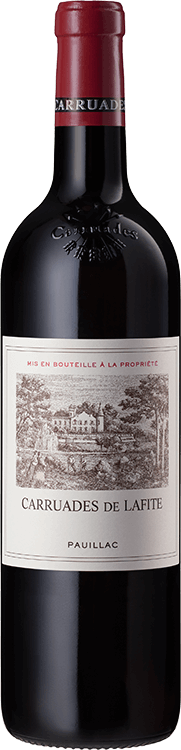
Château Lafite Rothschild - Carruades de Lafite
The second wine of Château Lafite Rothschild, born partly on the Carruades plateau in Pauillac.
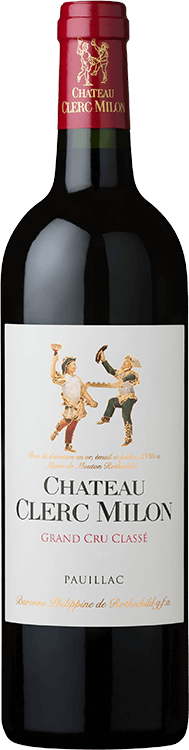
Château Clerc Milon - Pauillac 5e Cru Classé
The Rothschild family's classified growth in Pauillac, a neighbour of Mouton, with its label of two dancers.
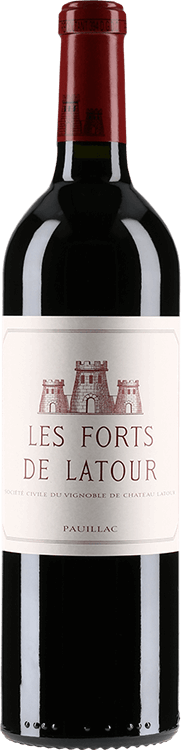
Château Latour - Les Forts de Latour
The second wine of Château Latour, crafted with the same exacting standards on the gravels of Pauillac.

Château Grand-Puy-Lacoste - Pauillac 5ème Cru Classé
A classic, thoroughbred Pauillac with intense blackcurrant, from a vineyard in a single block.

Château Haut-Batailley - Pauillac 5ème Cru Classé
An elegant, fresh Pauillac from the south of the appellation, with one foot in Saint-Julien.

Château Lafite Rothschild - Pauillac 1er Cru Classé
The first of the 1855 Premiers Crus, a Pauillac of rare elegance and longevity.

Château Latour - Pauillac 1er Cru Classé
The Premier Grand Cru of the Enclos, a gravel-grown Pauillac dominated by Cabernet Sauvignon and built to last for decades.

Château Lynch-Bages - Pauillac 5ème Cru Classé
A generous Pauillac from the Bages plateau, all blackcurrant and cedar, with a classic build and immediate charm.
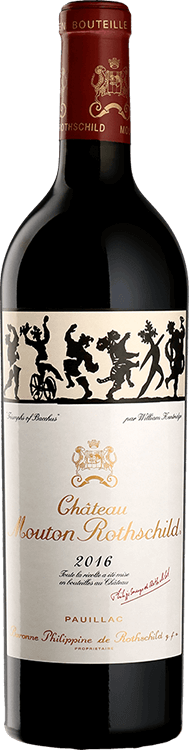
Château Mouton Rothschild - Pauillac 1er Cru Classé
The Pauillac Premier Cru Classé with the artist's label, a Cabernet of rare depth and finesse.

Château Mouton Rothschild - Le Petit Mouton de Mouton Rothschild
The second wine of Mouton Rothschild, from the young vines of the Premier Cru, between blackcurrant, graphite and silk.
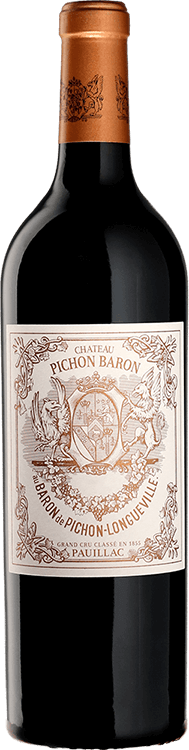
Château Pichon Baron - Pauillac 2ème Cru Classé
A powerful, thoroughbred Pauillac, born of the oldest vines on Pichon Baron's historic hillock.
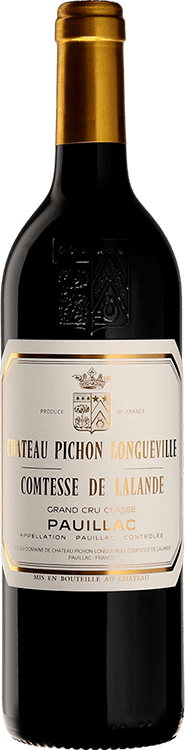
Château Pichon Longueville Comtesse de Lalande - Pauillac 2ème Cru Classé
The power of Pauillac and the floral elegance of the Comtesse, on gravel ridges facing the estuary.

Château Pontet-Canet - Pauillac 5ème Cru Classé
The benchmark biodynamic Pauillac, born on the gravel ridge neighbouring Mouton and Lafite.
The 1855 crus classés, château by château
The 1855 classification, drawn up by Bordeaux's wine brokers for the Paris Universal Exhibition, ranks the crus of the Médoc in five tiers. Pauillac has eighteen: three Premiers Crus (first growths), two Deuxièmes, one Quatrième and twelve Cinquièmes. The rank should be read alongside the terroir and the share of Cabernet Sauvignon.
| Rank in 1855 | Terroir | Blend | In the shop |
|---|---|---|---|
| Premier Cru Classé | North, on the edge of Saint-Estèphe: Carruades plateau, fine, deep gravel over limestone | 94% Cabernet Sauvignon, 5% Merlot, 1% Petit Verdot | Château Lafite Rothschildfrom €654.00 a bottle (2023) |
| Premier Cru Classé | South: l'Enclos, a croupe of clayey gravel at 16 m altitude and 300 m from the estuary | 76% Cabernet Sauvignon, 22% Merlot, 2% Petit Verdot | Château Latourfrom €691.00 a bottle (2017) |
| Premier Cru Classé since 1973 | Mouton plateau, a croupe rising to 27 m: thin, stony gravel over a clay-limestone base | 81% Cabernet Sauvignon, 15% Merlot, 3% Cabernet Franc, 1% Petit Verdot | Château Mouton Rothschildfrom €654.00 a bottle (2021) |
| Deuxième Cru Classé | South of the commune: a mound of poor, free-draining gravel, old vines on the historic terroir | 80% Cabernet Sauvignon, 20% Merlot | Château Pichon Baronfrom €841.00 a jéroboam (2021) |
| Deuxième Cru Classé | South of the commune, facing the estuary: gravel croupes over clay | 77% Cabernet Sauvignon, 17% Merlot, 6% Cabernet Franc | Château Pichon Longueville Comtesse de Lalandefrom €481.00 a magnum (2006) |
| Cinquième Cru Classé | Bages plateau, south-west of the village: deep, poor and very free-draining Garonne gravel | 71% Cabernet Sauvignon, 22% Merlot, 4% Cabernet Franc, 3% Petit Verdot | Château Lynch-Bagesfrom €549.00 a magnum (2005) |
| Cinquième Cru Classé | Next to Mouton: a gravel croupe on a limestone base, vineyard certified organic and biodynamic since 2010 | 65% Cabernet Sauvignon, 30% Merlot, 3% Cabernet Franc, 2% Petit Verdot | Château Pontet-Canetfrom €541.00 a jéroboam (2021) |
| Cinquième Cru Classé | Heart of the appellation: 60 hectares of vines in a single block on deep gravel croupes | 77% Cabernet Sauvignon, 23% Merlot | Château Grand-Puy-Lacostefrom €755.00 an impériale (2017) |
| Cinquième Cru Classé | Southern boundary, bordering Saint-Julien: fine gravel and coarse gravel mixed with clay | 71% Cabernet Sauvignon, 25% Merlot, 4% Petit Verdot | Château Haut-Batailleyfrom €643.00 an impériale (2020) |
Blends vary from one vintage to the next: those in the table are the ones on the product pages. The rank dates from 1855; only Mouton Rothschild has changed rank, by ministerial decision, in 1973.
From bottle to impériale: a buying guide
In Pauillac, the format matters as much as the vintage: the larger the bottle, the more slowly the wine evolves. Start from your plan: a dinner, a cellar to build or a birthday to mark.
| Your plan | Format | What you need to know | Reference in the shop |
|---|---|---|---|
| Getting close to a Premier Cru | 75 cl bottle | The second wine comes from the same vines and the same cellar as the grand vin, with a selection of young vines | Le Petit Mouton de Mouton Rothschild 2003€460.00 a bottle |
| Laying down a second wine | 1.5 L magnum, i.e. two bottles | The format for those who love ageing wine: slower, more even evolution than in bottle | Carruades de Lafite 2021€526.00 a magnum |
| Tasting the Latour style | Magnum, jéroboam or impériale | 66% Cabernet Sauvignon and 32% Merlot, vineyard certified organic since 2018 | Les Forts de Latourfrom €549.00 a magnum (2017) |
| Opening a mature Premier Cru | 75 cl bottle | After twenty to thirty years, blackcurrant gives way to cedar, tobacco and fine leather | Château Mouton Rothschild 1994€669.00 a bottle |
| Serving a twenty-year-old cru classé | 1.5 L magnum | A magnum serves ten to twelve glasses: the format for a family meal | Pichon Longueville Comtesse de Lalande 2005€594.00 a magnum |
| Marking a birth year | 3 L jéroboam, i.e. four bottles | A recent vintage in a large bottle will wait calmly for the child's twentieth birthday | Château Lynch-Bages 2023€550.00 a jéroboam |
| Bringing a big table together | 6 L impériale, i.e. eight bottles | Around fifty glasses: plan for a wide decanter and two people to serve | Château Grand-Puy-Lacoste 2018€831.00 an impériale |
| Giving a collector's piece | 5 L bottle | A rare bottle from a vintage more than twenty-five years old, signed by the Rothschild family | Château Clerc Milon 2000€1,771.00 for the 5-litre bottle |
Each bottle is bought singly. Available vintages and formats are listed on each product page, with the price of the chosen bottle.
A Pauillac for every plan
Start from what you are after: a first approach, a bottle for the cellar, a large format, or a detour through the neighbouring vineyards.
The first approach
The second wine of Mouton Rothschild, from the young vines of the Premier Cru: blackcurrant, graphite, silky texture, in a vintage that is already mature.
Le Petit Mouton de Mouton Rothschild 2003, €460.00 per bottle, sold singlyLafite's second wine
Born partly on the Carruades plateau, aged for around 16 months in barrels from the estate's own cooperage: dense, chalky, long.
Carruades de Lafite 2021, €526.00 a magnumA Premier Cru for the cellar
Cabernet Sauvignon from the Carruades plateau, all finesse, available in many vintages, from 1994 to 2023, from bottle to impériale.
Château Lafite Rothschild, from €654.00 a bottle (2023)The power of l'Enclos
Old vines on a gravel croupe 300 m from the estuary, farmed organically: a dense, tight wine, built for decades.
Château Latour, from €691.00 a bottle (2017), €1,344.00 a magnum (2012)The biodynamic Pauillac
Vineyard certified organic and biodynamic since 2010, fermentation in concrete and wooden vats, part of the ageing in amphorae: blackcurrant, violet, minty freshness.
Château Pontet-Canet 2021, €541.00 a jéroboamThe neighbouring appellations
Margaux, Saint-Julien, Saint-Estèphe: the Médoc section sets Pauillac alongside the other Left Bank communes, from the south to the north of the peninsula.
All the grands crus classés
The 1855, Graves and Saint-Émilion classifications brought together in a single section, to compare ranks, banks and vintages.
Cabernet Sauvignon elsewhere
Pauillac's king of grapes in other climates and other countries: all our bottles of Cabernet Sauvignon in one place, to compare styles.
Gravel croupes facing the estuary
Pauillac lies on the Left Bank of the Gironde, around fifty kilometres north-west of Bordeaux, between Saint-Julien to the south and Saint-Estèphe to the north. The appellation, recognised by decree on 14 November 1936, produces red wines only. Its relief can be summed up in one word: croupes, broad mounds of gravel deposited by the Garonne, 16 to 30 metres high, separated by small drainage streams. One plateau stretches across the north, around Le Pouyalet, Mouton and Lafite; another across the south, around Bages, Latour and the two Pichons.
These poor stones drain the rain, store the heat of the day and force the vine to send its roots deep. Cabernet Sauvignon, a late-ripening variety, matures slowly here, tempered by the nearby estuary. It makes up 65 to 94% of the wines in the selection, complemented by Merlot, Cabernet Franc and Petit Verdot. Hence the signature of Pauillac: dark colour, blackcurrant, cedar, pencil lead, tannins that are firm in youth and mellow after ten to fifteen years. To place the commune among its neighbours, see the Médoc section.
Grand vin and second wine
Each classified château makes a grand vin, from its best plots and its old vines, and usually a second wine, from the young vines and the lots set aside at blending. Same team, same cellar, a gentler price and earlier maturity. Carruades de Lafite, Les Forts de Latour and Le Petit Mouton thus open the door to the three Premiers Crus. The 1855 rank belongs to the château, and the grand vin carries it on its label.
The Wine Wanderer Team
What we are asked about Pauillac
What is the best Pauillac?
The three Premiers Crus Classés (first growths), Lafite Rothschild, Latour and Mouton Rothschild, form the summit of the appellation. Lafite is about finesse, Latour about power and longevity, Mouton about opulence. The best one for you depends on the occasion: a Premier Cru more than twenty years old for a grand dinner, a second wine to discover the style. Château Latour starts at €691.00 a bottle (2017), Château Lafite Rothschild at €654.00 a bottle (2023).
Which Pauillac should I buy for a first taste?
Start with a second wine: it offers the terroir and know-how of a Premier Cru at a gentler price, with earlier maturity. Le Petit Mouton de Mouton Rothschild 2003 costs €460.00 a bottle, sold singly. In magnum, Carruades de Lafite 2021 is €526.00 and Les Forts de Latour 2017 is €549.00. A magnum shared between eight guests is also a fine way into the appellation.
How many crus classés are there in Pauillac?
Pauillac has eighteen crus classés from 1855: three Premiers Crus (first growths), two Deuxièmes, one Quatrième and twelve Cinquièmes. It is the commune with the most Premiers Crus, three of the five in the classification. These châteaux account for most of the appellation's production. To understand the ranks and compare them with the other Bordeaux classifications, see the grands crus classés of Bordeaux section.
Why has Mouton Rothschild been a Premier Cru since 1973?
Classified as a Deuxième Cru in 1855, Mouton Rothschild was promoted to Premier Cru Classé in 1973, by decision of the Minister of Agriculture, after decades of campaigning by Baron Philippe de Rothschild. It is the only change of rank in the history of the classification. The château is also known for its labels, entrusted to a different artist each year. In the shop, it starts at €654.00 a bottle (2021), with vintages from 1994 to 2022.
Which grape varieties go into a Pauillac?
Cabernet Sauvignon dominates by a wide margin, complemented by Merlot, then by small touches of Cabernet Franc and Petit Verdot. In the selection, its share ranges from 65% at Pontet-Canet to 94% at Lafite Rothschild. It brings colour, blackcurrant, cedar and tannic structure; Merlot rounds out the mid-palate; Petit Verdot adds spice and freshness.
How long should you keep a Pauillac?
A Pauillac cru classé generally needs ten to fifteen years to open up, and the great vintages last thirty years and more. A second wine is ready earlier, between eight and fifteen years. Store the bottles lying down, in the dark, between 12 and 14 °C. Large formats evolve more slowly: a magnum or an impériale extends the drinking window by several years.
What food goes with Pauillac, and at what temperature should it be served?
The classic pairing is lamb, roasted or as a leg: the commune has in fact given its name to a renowned milk-fed lamb. The tannins of Cabernet Sauvignon also like a grilled rib of beef, roast pigeon, feathered game and mushrooms. Serve between 16 and 18 °C, and decant a vintage less than ten years old for one to two hours.
Pauillac, Margaux, Saint-Julien or Saint-Estèphe: what is the difference?
The four communes share gravel and Cabernet Sauvignon, with clear nuances in the glass. Margaux, to the south, gives the most perfumed and supple wines. Saint-Julien stands out for its balance. Pauillac is the most structured, with blackcurrant and graphite. Saint-Estèphe, to the north, on more clayey soils, offers firmer tannins. Château Haut-Batailley, on the boundary with Saint-Julien, illustrates the transition between the two styles.
Pauillac or Saint-Émilion: what is the difference?
They are opposites in every way, starting with the bank and the grape. Pauillac, on the Left Bank, blends mostly Cabernet Sauvignon on gravel: upright, tannic wines for long ageing. Saint-Émilion and Pomerol, on the Right Bank, favour Merlot on limestone and clay: rounder wines that are approachable earlier. The classifications differ too: the 1855 one is fixed, the Saint-Émilion one is revised periodically.
Why are there so many magnums and large formats in Pauillac?
Because wines made for ageing mature better in large bottles: the ratio between the volume of wine and the air under the cork slows their evolution. Several crus classés in the selection are available only in large format, each bottle being bought singly: Château Lynch-Bages at €549.00 a magnum (2005), Château Pichon Baron at €841.00 a jéroboam (2021), Château Haut-Batailley at €643.00 an impériale (2020).
Where can I buy Pauillac in France?
You can order crus classés and second wines from Pauillac here, online, in bottle and in large format, shipped in reinforced packaging. Each product page gives the vintage, the format and the price of the bottle. To widen your search, browse the Bordeaux wines section or all our French wines, and write to us for advice on vintages.