
Pomerol wines: Merlot, clay and gravel of the plateau
11 bottles, from estate Pomerol to the crus of the plateauA Merlot red with a velvet touch, aromas of plum, violet and truffle, an ageing potential counted in decades for the most sought-after crus: that is what people come to Pomerol for. This small appellation on the right bank of Bordeaux, around 800 hectares on the doorstep of Libourne, lives outside any official classification: here, rank is read château by château, and first of all in the soil.
The selection runs from estate Pomerol sold by the case to the crus of the plateau, Petrus, Lafleur or Le Pin, with several vintages, magnums and large formats.

Château Clinet - Pomerol
A generous, silky Pomerol, born of a clay and gravel terroir on the plateau.
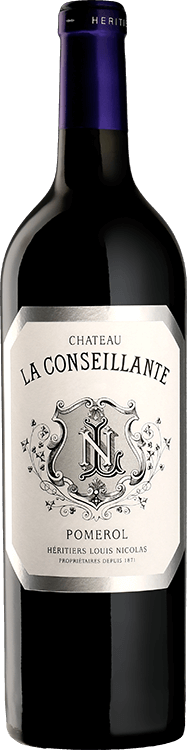
Château La Conseillante - Pomerol
A floral, velvety Pomerol, shaped by its grey clays and iron-tinged gravel.
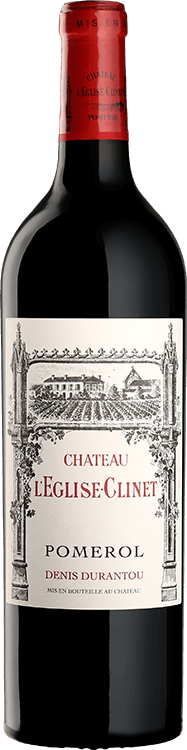
Château L'Église-Clinet - Pomerol
A rare, deep Pomerol from old vines on the iron-rich clays of the plateau.
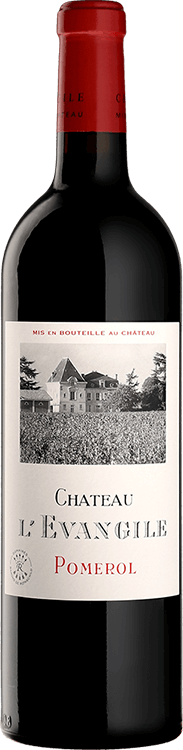
Château L'Évangile - Pomerol
A powerful, deep Pomerol, born of heavy clays covered with gravel in the heart of the plateau.

Château Lafleur - Pomerol
A legendary, rare Pomerol in which Cabernet Franc almost equals Merlot.

Le Pin - Pomerol
A rare two-hectare Pomerol, pure Merlot from the plateau, of uncommon sensuality and depth.

Petrus - Pomerol
Merlot at its most sublime on the blue clay of Pomerol's "boutonnière": a wine of velvet, truffle and black fruit.
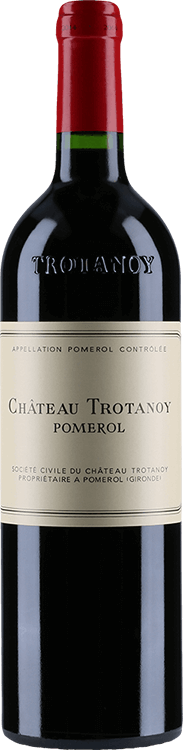
Château Trotanoy - Pomerol
A powerful, deep Pomerol, born of clay-gravel and black clay over crasse de fer.
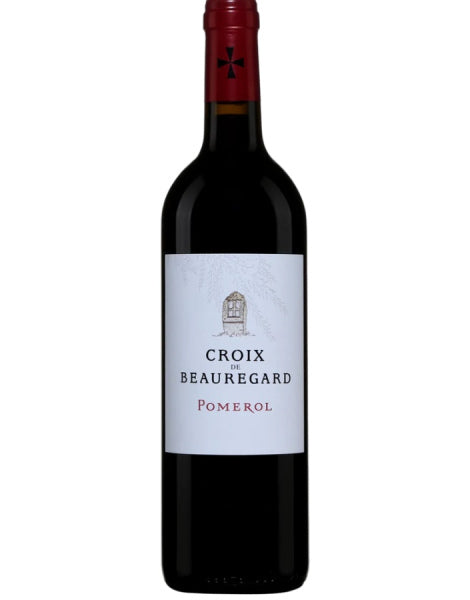
Château Beauregard - Croix de Beauregard Pomerol 2021
A supple, refined Pomerol, centred on black fruit and freshness.
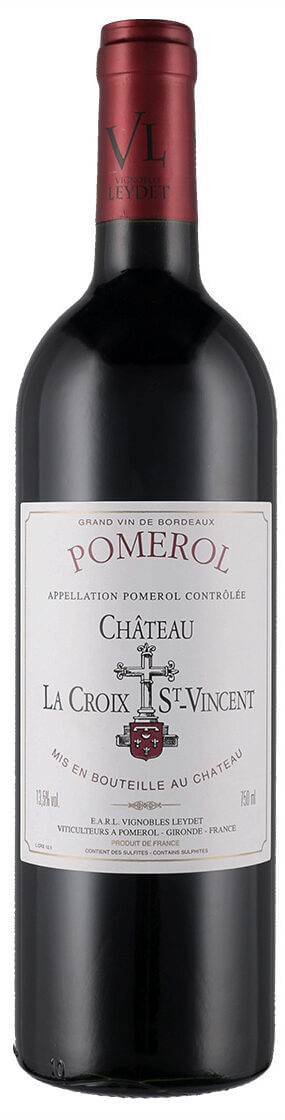
Château La Croix Saint-Vincent - Pomerol 2021
A supple, flavourful Pomerol, with dark fruit, spice and silky tannins.
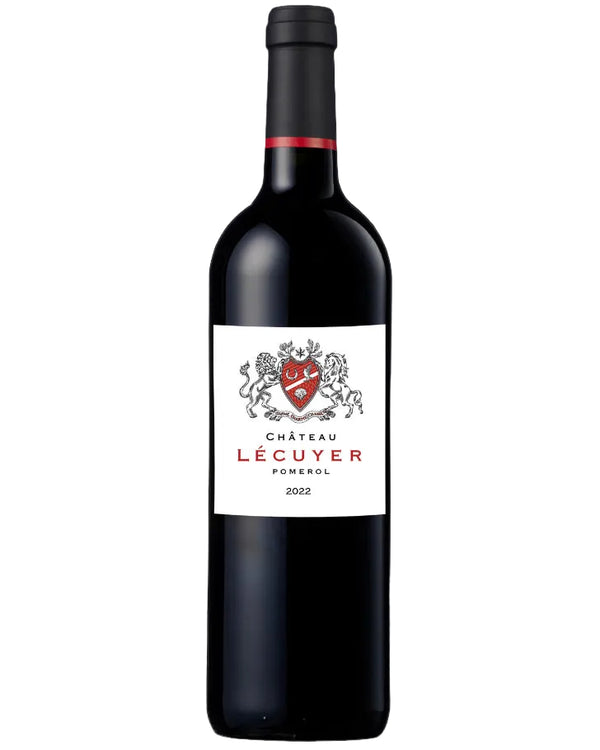
Château Lécuyer - Pomerol 2022
A Pomerol of real breeding, carried by deep fruit and a silky texture.
From the top of the plateau to the sandy slopes
Pomerol is a series of almost flat terraces laid down by the Isle: sand, gravel and pebbles on the surface, clay at depth, iron oxides in the subsoil. The upper terrace peaks at between 30 and 40 metres. The closer the clay, the more density the wine gains; the more sand dominates, the more supple and early-drinking it is.
| Sector | Ground | In the glass | To taste |
|---|---|---|---|
| The boutonnière (“buttonhole”), the highest point at around forty metres | Blue smectite clay, which swells with water and shrinks when dry | Merlot alone, velvet texture, truffle, very long ageing potential | Petrusfrom €4,201.00 per bottle (2011) |
| Upper plateau, gravel side | Gravel, old massal selections of Cabernet Franc and Merlot | Finesse, rose, raspberry, graphite, mineral finish | Château Lafleur€826.00 per bottle (2012) |
| Plateau, black clays | Half clayey gravel, half deep black clay, on a bed of crasse de fer (iron-rich subsoil) | Merlot alone, dense substance, tight tannins, black plum and liquorice | Château Trotanoy€976.00 per magnum (2019) |
| Heart of the plateau, heavy clays | Heavy clay topped at the surface by a layer of gravel | Power and depth, blueberry, cedar, black truffle | Château L'Évangilefrom €504.00 per magnum (2011) |
| Plateau, on the Saint-Émilion boundary | 60% grey clay, 40% sandy gravel, subsoil tinged with iron oxides | Violet, peony, velvety tannins with a powdery grain | Château La Conseillantefrom €550.00 per magnum (2018) |
| Plateau, around the church | Deep clay mixed with gravel, crasse de fer in the subsoil, old vines | Ripe black fruit, truffle, forest floor, a dense, balanced palate | Château L'Église-Clinet€1,538.00 per 3 L jéroboam (2023) |
| Plateau, Clinet sector | Clay-gravel: the clay holds freshness, the gravel drains | Merlot and Cabernet Sauvignon, creamy texture, black fruit, spices | Château Clinet€924.00 per magnum (2009) |
| Plateau, two hectares of plots | Gravel, clay and sand enriched with crasse de fer | Merlot alone, opulent bouquet, black cherry, cocoa, soft tannins | Le Pinfrom €3,601.00 per bottle (2017) |
| Southern slope | Sand and fine gravel over a subsoil where alios (iron-rich sandstone) outcrops | Supple, fresh red, black fruit, spices, ready in five to ten years | Château La Croix Saint-Vincentfrom €25.00 per bottle, by the case of 6 |
The appellation produces red wines only. Grape varieties permitted by the appellation rules: Merlot, Cabernet Franc, Cabernet Sauvignon, Cot (Malbec) and Petit Verdot.
Budget, bottle size and cellar time
In Pomerol, the plan decides the bottle size: a case to discover, a magnum for a big table, a jéroboam or an impériale for the cellar, a 75 cl bottle for a collector's vintage.
| Your plan | Bottle | Format and price | Ageing and serving |
|---|---|---|---|
| Discover the appellation | Château La Croix Saint-VincentMerlot, Cabernet Franc, Cabernet Sauvignon | From €25.00 per bottle, by the case of 6; vintages from 2013 to 2021 | 5 to 10 years. At 16–18 °C, with roast poultry or an entrecôte |
| Taste the plateau at a measured price | Croix de Beauregardyoung vines of Château Beauregard | From €31.80 per bottle, by the case of 6; vintages 2019 to 2021 | 5 to 10 years. Short ageing in one-year-old barrels, fruit to the fore |
| Give a Pomerol as a gift | Château Lécuyermade at Château Clinet | €60.00 per bottle, in packs of 2; 2022 and 2023 vintages | 5 to 10 years. An hour in a decanter in its youth |
| A magnum for a big table | Château L'Évangile88% Merlot, 12% Cabernet Franc | €504.00 per magnum in 2011 and in 2002, €751.00 per magnum in 2004 | 10 years and more. Vintages at maturity, to open with feathered game |
| A magnum from a recent vintage | Château Trotanoy100% Merlot | €976.00 per magnum (2019) | 10 years and more. To lay down in the cellar, built for long ageing |
| A large format for the cellar | Château La Conseillante80% Merlot, 20% Cabernet Franc | From €550.00 per magnum (2018); €1,701.00 per 3 L jéroboam (2016); from €2,321.00 per 6 L impériale (2018) | 10 years and more. The large bottle slows the wine's evolution |
| A birthday bottle | Château Clinet75% Merlot, 25% Cabernet Sauvignon | €924.00 per magnum (2009); €954.00 per 5 L bottle (2002) | 10 years and more. Two vintages already into their maturity |
| A collector's vintage, sold singly | Petrus100% Merlot | From €4,201.00 per bottle (2011); €4,576.00 per bottle in 1986 | 10 years and more. Vintages from 1986 to 2019, in 75 cl bottles |
A magnum holds 1.5 litres, a Bordeaux jéroboam 3 litres, an impériale 6 litres. Vintage and format are chosen on each product page.
A way in for every wish
Start from the occasion and the budget, and the château follows.
A first Pomerol
Merlot, Cabernet Franc and Cabernet Sauvignon on the sand and fine gravel of the southern slope: a supple red, black fruit and spices, to drink over ten years.
Château La Croix Saint-Vincent, from €25.00 per bottle, by the case of 6The plateau at a measured price
Young vines and plot selection from Château Beauregard, on clay-gravel soils: blackberry, blackcurrant, violet, a velvety palate and silky tannins.
Croix de Beauregard 2021, €31.80 per bottle, by the case of 6A Pomerol to give
Plots in the Clinet sector, made at Château Clinet: macerated cherry, truffle and dark chocolate, ample substance and ripe, fine-grained tannins.
Château Lécuyer 2022, €60.00 per bottle, in packs of 2A large format for the cellar
Grey clay and sandy gravel on the Saint-Émilion boundary: violet, peony, velvety tannins. From magnum to the 6-litre impériale, vintages from 2016 to 2022.
Château La Conseillante 2018, €550.00 per magnumCabernet Franc from the upper plateau
Old massal selections on gravel, 53% Merlot and 47% Cabernet Franc, one-third new oak: rose, raspberry, graphite, a very long finish.
Château Lafleur 2012, €826.00 per bottleMerlot on blue clay
Pure Merlot from the boutonnière, at the appellation's highest point: blackberry, truffle, iris, velvet texture. Vintages from 1986 to 2019, sold singly.
Petrus 2011, €4,201.00 per bottleSaint-Émilion, the neighbouring appellation
Same bank, same Merlot, but a limestone plateau and slopes, and a classification revised since 1955: the most instructive comparison with Pomerol.
Merlot elsewhere
Pomerol's grape variety under other climates and at other prices: all our Merlot bottles gathered in a single section, for comparison.
A de facto hierarchy, château by château
In Bordeaux, rank is usually read in a classification: 1855 for the Médoc, 1955 for Saint-Émilion. Pomerol took another path. The appellation, recognised by decree on 8 December 1936, lives outside any official classification, and the reputation of its crus was built for the most part in the second half of the 20th century, vintage after vintage. The hierarchy exists nonetheless: it is de facto, set by the market, the critics and the consistency of each property.
It closely follows the soil map. At the heart of the plateau, where clay outcrops beneath the gravel, are the most sought-after names: Petrus, Lafleur, Le Pin, Trotanoy, L'Évangile, La Conseillante, L'Église-Clinet, Clinet. The size of the properties does the rest: two hectares for Le Pin, around 4.5 for Lafleur, five for L'Église-Clinet. Towards the slopes, sand and fine gravel give more supple wines, ready earlier, at prices of an entirely different order, such as Château La Croix Saint-Vincent. Between the two, Croix de Beauregard and Château Lécuyer, made at Château Clinet, open the door to the plateau.
The boutonnière of Petrus
Petrus occupies the appellation's highest point, at an altitude of around forty metres. Its 11.5 hectares rest on the “boutonnière” (buttonhole), an upwelling of blue smectite clay some 40 million years old. This clay swells with water and shrinks in dry periods: the vines stay regularly supplied, even in hot summers. Merlot reigns alone here, aged for 18 to 28 months in barrels, half of them new.
The Wine Wanderer Team
What we are asked about Pomerol
What is the best Pomerol?
Pomerol has no official classification, so the answer is read château by château. Petrus, pure Merlot on blue clay, is the most famous name; Lafleur and Le Pin are among the rarest, followed by Trotanoy, L'Évangile, La Conseillante, L'Église-Clinet and Clinet. The best one for you depends on your plan: Lafleur for the finesse of Cabernet Franc (€826.00 per bottle in 2012), La Conseillante for its floral velvetiness, from €550.00 per magnum.
Pomerol or Saint-Émilion: what is the difference?
The two neighbouring appellations share the right bank and Merlot, and differ in soil, size and classification. Pomerol covers around 800 hectares of gravel, clay and sand, in almost flat terraces, outside any classification. Saint-Émilion, far larger, adds a limestone plateau and slopes, and has classified its crus since 1955. In the glass, Pomerol often gives a round, velvety wine, Saint-Émilion more tension.
Is there a classification of Pomerol wines?
Pomerol lives outside any official classification, unlike the Médoc (1855), Graves or Saint-Émilion (1955). The INAO points this out: the reputation of the crus was built during the second half of the 20th century, as with Petrus, whose renown was launched by the 1945 vintage. The hierarchy is therefore de facto, based on terroir and consistency. For classified wines, see our grands crus classés of Bordeaux page.
What is crasse de fer in Pomerol?
Crasse de fer refers to the iron oxides found in Pomerol's subsoil, beneath the gravel and clay. The appellation rules cite it among the elements that shape the wines' personality, along with the clay substrate and the surface gravel. It is found beneath the vines of Trotanoy, L'Église-Clinet or Le Pin. Tasters readily associate it with the truffle notes and mineral backbone of the plateau's wines.
Which grape varieties go into a Pomerol?
Merlot dominates by a wide margin: it covers around 80% of the vineyard and is the sole variety in Petrus, Le Pin or Trotanoy. Cabernet Franc, known locally as Bouchet, brings freshness and floral perfume: it reaches 47% at Lafleur. Cabernet Sauvignon completes a few blends, as at Château Clinet (25%). The appellation rules also allow Cot (Malbec) and Petit Verdot, now rare. Merlot likes soils with a clay matrix, the Cabernets the most gravelly soils.
How long can you keep a Pomerol?
Allow five to ten years for an estate Pomerol, ten years and far longer for a cru from the plateau. La Croix Saint-Vincent, Croix de Beauregard or Château Lécuyer open up in their first ten years. Petrus, Lafleur, Trotanoy or L'Évangile call for a decade of patience and then hold for a long time: the selection goes back to the 1986 vintage for Petrus. A magnum evolves more slowly than a bottle. Keep the bottles lying down, cool and in the dark.
What food goes with a Pomerol?
The velvetiness of Merlot calls for tender meats and forest-floor flavours. Serve a young Pomerol with a roast joint of beef, seven-hour lamb or poultry with mushrooms. A wine of ten years or more, with truffle notes, goes with feathered game, a cep risotto or a mature pressed cheese. Temperature: 16–18 °C, after an hour in a decanter for a young wine.
Pomerol or Pauillac: right bank or left bank?
Everything sets them apart, from grape variety to classification. In Pauillac, in the Médoc, Cabernet Sauvignon ripens on gravel mounds and gives upright wines with firm tannins, classified since 1855. In Pomerol, Merlot grows on clay and gravel and gives rounder wines with a velvety touch, often approachable a little earlier. Lovers of blackcurrant and cedar will head for Pauillac, those of plum and truffle for Pomerol.
Which Pomerol should I choose to start with?
Start with an estate Pomerol, sold by the case. Château La Croix Saint-Vincent, born on the sand and fine gravel of the southern slope, starts at €25.00 per bottle, by the case of 6 (2013 vintage). Croix de Beauregard, from young vines at Château Beauregard, costs €31.80 per bottle, by the case of 6. Château Lécuyer, made at Château Clinet, is €60.00 per bottle, in packs of 2.
Why are some Pomerols sold by the case or in large format?
The format follows the wine and its use. Estate Pomerols are sold by the case of 6 or in packs of 2, and we always show the price per bottle. Several crus of the plateau are offered in large format: L'Évangile and Trotanoy in magnum, L'Église-Clinet in 3-litre jéroboam, La Conseillante from magnum to 6-litre impériale. Petrus, Lafleur and Le Pin are bought singly, in 75 cl bottles.
Where is Pomerol and how big is it?
Pomerol lies in the north-east of the Gironde, in the commune of the same name and the northern part of Libourne, near the confluence of the Isle and the Dordogne. The Barbanne stream separates it from Lalande-de-Pomerol to the north; Saint-Émilion borders it to the south-east. According to the appellation rules, the vineyard covers around 800 hectares, shared between some 140 holdings averaging six hectares, most of them family-run.
How long has wine been made in Pomerol?
The vineyard developed from the 12th century, with the arrival of the Knights Hospitaller of Saint John of Jerusalem, whose hospice took in pilgrims on the way to Santiago de Compostela. Destroyed during the Hundred Years' War, it was reborn in the 18th century. After phylloxera, at the end of the 19th century, Merlot became predominant. The winegrowers set up their syndicate in 1900, a court ruling fixed the boundaries of the area in 1928, and the decree of 8 December 1936 recognised the appellation.