
Central Otago Pinot Noir, the southernmost wine region
12 bottles, from Bannockburn Pinot Noir to high-altitude ChardonnayWinters that freeze, dry and bright summers, cool nights in the middle of February: this corner of the South Island is the only one in the country to live to the rhythm of a semi-continental climate, sheltered from the rain by the Southern Alps. Pinot Noir ripens slowly here, under intense ultraviolet radiation, which thickens the skins of the berries and feeds the colour.
The result is reds of black fruit, thyme and spice, drawn tight by a lively acidity. This section follows the estates that made the district's name, from Bannockburn to Wanaka, with a few chardonnays and a riesling alongside.

Felton Road - Bannockburn Pinot Noir 2024
A precise and harmonious Pinot Noir from Bannockburn, where the purity of the fruit meets the elegance of the Central Otago terroir.

Felton Road - Block 6 Chardonnay 2024
A biodynamic Chardonnay from Bannockburn, from old north-facing vines, vibrant and saline.
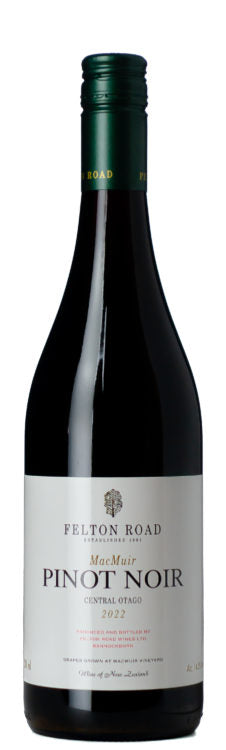
Felton Road - MacMuir Pinot Noir 2023
A precise and profound Pinot Noir from Central Otago, combining freshness, fine tannins and aromatic intensity.

Felton Road - Bannockburn Chardonnay 2024
A precise and vibrant Chardonnay from Bannockburn, where the purity of the fruit meets a chiseled minerality.

Felton Road - Bannockburn Riesling 2025
A precise and crystalline Bannockburn Riesling, where sharp freshness meets the purity of the Central Otago terroir.
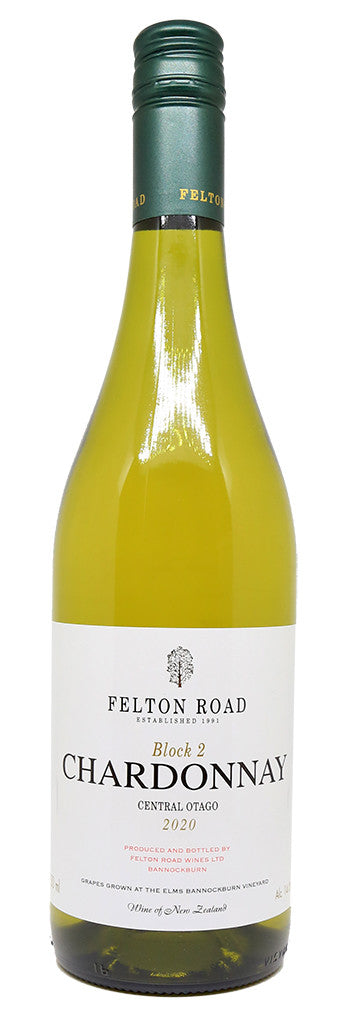
Felton Road - Block 2 Chardonnay 2024
A Chardonnay with a precise and saline terroir, where the purity of the fruit meets the depth of Bannockburn.

Felton Road - Calvert Pinot Noir 2024
A precise and elegant Pinot Noir from Central Otago, where the purity of the fruit meets the finesse of the Bannockburn terroir.
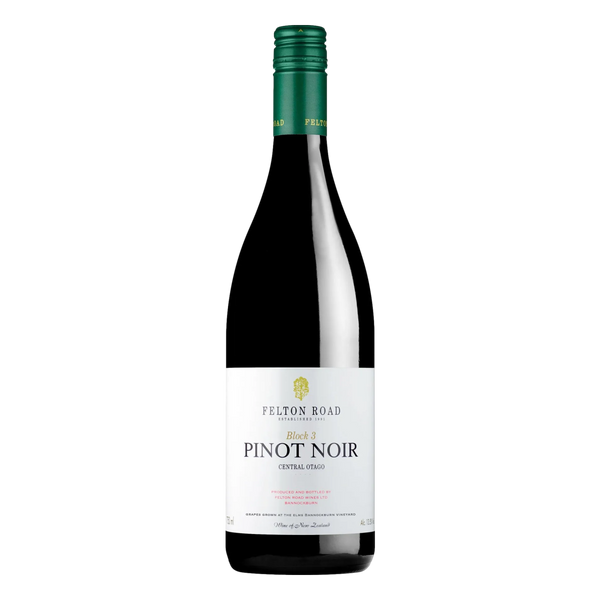
Felton Road - Block 3 Pinot Noir 2024
A precise and profound Pinot Noir from Bannockburn, combining aromatic intensity and silky texture.

Felton Road - Cornish Point Pinot Noir 2024
A precise and intense Pinot Noir from Central Otago, combining purity of fruit, finesse of tannins and aromatic depth.

Felton Road - Block 5 Pinot Noir 2024
A Pinot Noir from Bannockburn that is both precise and profound, which finely expresses the singularity of Block 5.

Peregrine Estate - Pinot noir 2015
A Pinot Noir that combines purity and elegance, concentration and length.

Rippon - Mature Vine Pinot Noir 2017
An elegant and refined Pinot noir, grown on the banks of Lake Wanaka
The sub-districts, from the coolest to the warmest
An hour of driving separates the northern vines from the southern ones, and the relief changes everything along the way. Each district moves at its own pace: almost three weeks separate the harvest in Gibbston from the one in Bendigo, and that gap can be read in the glass.
| The sub-region | Altitude and exposure | The Pinot's profile | The estate in our range |
|---|---|---|---|
| Bannockburn, south bank of the Kawarau | 220 to 350 m, north-facing slopes, loess and schist | Dense black fruit, thyme, tight tannin, long finish | Felton Road Bannockburn Pinot Noir€69 per bottle, sold individually |
| Gibbston, the deep gorge | 320 to 420 m, the coolest sector, the latest ripening | Red cherry, flowers, fine tannin, high acidity | Peregrine Estate Pinot noir€45 per bottle, sold individually |
| Cromwell and Lowburn, on the shores of Lake Dunstan | 200 to 300 m, alluvial terraces, light reflected off the water | Fleshy red fruit, broad palate, supple tannin | Burn Cottage, planted in 2002 and farmed biodynamically from the start |
| Bendigo and Pisa, on the east bank | 250 to 400 m, north-facing schist slopes, the warmest | Candied black fruit, sweet spices, ample structure | Two of the three districts blended by Peregrine Estate |
| Wanaka, on the slopes above the lake | 300 to 340 m, short season, quartz, clay and pebbles | Floral perfume, lithe body, lively acidity | Rippon, four generations of the Mills family by the water |
Felton Road vinifies each plot on its own: Cornish Point, born on silty-sandy soils loaded with stones, and Calvert, on loess laid in fine layers over glacial gravels, are both €86 a bottle, in packs of 2. To compare with the country's other great Pinot district, head to Martinborough.
The age of Pinot, from black fruit to undergrowth
The high acidity and fine tannin of these wines open up a long trajectory. The listings in this section give five to ten years of ageing potential on Felton Road's cuvées. Here is how the glass shifts over the years, with the right move at each stage.
| The age of the bottle | What the glass tells you | Decanting and temperature | The pairing of the moment |
|---|---|---|---|
| The year of release | Black cherry, violet, tight tannin, compact palate | One hour in a decanter, served at fifteen degrees | Duck breast, oven-roasted beetroot |
| Two to four years | The fruit tightens, thyme and spice rise | Forty minutes in a decanter, fifteen degrees | Roast pigeon, cep risotto |
| Five to seven years | Open palate, integrated black fruit, silky tannin | Twenty minutes of air, fifteen to sixteen degrees | Milk-fed lamb, duck with cherries |
| Eight to ten years | Undergrowth, leather, orange peel, rounded substance | Opened at the time of serving, sixteen degrees | Game birds, morels in cream |
| Beyond ten years | Truffle, dried mushroom, candied fruit, integrated tannin | Bottle stood upright the day before, decanted at the last moment | Hare à la royale, aged cheeses |
The whites follow the same line: the Bannockburn Chardonnay, at €54 a bottle in packs of 2, is served at around 11 °C and gains three years in the cellar; the Bannockburn Riesling, at the same price and 11.5% abv, is ready now at 9 °C. The Pinot Noir page allows the comparison with Burgundy and Oregon.
Which bottle to enter the region with
Seven bottles and one grape trail, from a first Pinot to a block vinified separately.
Set the tone for the region
A blend from Bendigo, Pisa and Gibbston, thirty per cent whole bunches and ten months in old barrels: cherry, wild strawberry and leather.
Peregrine Estate Pinot noir 2015 · €45 per bottle, sold individuallyThe Bannockburn benchmark
North-facing slopes on loess and schist, certified biodynamics, native yeasts: the deep black fruit and fine tannin that made the sector's reputation.
Felton Road Bannockburn Pinot Noir 2023 · €69 per bottle, sold individuallyA Pinot that plays on finesse
Loess and fine silts over glacial gravels, spontaneous fermentation, moderate punching down: an elegant, straight palate, at 13.5% alcohol.
Felton Road Calvert Pinot Noir 2023 · €86 per bottle, in a pack of 2Taste a fully destemmed plot
Old silty-clay terraces, fruit one hundred per cent destemmed, stainless-steel tanks and native yeasts: aromatic intensity and a silky texture.
Felton Road Block 3 Pinot Noir 2023 · €112 per bottle, sold individuallyComparing with whole bunches
Deep silty-clay soils over schist gravels, a share of whole bunches in the vat, gentle punching down: more depth and relief.
Felton Road Block 5 Pinot Noir 2023 · €112 per bottle, sold individuallyDiscover high-altitude Chardonnay
Whole-bunch pressed, fermented in French oak barrels with native yeasts, full malolactic: mineral tension and a saline finish.
Felton Road Bannockburn Chardonnay 2023 · €54 per bottle, in a pack of 2A taut white for the table
Whole-bunch pressing, slow low-temperature fermentation in stainless-steel tank: crystalline citrus, razor-sharp acidity and 11.5% alcohol.
Felton Road Bannockburn Riesling 2024 · €54 per bottle, in a pack of 2Follow the grape elsewhere
The selection page brings together the Pinot Noirs of Burgundy, Oregon and the antipodes: the same grape, read by opposite climates.
Section page · Pinot Noir
From the gold rush to the vine
In 1862, the discovery of gold in the Clutha drew tens of thousands of prospectors, from Europe and then from China, into a valley empty until then. Two years later a Frenchman settled at Clyde, Jean Désiré Feraud, planted vines above the river and won medals as far away as Sydney. Once the gold ran out, the vine faded for nearly a century.
It came back in the 1970s, when a few families sensed that the forty-fifth parallel south, the shelter of the Southern Alps and the swing between day and night suited Pinot Noir. The Mills family planted at Wanaka, others followed at Gibbston and then at Bannockburn. It took thirty years for the case to be proved.
How do you choose
We taste every cuvée before listing it, and two things decide here: the freshness that holds beneath the ripe fruit, and the finesse of the tannin on the finish. A Pinot that banks everything on colour and extraction is passed over. We then follow the estates that pick by hand, ferment with native yeasts and keep a light touch with new oak.
The Wine Wanderer Team
What we are asked about Central Otago
Why do these bottles often go in packs of two?
The estates of Central Otago make little and ship to the other side of the world. The two-bottle pack keeps the price tight despite the distance, and it lets you open one while keeping the other in the cellar. The price shown is that of the bottle, and the sales format sits right beside it. Several cuvées are still offered as single bottles, at Felton Road as at Peregrine Estate.
Are Shiraz and Syrah the same grape variety?
Yes, one grape under two names. Australia and South Africa write Shiraz, France and New Zealand write Syrah. The word above all announces a style: Shiraz for a sun-drenched, jammy, generous version, Syrah for a peppery, taut reading. Central Otago remains Pinot Noir country, but the Syrah page gathers both schools from one country to another.
What distinguishes this Pinot from Martinborough's?
Climate, above all. Martinborough lives under maritime influence, swept by the winds of Cook Strait: its Pinot comes out tight, spicy, with firm tannin. Central Otago, cut off from the sea by the Southern Alps, has a semi-continental regime, with hot dry summers and cold nights. The fruit turns black there and the matter gains in density. See Martinborough.
Why is it called the southernmost wine region in the world?
The vines of Bannockburn and Alexandra lie beyond the forty-fifth parallel south, closer to the pole than any other commercial wine region. At that latitude, the summer days stay long and ultraviolet radiation remains intense. The skin of the berries thickens to protect itself, which brings Pinot Noir more colour, more tannin and more aroma.
What does altitude change from one sub-region to another?
Every hundred metres delays ripening. Gibbston, the highest and the most hemmed in, picks up to three weeks after Bendigo and gives perfumed wines, light in body, very fresh. Bendigo, on its north-facing schist slopes, pushes the fruit towards black and jammy. The table of sub-regions above sums up these differences for each lieu-dit.
What does vinifying by plot mean at Felton Road?
Each block comes into the winery separately and follows its own path, under certified biodynamics and native yeasts. The Block 3 is fully destemmed and ferments in stainless-steel tank; the Block 5 keeps a share of whole bunches. Both are €112 a bottle, sold singly, and are well worth tasting side by side.
How long does a Central Otago Pinot keep?
The listings in this section give five to ten years on Felton Road's cuvées, and the single-plot selections often hold longer. The wine goes through a closed phase around its third year, then opens again on forest floor and spice. Keep the bottle lying down, at around 12 °C, away from the light. The ageing table gives the detail band by band.
Should these wines be decanted?
Yes for young vintages, which gain from an hour of air to soften: the tannin melts in and the fruit broadens. From eight years on, open the bottle at the moment of serving, or give it a very short spell in a decanter to leave the sediment at the bottom. Serve at 15–16 °C, in a large glass.
Are there any whites in Central Otago?
Yes, in small quantities, and they are worth the detour. Felton Road presses its chardonnays as whole bunches and ferments them in French oak barrels on native yeasts, for a saline, taut palate. Its Bannockburn riesling, vinified in stainless-steel tank at low temperature, keeps a razor-sharp acidity and comes in at 11.5% abv, which makes it an ideal white for the table.
Which bottle should I start with?
Take the Peregrine Estate Pinot Noir, at €45 a bottle and available singly: a blend of three sub-regions that sets the tone of the region. Then move on to Felton Road's Bannockburn, at €69 a bottle, to measure what a plot-by-plot reading brings.