
Grands crus classés of Bordeaux: Médoc, Graves, Saint-Émilion
39 crus classés, from Premier Cru by the bottle to magnums for ageingYou are looking for a bottle whose rank can be read on the label: Premier Cru (first growth) of Pauillac, Deuxième Cru of Saint-Julien, Premier Grand Cru Classé of Saint-Émilion, Premier Cru Supérieur of Sauternes. Three official classifications rank these châteaux: the 1855 one for the Médoc and Sauternes, the Graves one, drawn up in 1953 and completed in 1959, and the Saint-Émilion one, created in 1955 and open to revision every ten years.
This page explains what each rank is worth, how to choose between a young vintage and a mature bottle, and why so many of these wines come in magnum, jéroboam or impériale.
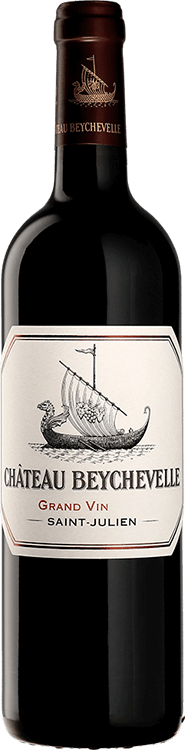
Château Beychevelle - Saint-Julien 4e Cru Classé
The grand vin of the “Versailles of the Médoc”, on the gravel hilltops of Saint-Julien facing the estuary.
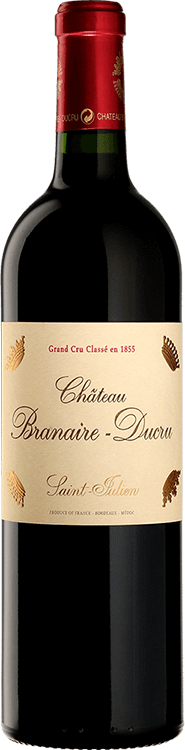
Château Branaire-Ducru - Saint-Julien 4e Cru Classé
A Saint-Julien from the Maroteaux family, all purity of fruit, freshness and elegance.

Château Brane-Cantenac - Margaux 2e Cru Classé
The Second Growth (Deuxième Cru Classé) of the Lurton family, on the Brane gravel hilltop, in the heart of Margaux.
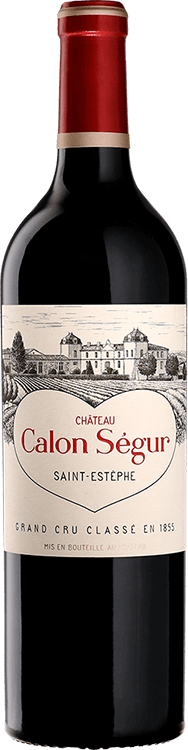
Château Calon Ségur - Saint-Estèphe 3e Cru Classé
The grand vin in the heart of Saint-Estèphe, on a thick bed of Garonne gravel.
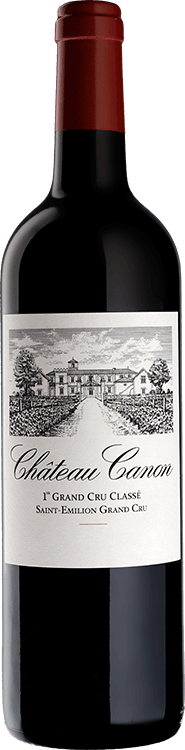
Château Canon - Saint-Émilion 1er Grand Cru Classé
The Premier Grand Cru Classé of Saint-Émilion's limestone plateau, aged in its underground quarries.

Château Canon-la-Gaffelière - Saint-Émilion 1er Grand Cru Classé
The organic Premier Grand Cru Classé of the Counts von Neipperg, at the foot of the Saint-Émilion slope.

Château Cantenac Brown - Margaux 3e Cru Classé
The Troisième Cru Classé of Margaux with its neo-Tudor château, on its gravel hilltops.
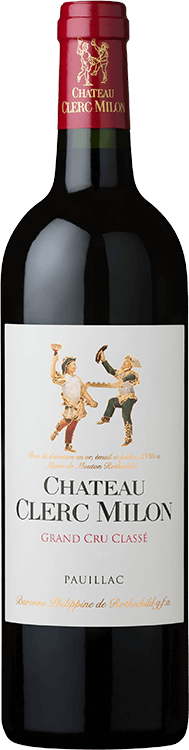
Château Clerc Milon - Pauillac 5e Cru Classé
The Rothschild family's classified growth in Pauillac, a neighbour of Mouton, with its label of two dancers.

Château Cos d'Estournel - Saint-Estèphe 2ème Cru Classé
The great Saint-Estèphe with the pagodas, between Cabernet power and a cashmere touch.

Château Ducru-Beaucaillou - Saint-Julien 2ème Cru Classé
A thoroughbred Saint-Julien, born of the fine gravel pebbles facing the Gironde estuary.

Château-Figeac - Saint-Émilion Grand Cru 1er Grand Cru Classé
The Saint-Émilion of the gravels, where the two Cabernets bring freshness, brightness and long ageing potential.

Château Grand Mayne - Saint-Émilion Grand Cru Classé
A generous Saint-Émilion Grand Cru Classé, born on the clay-limestone slope at the foot of the town.

Château Grand-Puy-Lacoste - Pauillac 5ème Cru Classé
A classic, thoroughbred Pauillac with intense blackcurrant, from a vineyard in a single block.

Château Gruaud Larose - Saint-Julien 2ème Cru Classé
An ample, deep Saint-Julien, organically farmed on the Quaternary Garonne gravels.

Château Haut-Bailly - Pessac-Léognan Cru Classé de Graves
A Pessac-Léognan of great elegance, from the top of a single unbroken gravel ridge.

Château Haut-Batailley - Pauillac 5ème Cru Classé
An elegant, fresh Pauillac from the south of the appellation, with one foot in Saint-Julien.
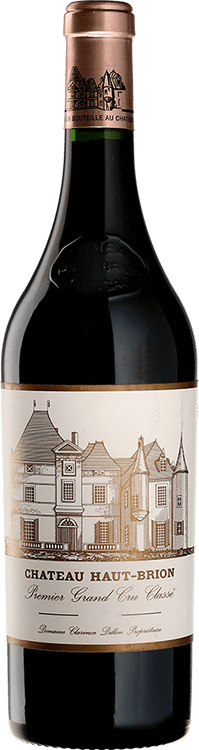
Château Haut-Brion - Pessac-Léognan 1er Cru Classé
The oldest of Bordeaux's great growths, a mineral and complex Premier Cru from the Graves.
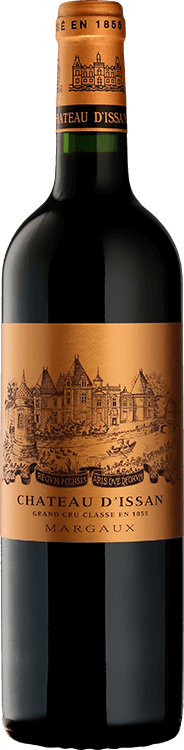
Château d'Issan - Margaux 3ème Cru Classé
A fine, elegant Margaux, born of the old vines in the walled enclosure of a moated château.

Château Lafite Rothschild - Pauillac 1er Cru Classé
The first of the 1855 Premiers Crus, a Pauillac of rare elegance and longevity.
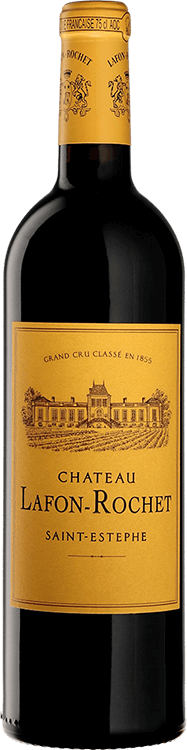
Château Lafon-Rochet - Saint-Estèphe 4ème Cru Classé
The yellow château of Saint-Estèphe, a classic Médoc on deep gravel and clay.

Château Latour - Pauillac 1er Cru Classé
The Premier Grand Cru of the Enclos, a gravel-grown Pauillac dominated by Cabernet Sauvignon and built to last for decades.

Château Lynch-Bages - Pauillac 5ème Cru Classé
A generous Pauillac from the Bages plateau, all blackcurrant and cedar, with a classic build and immediate charm.

Château Léoville Las Cases - Saint-Julien 2ème Cru Classé
The Grand Vin of the Clos de Léoville, a Saint-Julien with a depth and rigour worthy of the greatest Pauillacs.

Château Léoville Poyferré - Saint-Julien 2ème Cru Classé
A voluptuous, vibrant Saint-Julien, born of the deep gravel that runs along the Gironde, charming and built for ageing.
The three classifications, rank by rank
The 1855 classification ranks the reds of the Médoc in five tiers and the sweet wines of Sauternes and Barsac in three. The Graves classification has a single tier. The Saint-Émilion classification has two, put back in play at each revision.
| Tier | Classification | Key facts | To taste |
|---|---|---|---|
| Premier Cru Classé | 1855, Médoc reds | 5 châteaux: three in Pauillac, one in Margaux, one in Pessac. The only promotion in the history of the classification dates from 1973. | Château Margaux 2023€571.00 a bottle |
| Deuxième Cru Classé | 1855, Médoc reds | 14 châteaux, mainly in Margaux and Saint-Julien. Mostly Cabernet Sauvignon, very long ageing. | Château Léoville Las Cases 1996€489.00 a bottle |
| Troisième Cru Classé | 1855, Médoc reds | 14 châteaux, most of them in the Margaux appellation, on gravel croupes. | Château Palmer 2022€466.00 a bottle |
| Quatrième Cru Classé | 1855, Médoc reds | 10 châteaux, led by Saint-Julien with Beychevelle, Branaire-Ducru, Saint-Pierre and Talbot. | Château Branaire-Ducru 2023€526.00 for the 6 L impériale |
| Cinquième Cru Classé | 1855, Médoc reds | 18 châteaux, led by Pauillac. The most varied rank: several of its crus trade at the level of Deuxièmes Crus. | Château Lynch-Bages 2005€549.00 per magnum |
| Premier Cru Supérieur, premiers and seconds crus | 1855, Sauternes and Barsac | 27 sweet wine crus: one Premier Cru Supérieur, 11 premiers crus, 15 seconds crus. | Château d'Yquem 2008€456.00 a bottle |
| Cru Classé de Graves | Graves, 1953, completed in 1959 | 16 crus, all in Pessac-Léognan, classified for red, for white or for both colours, in a single tier. | Château La Mission Haut-Brion 2019€544.00 a bottle |
| Premier Grand Cru Classé | Saint-Émilion, 1955, 2022 edition | 14 châteaux in the 2022 edition, two of which hold the A distinction. | Château Pavie 2010Premier Grand Cru Classé A, €564.00 a bottle |
| Grand Cru Classé | Saint-Émilion, 1955, 2022 edition | 71 châteaux in the 2022 edition. Merlot dominant, on the limestone plateau, the slopes and the foot of the slopes. | Château Grand Mayne 2022€574.00 for the 6 L impériale |
Each price applies to the vintage and format quoted; the château's product page lists the other vintages and formats available.
From bottle to melchior
Many crus classés in this section come in large format, some only that way. The larger the container, the more slowly the wine evolves: the magnum and its bigger siblings are formats for ageing and for large tables.
| Format | Capacity | What it is for | Example |
|---|---|---|---|
| Bottle | 75 cl | Discovering a cru, comparing two vintages or two ranks | Château Haut-Brion 2023€489.00 a bottle |
| Magnum | 1.5 L | The benchmark format for ageing, at ease on a table of six to eight guests | Château Rauzan-Ségla 2000€460.00 a magnum |
| Jéroboam | 3 L | A festive dinner, with even slower evolution than in magnum | Château Cantenac Brown 2015€469.00 for the 3 L jéroboam |
| 5 L bottle | 5 L | A rare piece, to mark a birthday or a birth year | Château Clerc Milon 2000€1,771.00 for the 5 L bottle |
| Impériale | 6 L | The most common large format among the crus classés, for a reception | Château Lafon-Rochet 2018€540.00 an impériale |
| Salmanazar | 9 L | A wedding, a big family meal | Château Pape Clément 2016€2,071.00 a salmanazar |
| Balthazar | 12 L | A cellar piece, to open for a company or club event | Château d'Issan 2018€1,547.00 a balthazar |
| Nabuchodonosor | 15 L | The collector's bottle, for several decades of ageing | Château Haut-Batailley 2018€1,864.00 a nabuchodonosor |
| Melchior | 18 L | The largest format in the section, an exceptional piece | Château Rauzan-Ségla 2022€3,998.00 a melchior |
A large format is stored lying down, at a stable temperature. For serving, plan for two people and several decanters.
A cru classé for every wish
Start from the occasion to celebrate or the cellar to build; the rank and the format follow.
A Premier Cru by the bottle
Merlot, Cabernet Sauvignon and Cabernet Franc on the gravel terrace of Pessac: a mineral 1855 Premier Cru, with notes of tobacco, cedar and truffle.
Château Haut-Brion 2023, €489.00 a bottleA mature Deuxième Cru
A Saint-Julien born of the gravel facing the estuary, dominated by Cabernet Sauvignon: a vintage from the 1990s, ready for the table: blackcurrant, cedar and tobacco.
Château Ducru-Beaucaillou 1995, €519.00 a bottleThe magnum of an evolved Pauillac
Gravel croupes over clay in the south of Pauillac, mostly Cabernet Sauvignon: peony, iris and cedar, in the format that suits large tables.
Château Pichon Longueville Comtesse de Lalande 2006, €481.00 a magnumThe classified Right Bank
A due-south-facing limestone slope, Merlot and Cabernets, around eighteen months in barrel: a dense Saint-Émilion, with black cherry, liquorice and truffle.
Château Pavie 2010, €564.00 a bottleThe sweet wine of 1855
Sémillon and Sauvignon Blanc harvested in successive passes (tries), around twenty months in new barrels: dried apricot, saffron and acacia honey, for a blue cheese or a dessert.
Château d'Yquem 2008, €456.00 a bottlePauillac, stronghold of the Premiers Crus
Three of the five Premiers Crus and most of the Cinquièmes: the whole appellation, its gravel croupes and its Cabernet Sauvignon, in a dedicated section.
Saint-Émilion, plateau and slopes
The 1955 classification explained terroir by terroir, from the limestone plateau to the gravel in the west, with the crus classés and their neighbours in the appellation.
All of Bordeaux, for a first approach
The complete Bordeaux section, Left Bank and Right Bank: the starting point for getting to know the style of the crus classés before aiming for a rank.
1855: a hierarchy dictated by prices
For the Paris Universal Exhibition of 1855, Napoleon III asked for a selection of the best wines of Bordeaux. The Chamber of Commerce entrusted the task to the city's wine brokers, who ranked the crus according to the prices achieved over several decades: the market served as judge, well before tasting. The result was five tiers of reds, all from the Médoc with the exception of Haut-Brion, and three tiers of sweet wines in Sauternes and Barsac.
The list has changed very little since: a fifth-tier cru joined it in 1855 itself, and Mouton Rothschild moved from Deuxième to Premier Cru in 1973. The rank therefore rewards a long-standing reputation, while today's price tells you the current level. A Troisième Cru such as Château Palmer or a Cinquième such as Château Pontet-Canet, farmed biodynamically, trade at the level of Deuxièmes Crus. Graves and Saint-Émilion followed a century later, with two opposite approaches: a fixed list in Pessac-Léognan, a classification put back in play every ten years on the Right Bank.
Haut-Brion, classified twice
Château Haut-Brion is the only cru outside the Médoc to feature among the reds of 1855, with the rank of Premier Cru. It also belongs to the crus classés of Graves, in the Pessac-Léognan appellation created in 1987. Its neighbour Château La Mission Haut-Brion shares the same gravel terrace, directly opposite. Comparing the two sheds light on the whole classification: €489.00 a bottle for the former (2023), €544.00 for the latter (2019).
The Wine Wanderer Team
What we are asked about the crus classés
What is a Bordeaux grand cru classé?
A grand cru classé is a château listed in one of Bordeaux's official classifications: the 1855 one for the Médoc, Sauternes and Barsac, the Graves one (1953, completed in 1959) or the Saint-Émilion one (1955). The rank belongs to the château and appears on the label. In Saint-Émilion, it is put back in play every ten years; in the Médoc and Graves, it is permanent.
How many grands crus classés are there in the 1855 classification?
The 1855 classification includes 88 crus: 61 reds and 27 sweet wines. The reds are divided into 5 Premiers, 14 Deuxièmes, 14 Troisièmes, 10 Quatrièmes and 18 Cinquièmes Crus, across Margaux, Pauillac, Saint-Julien, Saint-Estèphe, the Haut-Médoc and Pessac for Haut-Brion. Sauternes and Barsac have one Premier Cru Supérieur, 11 premiers crus and 15 seconds crus. The Médoc therefore accounts for almost all the reds.
What are the five Premiers Crus Classés of Bordeaux?
Château Lafite Rothschild, Château Latour and Château Mouton Rothschild in Pauillac, Château Margaux in Margaux, Château Haut-Brion in Pessac. Mouton Rothschild joined the other four in 1973. All five are in this section, in several vintages: Haut-Brion from €489.00 a bottle (2023), Margaux from €571.00 (2023), Lafite and Mouton from €654.00, Latour from €691.00 a bottle (2017).
Premier Cru or Cinquième Cru Classé: what is the difference in the glass?
The rank reflects the price hierarchy of 1855 more than a style. The Premiers Crus (first growths) offer the greatest consistency and the longest ageing. Several crus from the lower ranks have since reached this level of quality: Château Lynch-Bages and Château Pontet-Canet, Cinquièmes Crus of Pauillac, or Château Palmer, Troisième Cru of Margaux, at €466.00 a bottle (2022). Choose the appellation and the vintage first, the rank second.
Has the 1855 classification changed since it was created?
Very little: two changes in more than one hundred and seventy years. A fifth-tier cru was added in 1855 itself, then Château Mouton Rothschild moved from Deuxième to Premier Cru in 1973, by decision of the Minister of Agriculture. The estates themselves have evolved: enlarged vineyards, new owners, conversion to organic or biodynamic farming as at Château Latour or Château Pontet-Canet. The rank remains attached to the name of the château.
What is the difference between Saint-Émilion Grand Cru and Grand Cru Classé?
Saint-Émilion Grand Cru is an appellation, open to any producer who meets its specifications. Grand Cru Classé and Premier Grand Cru Classé are ranks in the classification, awarded to a château after assessment and open to revision every ten years. The 2022 edition lists 85 châteaux: 14 Premiers Grands Crus Classés, two of them with the A distinction, and 71 Grands Crus Classés. The Saint-Émilion section describes the terroirs in detail.
Why is Pomerol not part of any classification?
Pomerol has always lived outside any official classification: this small appellation made its name château by château, through the reputation of its Merlot wines. The hierarchy there is therefore a de facto one, set by the market. To compare, taste Château-Figeac, a Premier Grand Cru Classé of Saint-Émilion on the edge of Pomerol, from €511.00 a magnum (2021), then browse the Pomerol section.
What is the second wine of a cru classé?
A second wine comes from the same estate as the grand vin, made from the lots left out of the main blend: young vines, less consistent plots, vats judged to be softer. The selection is strict: Château Margaux keeps around 40% of its harvest for its grand vin. The second wine gives the style of the property, ready earlier and at a gentler price. For a first approach, browse the Bordeaux section.
How long should you keep a Bordeaux grand cru classé?
Allow at least ten years for a classified red, twenty to thirty years for the great vintages of the Premiers and Deuxièmes Crus. The Cabernet Sauvignon of the Médoc needs time for its tannins to soften; the Merlot and Cabernet Franc of the Right Bank open up a little earlier. A sweet wine such as Château d'Yquem lasts for several decades. To drink now, look for a mature vintage: Château Ducru-Beaucaillou 1995, €519.00 a bottle.
Bottle, magnum or impériale: which format should you choose?
The 75 cl bottle is right for discovering a cru; the magnum, for keeping it a long time or serving it to a large table. Several châteaux in this section are sold only in large format, singly: 3 L jéroboam, 6 L impériale, up to the 18 L melchior. The price shown always applies to the whole bottle, for example €540.00 for the impériale of Château Lafon-Rochet 2018.
What food goes with a grand cru classé?
A red from the Médoc or Graves calls for roast meat: lamb, rib of beef, feathered game for an evolved vintage. A Saint-Émilion pairs with a dish in sauce, truffled poultry or mushrooms. Château d'Yquem goes with a blue cheese, roast poultry or a dessert made with yellow fruit. Serve the reds at around 17 °C, after one to two hours in the decanter for young vintages.
Where can I buy a Bordeaux grand cru classé in France?
Right here: the section brings together crus classés from 1855, Graves and Saint-Émilion among our French wines, in bottle and in large format, from recent vintages to the 1980s and 1990s. Each product page gives the rank, the blend, the ageing and the formats available. The bottles leave individually secured in reinforced packaging, for France, Europe and international destinations. For advice, use the contact page.