
Médoc wines: from Margaux to Saint-Estèphe, the crus classés
32 bottles, from second wine to Premier Grand Cru ClasséA Cabernet Sauvignon red born on gravel, built for the cellar, with a nose of blackcurrant, cedar and graphite: that is what people come to the left bank of the Gironde for. From south to north, four communal appellations follow one another along the estuary, Margaux, Saint-Julien, Pauillac and Saint-Estèphe, each with its own feel of tannin.
The selection brings together the crus classified in 1855, from Cinquième to Premier, their second wines and a rare white, in 75 cl bottles as well as magnum, jéroboam or impériale, across vintages ranging from the 1980s to 2023.
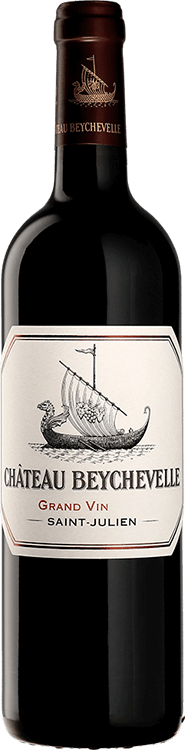
Château Beychevelle - Saint-Julien 4e Cru Classé
The grand vin of the “Versailles of the Médoc”, on the gravel hilltops of Saint-Julien facing the estuary.
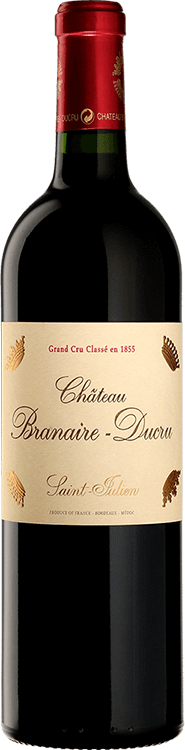
Château Branaire-Ducru - Saint-Julien 4e Cru Classé
A Saint-Julien from the Maroteaux family, all purity of fruit, freshness and elegance.

Château Brane-Cantenac - Margaux 2e Cru Classé
The Second Growth (Deuxième Cru Classé) of the Lurton family, on the Brane gravel hilltop, in the heart of Margaux.
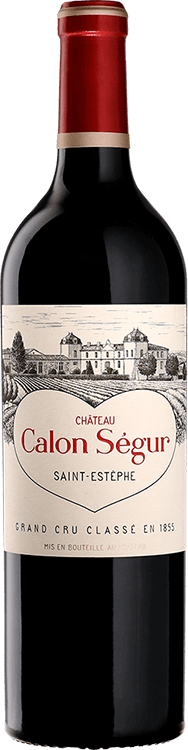
Château Calon Ségur - Saint-Estèphe 3e Cru Classé
The grand vin in the heart of Saint-Estèphe, on a thick bed of Garonne gravel.

Château Cantenac Brown - Margaux 3e Cru Classé
The Troisième Cru Classé of Margaux with its neo-Tudor château, on its gravel hilltops.
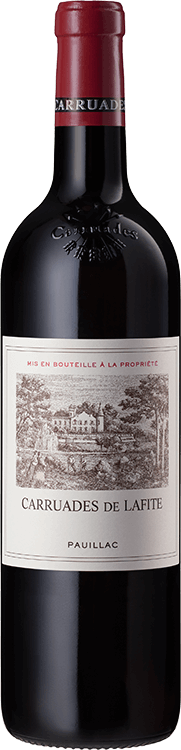
Château Lafite Rothschild - Carruades de Lafite
The second wine of Château Lafite Rothschild, born partly on the Carruades plateau in Pauillac.
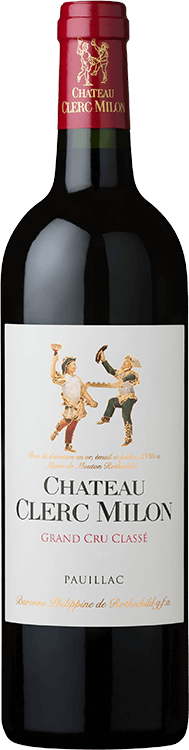
Château Clerc Milon - Pauillac 5e Cru Classé
The Rothschild family's classified growth in Pauillac, a neighbour of Mouton, with its label of two dancers.

Château Cos d'Estournel - Saint-Estèphe 2ème Cru Classé
The great Saint-Estèphe with the pagodas, between Cabernet power and a cashmere touch.

Château Ducru-Beaucaillou - Saint-Julien 2ème Cru Classé
A thoroughbred Saint-Julien, born of the fine gravel pebbles facing the Gironde estuary.
Château Latour - Les Forts de Latour
The second wine of Château Latour, crafted with the same exacting standards on the gravels of Pauillac.

Château Grand-Puy-Lacoste - Pauillac 5ème Cru Classé
A classic, thoroughbred Pauillac with intense blackcurrant, from a vineyard in a single block.

Château Gruaud Larose - Saint-Julien 2ème Cru Classé
An ample, deep Saint-Julien, organically farmed on the Quaternary Garonne gravels.

Château Haut-Batailley - Pauillac 5ème Cru Classé
An elegant, fresh Pauillac from the south of the appellation, with one foot in Saint-Julien.
Château d'Issan - Margaux 3ème Cru Classé
A fine, elegant Margaux, born of the old vines in the walled enclosure of a moated château.

Château Lafite Rothschild - Pauillac 1er Cru Classé
The first of the 1855 Premiers Crus, a Pauillac of rare elegance and longevity.
Château Lafon-Rochet - Saint-Estèphe 4ème Cru Classé
The yellow château of Saint-Estèphe, a classic Médoc on deep gravel and clay.

Château Latour - Pauillac 1er Cru Classé
The Premier Grand Cru of the Enclos, a gravel-grown Pauillac dominated by Cabernet Sauvignon and built to last for decades.

Château Lynch-Bages - Pauillac 5ème Cru Classé
A generous Pauillac from the Bages plateau, all blackcurrant and cedar, with a classic build and immediate charm.

Château Léoville Las Cases - Saint-Julien 2ème Cru Classé
The Grand Vin of the Clos de Léoville, a Saint-Julien with a depth and rigour worthy of the greatest Pauillacs.

Château Léoville Poyferré - Saint-Julien 2ème Cru Classé
A voluptuous, vibrant Saint-Julien, born of the deep gravel that runs along the Gironde, charming and built for ageing.

Château Margaux - Margaux 1er Cru Classé
The Premier Grand Cru of Margaux, a rare marriage of finesse and power, with a silky, perfumed tannic touch.

Château Montrose - Saint-Estèphe 2ème Cru Classé
A Saint-Estèphe of precise power, born of gravel terraces facing the Gironde and dominated by Cabernet.
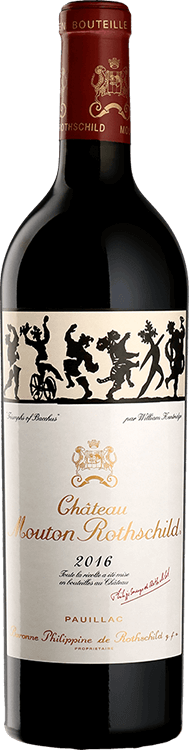
Château Mouton Rothschild - Pauillac 1er Cru Classé
The Pauillac Premier Cru Classé with the artist's label, a Cabernet of rare depth and finesse.

Château Palmer - Margaux 3ème Cru Classé
A singular Margaux in which Merlot and Cabernet share equal billing, with velvety depth and rare elegance.
Four communes, from south to north
The vineyard covers around 16,000 hectares between the Gironde estuary and the Landes forest. The thickest gravel, laid down by the Garonne, is concentrated in the communal appellations: that is where almost all the crus classés are found.
| Denomination | Terroir | In the glass | To taste |
|---|---|---|---|
| Margaux Around 1,500 ha, 21 crus classés | The southernmost. Fine, deep gravel, poor and very free-draining, around Margaux, Cantenac, Soussans, Arsac and Labarde | Scent of violet and rose, fine tannins, silky touch: the most delicate of the four | Château Rauzan-SéglaMargaux 2ème Cru Classé, from €460.00 per magnum (2000) |
| Saint-Julien Around 900 ha, 11 crus classés | Between Margaux and Pauillac. Even gravel mounds facing the estuary, subsoils of sand and clay | Balance: the finesse of Margaux and the frame of Pauillac, blackcurrant, cedar, tobacco | Château Ducru-BeaucaillouSaint-Julien 2ème Cru Classé, from €519.00 per bottle (1995) |
| PauillacAround 1,200 ha, 18 crus classés including three Premiers | Deep gravel mounds on a base of clay or limestone, a few hundred metres from the estuary | Cabernet Sauvignon dominant, blackcurrant, graphite, pencil lead: power and the longest ageing potential | Château Lynch-BagesPauillac 5ème Cru Classé, from €549.00 per magnum (2005) |
| Saint-Estèphe Around 1,200 ha, 5 crus classés | The northernmost. Gravel lying on more clay, which holds water during dry summers | Firm structure, freshness, black fruit and spices: a wine slow to open, very consistent in hot years | Château Calon SégurSaint-Estèphe 3e Cru Classé, from €564.00 per magnum (1990) |
| Haut-Médoc, Médoc, Moulis, Listrac The peninsula's four other appellations | Haut-Médoc in the south, around the communal appellations; Médoc in the north; Moulis and Listrac set back from the estuary, on gravel, clay and limestone | More approachable blended reds, home of the crus bourgeois and of five crus classés in Haut-Médoc | The whole Bordeaux sectionTo extend to the other Gironde appellations |
Rounded areas. Médoc, Haut-Médoc, Saint-Estèphe, Saint-Julien and Pauillac have been recognised as appellations d'origine contrôlée since 1936, Margaux since 1954.
The 1855 classification, rank by rank
Published on 18 April 1855 for the Paris Universal Exhibition, the classification ranks 61 red crus in five tiers, based on the prices recorded by Bordeaux brokers. The rank belongs to the château and appears on the label.
| Tier | What it covers | In the selection | Buying pointer |
|---|---|---|---|
| Premier Grand Cru Classé | 5 crus: Lafite Rothschild, Latour and Mouton Rothschild in Pauillac, Château Margaux, Haut-Brion in Pessac-Léognan | Château Lafite Rothschild, Château Latour, Château Mouton Rothschild, Château Margaux | Château Margaux 2023€571.00 per bottle, several vintages from 1994 to 2023 |
| Deuxième Cru Classé | 14 crus, including five in Saint-Julien, five in Margaux, two in Pauillac and two in Saint-Estèphe | Léoville Las Cases, Ducru-Beaucaillou, Gruaud Larose, Pichon Baron, Cos d'Estournel, Montrose, Brane-Cantenac | Château Léoville Las Cases 1996€489.00 per bottle, at maturity |
| Troisième Cru Classé | 14 crus, ten of them in Margaux: the most Margaux-centred rank | Château Palmer, Château d'Issan, Château Cantenac Brown, Château Calon Ségur | Château Palmer 2022€466.00 per bottle, magnums from 2006 to 2023 |
| Quatrième Cru Classé | 10 crus, four of them in Saint-Julien | Château Beychevelle, Château Branaire-Ducru, Château Talbot, Château Saint-Pierre, Château Lafon-Rochet | Château Branaire-Ducru 2023€526.00 in 6-litre impériale |
| Cinquième Cru Classé | 18 crus, twelve of them in Pauillac: several now sell at the price of a Deuxième | Château Pontet-Canet, Château Lynch-Bages, Château Grand-Puy-Lacoste, Château Haut-Batailley, Château Clerc Milon | Château Pontet-Canet 2021€541.00 in 3-litre jéroboam, farmed biodynamically |
| Second wine | An unregulated term, alongside the classification: the young vines and the lots left out of the grand vin, same team, same cellar | Carruades de Lafite, Les Forts de Latour, Le Petit Mouton de Mouton Rothschild | Les Forts de Latour 2017€549.00 per magnum |
Two changes since 1855: the addition of Château Cantemerle in September 1855 and the promotion of Château Mouton Rothschild to the rank of Premier in 1973. All the Bordeaux classifications are compared on the Grands Crus Classés page.
Ways into the Médoc
Start from a wish: a commune, a rank, a format, an occasion.
Approach a Premier Cru
The second wine of Mouton Rothschild, from the young vines of the Mouton plateau in Pauillac: blackcurrant, graphite, silky texture, in a vintage that has already taken on a patina.
Le Petit Mouton de Mouton Rothschild 2003, €460.00 per bottle, sold singlyThe velvet of Margaux
Merlot and Cabernet Sauvignon in equal parts on the gravel of the Brauzes plateau, farmed biodynamically: blackberry, violet, rich, silky tannins.
Château Palmer 2022, €466.00 per bottle, sold singlyA Saint-Julien at maturity
The grand vin of the Clos de Léoville, next door to Pauillac: upright, deep Cabernet Sauvignon, blackcurrant, cedar and blond tobacco, in a vintage ready to drink.
Château Léoville Las Cases 1996, €489.00 per bottle, sold singlyThe build of Saint-Estèphe
Cabernet Sauvignon and Merlot from a deep gravel plateau run through with clay: black fruit, spices, black tea, to lay down in the cellar for several years.
Château Cos d'Estournel 2022, €586.00 per magnumA Premier Grand Cru Classé
The grand vin of Château Margaux, aged around twenty months in new barrels: violet, blackcurrant, truffle, a dense, caressing palate.
Château Margaux 2023, €571.00 per bottle, sold singlyA large format for a big table
A jéroboam of Margaux, that is four bottles in a single one: blackberry, graphite, velvety tannins, for a birthday or a family meal.
Château Cantenac Brown 2015, €469.00 in 3-litre jéroboamPauillac in detail
The gravel mounds, the three Premiers Crus, how to read grand vin and second wine: the page devoted to the Médoc's most famous commune.
All the crus classés of Bordeaux
The 1855 classification set alongside those of Graves and Saint-Émilion, to compare ranks from one bank to the other.
Gravel, an estuary, a late-ripening grape
It all starts with the stone. On the left bank the Garonne laid down sheets of pebbles and sand several metres thick, which erosion carved into gentle mounds: the croupes de graves (gravel mounds). This lean soil drains the rain, gives back the day's heat at night and drives the roots deep. The estuary, several kilometres wide, tempers the oceanic climate and keeps some of the spring frosts at bay.
These conditions suit Cabernet Sauvignon, a late-ripening variety that needs warm soil to ripen. It dominates the mounds, while Merlot occupies the cooler, more clayey lower slopes; Petit Verdot and Cabernet Franc complete the blend. From one commune to the next, the recipe changes little: it is the fineness of the gravel, the share of clay and the distance from the river that shape the style, from the perfume of Margaux to the firmness of Saint-Estèphe.
Grand vin, second wine: the same address
Every château sorts its vats. The old vines of the best plots make up the grand vin, which alone carries the 1855 rank. The young vines and the lots left out give the second wine: same terroir, same team, a more supple style and shorter ageing potential. Carruades de Lafite 2021 is €526.00 per magnum, Les Forts de Latour 2017 €549.00 per magnum.
The Wine Wanderer Team
What we are asked about the Médoc
What are the appellations of the Médoc?
The Médoc has eight appellations, all for red wine. Two are regional, Médoc in the north and Haut-Médoc in the south. Six are communal: Margaux, Moulis, Listrac-Médoc, Saint-Julien, Pauillac and Saint-Estèphe. The four communal appellations bordering the estuary account for 55 of the 61 crus classified in 1855. The whole covers around 16,000 hectares on the left bank of the Gironde, north of Bordeaux.
What is the difference between Margaux, Saint-Julien, Pauillac and Saint-Estèphe?
The difference lies in the soil and shows in the tannins. Margaux, on fine gravel, gives the most perfumed and most delicate wines. Saint-Julien offers the balance between finesse and frame. Pauillac, on deep gravel mounds, produces the most powerful reds, with blackcurrant and graphite. Saint-Estèphe, with more clay, delivers firm, fresh wines that are slow to open.
What is the 1855 classification?
It is the hierarchy of the best châteaux of the left bank, drawn up for the Paris Universal Exhibition at the request of Napoleon III. Bordeaux brokers ranked the crus in five tiers, from Premier to Cinquième, based on the prices achieved over several decades. The list now has 61 red crus, 60 of them in the Médoc plus Château Haut-Brion in Pessac-Léognan. It has been amended twice, in 1855 and in 1973.
Which are the Premiers Grands Crus Classés of the Médoc?
There are four in the Médoc: Château Lafite Rothschild, Château Latour and Château Mouton Rothschild in Pauillac, Château Margaux in Margaux. The fifth Premier, Château Haut-Brion, is in Pessac-Léognan. Mouton Rothschild joined this rank in 1973. In 75 cl bottles, Château Margaux 2023 is €571.00, Lafite Rothschild 2023 and Mouton Rothschild 2021 €654.00, Latour 2017 €691.00.
Which Médoc wine should I choose for a first great bottle?
Choose a second wine from a Premier Cru or a cru classé in a vintage at maturity. Le Petit Mouton de Mouton Rothschild 2003 is €460.00 per bottle, Château Palmer 2022 €466.00 per bottle, Château Léoville Las Cases 1996 €489.00 per bottle. The first gives you the Pauillac style, the second the velvet of Margaux, the third a thirty-year-old Saint-Julien ready to serve.
What is a second wine?
A second wine is a château's other cuvée, made from the young vines and the lots left out of the grand vin. It comes from the same terroir and the same cellar, with more immediate fruit and shorter ageing potential. In the Médoc, Carruades de Lafite, Les Forts de Latour and Le Petit Mouton de Mouton Rothschild are the most sought-after examples. The 1855 rank remains reserved for the grand vin.
How long should you keep a Médoc grand cru?
Allow at least ten years for a cru classé, and twenty to forty years for the best vintages of the Premiers and Deuxièmes Crus. Cabernet Sauvignon brings tight tannins that soften slowly; a recent vintage such as 2022 or 2023 is worth waiting for. To open now, look to the years 1990 to 2010: Ducru-Beaucaillou 1995 (€519.00 a bottle) or Calon Ségur 1990 (€564.00 a magnum).
What food goes with a Médoc wine?
Roast or grilled red meat remains the benchmark pairing. Lamb, long reared in Pauillac, matches the blackcurrant and cedar of Cabernet; a rib of beef stands up to the tannins of a young wine. A twenty-year-old cru, with notes of undergrowth and truffle, calls for feathered game or a mature pressed cheese. Serve between 16 and 18 °C, after an hour in the decanter for a young wine.
Médoc or Haut-Médoc: what is the difference?
The word refers both to the whole peninsula and to a specific appellation. The Médoc appellation covers the north, towards the mouth of the estuary, where the gravel is finer and shallower. The Haut-Médoc appellation covers the south, upstream, and surrounds the six communal appellations; it has five crus classés from 1855. The wines of Margaux, Saint-Julien, Pauillac and Saint-Estèphe carry the name of their commune, which is more restrictive.
Why are there so many magnums and large formats?
A large format ages more slowly and more evenly, which suits wines made for long ageing. Several crus in this section are sold only in magnum (1.5 l), jéroboam (3 l), impériale (6 l) or larger, always singly, and the price shown is for the whole bottle: Château Gruaud Larose 2021 at €495.00 in jéroboam, Château Talbot 2023 at €594.00 in impériale. The format is given on each product page.
Does the Médoc produce white wine?
Yes, in small quantities, under the Bordeaux appellation, because the Médoc appellations are reserved for reds. The best known is Pavillon Blanc du Château Margaux, pure Sauvignon Blanc from old vines, aged for eight months: grapefruit, candied lemon, flint, with real ageing potential. It is available in magnum, from €826.00 a magnum for the 2017 vintage, and also in 2013 and 2020.
Médoc or Saint-Émilion and Pomerol: how do you choose?
Choose the Médoc for the structure of Cabernet Sauvignon, the Right Bank for the roundness of Merlot. On the gravel of the Left Bank, the wines are upright, with blackcurrant and cedar, and need time. In Saint-Émilion, on limestone and clay, and in Pomerol, the fruit is fleshier and opens up earlier. Château Palmer, with as much Merlot as Cabernet, bridges the two styles.