
When and how to prune vines: the complete guide

The key takeaway: winter pruning channels the vine's vigour towards fruit production. Carried out during dormancy, this operation optimises the concentration of aromas and limits disease. Applying gentle pruning that respects the flow of sap ensures the long life of the vine and the superior quality of future harvests.
The fear of damaging the wood with a clumsy cut often paralyses gardeners, yet knowing when and how to prune a vine remains the main lever for getting tasty fruit. This guide explains the ideal dormancy periods and the specific pruning methods that direct the plant's vigour towards the bunch. Mastering these techniques properly preserves the vine's reserves over the long term and promotes even ripening of the grapes.
Why on earth go at your vine with secateurs?
For quality grapes, not a jungle of leaves
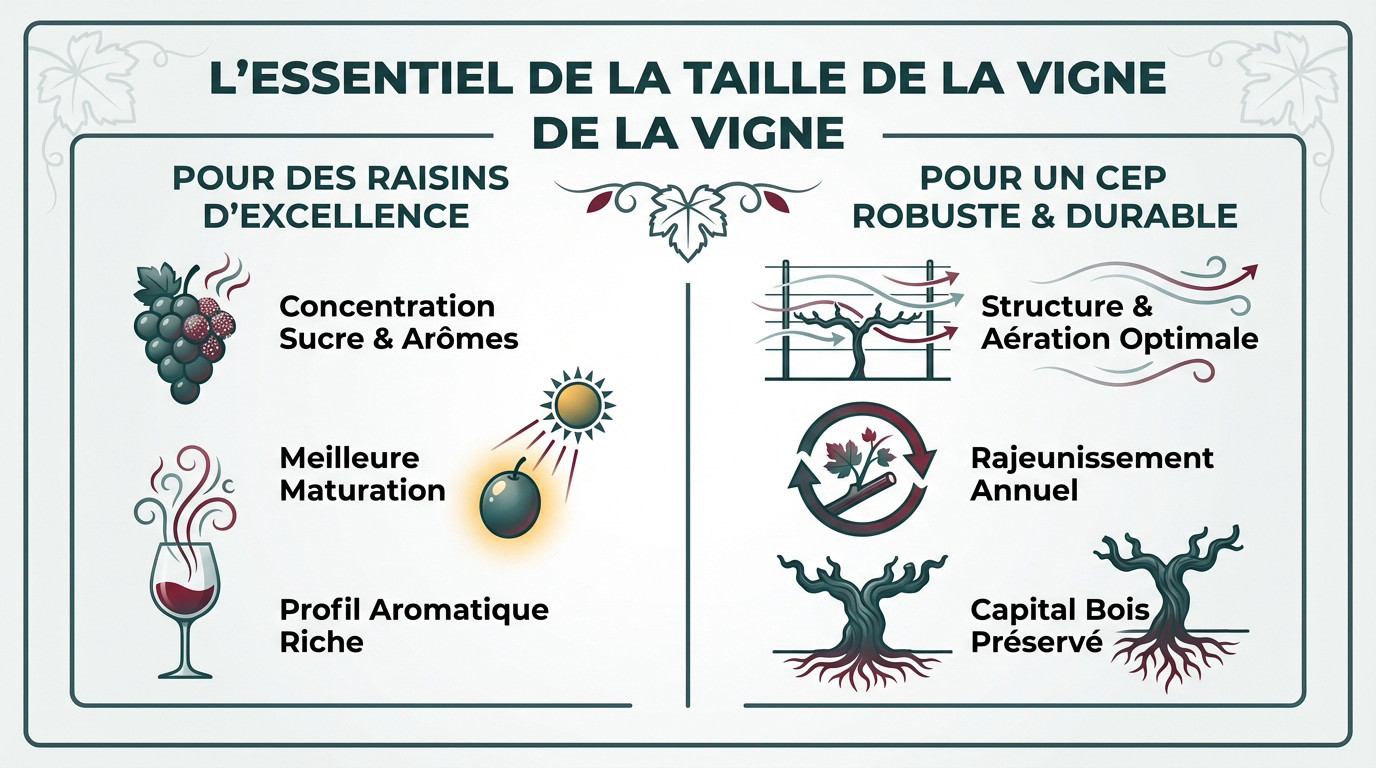
If you let nature take its course, your vine turns into a monster of wood and leaves. It wastes its energy everywhere except in the fruit. The goal is not to grow rampant creepers, but grapes concentrated in sugar and aromas.
Pruning limits the number of bunches. Less fruit means more resources for each one. That is the secret to better ripening and therefore superior grape quality.
This cut influences the aromatic profile of the wine. Canopy management changes how much sun the grapes get and their final character, whatever the grape variety chosen.
Controlling vigour for the long life of the vine
Pruning also means guiding the plant's growth. You give it a solid framework. This makes future work easier and ensures optimal airflow, which greatly reduces the risk of diseases such as downy mildew.
Think of winter pruning as a "reset". It removes dead or diseased wood and rejuvenates the vine. It is a concrete investment in its longevity.
A well-pruned vine will age better, that is a fact. You preserve its stock of wood for decades of production, instead of exhausting it in a few years of unruly growth.
The pruner's calendar: finding the perfect window
Now that you know why this snip of the secateurs is vital, the million-dollar question is: when should you act ? Timing is everything, and getting it wrong can be costly.
Dormancy, the only real moment
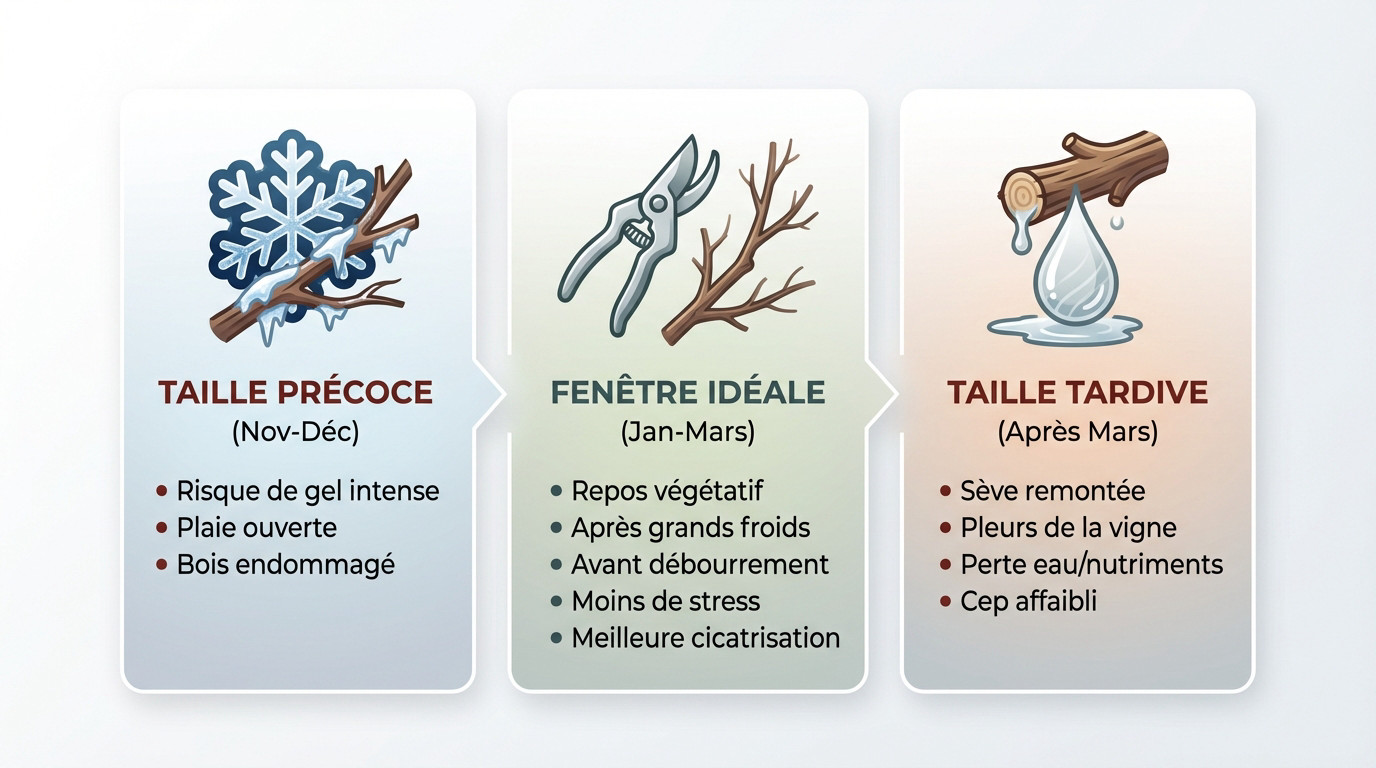
The principle is simple: you prune while the vine is asleep. This period of dormancy begins after the leaves fall. The ideal window runs from January to March, once the worst of the cold has passed, but always before budburst. In short, act while nature is on pause: that is when the plant will suffer least.
The vine's "weeping": the sign that it is too late
If you prune while the sap is rising, liquid flows from the cuts: this is the vine "weeping". It is not a disaster, but it is a sign that you are late. This bleeding tires the vine, which loses precious water and nutrients, a stress that can weaken it for the season.
The frost trap: don't prune too early
Pruning in November is tempting, but risky in cold regions. A fresh wound is an entry point for severe frost, damaging the wood deep inside.
Waiting until the end of winter allows the vine to heal better. Late pruning, just before the vine wakes up, is often safer than pruning too early, which exposes the plant to the worst of the frost.
The amateur winegrower's toolkit: your allies for a clean cut
Timing sorted? Perfect. Now let's move on to equipment. There is no need to spend a fortune, but bear in mind that quality, well-maintained tools make all the difference between a jeweller's precision and a botanical butchery.
Secateurs, your best friend
Forget the rusty old secateurs lying at the back of the garage. Your success depends on bypass secateurs for living wood or anvil secateurs for dead wood. The absolute must? They have to be razor-sharp and disinfected.
A clean cut heals quickly and well. Conversely, a crushed or ragged wound literally invites fungi and diseases to move in. It is as simple and brutal as that.
If you manage a whole plot, electric secateurs will save your wrists. But for one or two vines in the garden, a good manual tool does the job perfectly without any frills.
Saws and loppers for the tough cases
Secateurs quickly reach their physical limits. For canes more than 2 or 3 cm in diameter or old wood to be removed, a small pruning saw becomes a must. Choose a thin, curved blade for surgical precision.
Loppers are an interesting alternative. Thanks to their long handles, they offer powerful leverage for medium-sized branches. They are the ideal compromise between secateurs and a saw.
- Well-sharpened secateurs : handle 90% of everyday cuts.
- A small pruning saw : essential for old wood or thick sections.
- 70% alcohol: to disinfect the blades between each vine.
- Protective gloves : to spare your hands from scratches and blisters.
Life-saving techniques: how to prune without butchering
Well equipped and at the right time, all that remains is to know where to cut. Don't panic, the basic principles are logical.
The main principles: Guyot, Cordon and Gobelet explained
You need to know the three families of pruning that shape the vine according to the climate. To go further, this practical guide to pruning vines is an excellent resource.
| Type of pruning | Description | Ideal for... |
|---|---|---|
| Guyot pruning | One or two canes (6–10 buds) and renewal spurs. | Most vineyards, very productive. |
| Cordon de Royat | Horizontal framework with 2-bud spurs spread along it. | Trellised vines, mechanisation, quality. |
| Gobelet (bush vine) pruning | No trellising, 3 to 5 short arms growing from the trunk. | Hot, windy regions, manual upkeep. |
Gentle pruning: think like the sap to avoid wounding
Golden rule: sap is a motorway, so avoid roadblocks. A flush cut on old wood creates a cone of desiccation that blocks the flow. Adopt gentle pruning: always leave a stub of one centimetre. The necrosis will concentrate on this dead wood, sparing the living vessels.
Grape vines vs ornamental vines: two goals, two ways of pruning
You don't prune a Virginia creeper like a grape vine. For ornamental vines, the goal is to contain vigour so it covers a surface. For a table-grape vine, every cut is aimed at the future harvest by selecting the fruiting wood. One is aesthetic, the other productive.
Beginner's mistakes you absolutely must avoid
You have the theory, but in the field improvisation is not forgiven. Here are the classic pitfalls that often ruin the efforts of newcomers.
Cutting old wood flush: an open door to disease
This is the fatal mistake. Sawing flush with the trunk creates an irreversible wound, a real invitation to trunk diseases such as esca. Never do this.
The plant's survival comes before aesthetics.
Thinking about the long-term health of your vine matters more than having a "neat" cut. That extra centimetre of wood, the stub, is your vine's life insurance.
Leaving too much wood or too little: finding the right balance
A hand that is too timid guarantees dense foliage but poor-quality grapes. The vine exhausts itself in leaves and the bunches struggle to ripen.
At the other extreme, a cut that is too harsh risks wiping out the whole harvest. Balance is key : observe your vine's vigour to adjust your approach.
Forgetting to clean your tools: guaranteed contamination
Moving from an infected vine to a healthy one without disinfecting is like operating with a dirty scalpel. You actively spread problems across your plot.
Beyond strict hygiene, other oversights are costly. Here are the major pitfalls you absolutely must avoid :
- Mistake 1: Pruning in rainy weather (encourages fungi).
- Mistake 2: Leaving cut canes on the ground (reservoirs of disease).
- Mistake 3: Making lots of small cuts instead of a single clean one.
- Mistake 4: Ignoring the vine's vigour (a weak plant should be pruned short).
Pruning the vine is a fundamental step to ensure the long life of the vine and the quality of the grapes. Mastering this technique, by respecting dormancy and using suitable tools, allows you tobalance the plant's vigour. Careful work thus ensures optimal future harvests.
Frequently asked questions
When is the ideal time to prune a vine?
The right time to act is during the plant's dormancy, once the leaves have fallen and the sap has gone back down. This dormant phase generally runs from January to March, taking care to avoid periods of hard frost.
How do you prune table grapes?
Pruning for table grapes aims to favour fruit quality rather than leaf growth. It involves selecting the fruiting wood and limiting the number of buds, or "eyes", in order to focus the vine's energy on the future bunches. Methods such as Guyot or Cordon pruning are often favoured to structure production.
What are the key steps of winter pruning?
The operation begins by removing dead wood and excess canes using clean, disinfected secateurs. Next, shorten the selected shoots, leaving a small stub of wood above the last bud you keep. This non-flush cutting technique prevents the living tissue from drying out and promotes healthy healing.
Can you prune a vine as early as October?
Pruning in October is considered premature because the vine has not yet fully entered dormancy. Any remaining leaves and residual sap flow expose pruning wounds to the first frosts. It is better to wait until the plant is fully at rest to avoid weakening the wood.
What is specific about pruning a vine on a pergola?
The pruning of a pergola vine varies depending on whether the goal is ornamental or productive. For simple green cover, pruning mainly serves to guide the shoots along the support and contain their spread. If you want to produce grapes, more rigorous pruning is needed to let air through the foliage and ensure the fruit gets sunlight.
Is pruning in March risky?
Pruning in March is common practice, known as late pruning, and it often helps toescape damage from spring frosts by delaying budburst. The main risk is "weeping", sap flowing from the cuts, which signals that the plant is becoming active again but is generally harmless for a vigorous vine.
Which technique helps produce large bunches?
To get bigger, sweeter bunches, regulating the crop load is essential. Short pruning, which reduces the number of buds, limits the total amount of fruit but allows the vine to allocate more resources to each remaining bunch. This balance prevents the vine from becoming exhausted and ensures better ripening.
Is leaf removal necessary in addition to pruning?
Leaf removal is a separate operation from winter pruning, carried out during the growing season. It involves removing some of the leaves around the bunches to improve airflow and sun exposure. Although optional, it complements the initial pruning work to optimise the health and quality of the harvest.
The next journey arrives by email
Our new articles, seasonal pairings and the estates joining the cellar, straight to your inbox.


