
Port: Discover this Portuguese fortified wine

Port is a fortified wine to which grape spirit is added. It comes from northern Portugal, in the Douro Valley. Port is made from black grapes of the Touriga Nacional, Touriga Franca, Tinta Roriz, Tinta Cão and Tinta Barroca varieties. Port can also be made from white grapes.
What are the origins and history of port?
The history of port goes back centuries of courage and determination. In the 17th century, fearless sailors navigated the Douro down to the city of Porto, from which the wine takes its name. Winegrowers discovered that adding a small dose of grape spirit to the fermenting wine gave it a unique robustness and allowed it to survive long sea voyages.
These robust wines quickly grew in popularity and caught the attention of the whole world. Their rich flavours, sweetness and intense aromas have won over the palates of adventurous wine lovers down the centuries. The spectacular terraces of the Douro, with their intertwined vines, became the cradle of port, a true jewel among fortified wines.
Over time, different ageing techniques were developed to create a diverse range of ports. Ruby Ports, young and fruity, came into being, while Tawny Ports, aged in oak barrels, acquired a captivating complexity with notes of dried fruit and spices. Vintage Ports, made from the finest vintages, are regarded as rare and precious treasures.
Today, port is a living heritage, a unique product to be savoured. From centuries-old cellars to legendary port houses, history unfolds in every sip, evoking the bold spirit of the navigators who braved stormy waters to carry port beyond the horizon.

How is port made?
It all starts with the careful selection of the hardiest, most resilient grape varieties, grown on the steep slopes of the Douro. The harvest is done by hand, in sometimes acrobatic conditions, to ensure the highest quality grapes.
Once picked, the grapes are carefully taken to the cellars, where the magic happens. The crushed grapes produce a rich, sweet must, which ferments. This is where the secret of port lies: grape spirit, also known as brandy, is added to stop the fermentation and leave some residual sugar. This addition of alcohol gives the wine its strength and power.
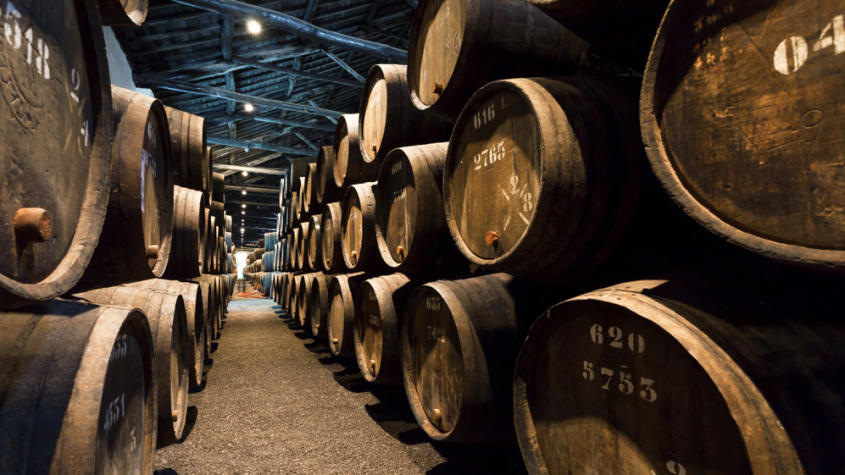
But the adventure doesn’t end there. The port wines are then transferred to large oak casks, which rest in dark, damp cellars. There, the wines develop their unique character over the years, through a complex process of controlled oxidation. Ruby Ports keep their fiery youth, while Tawny Ports, aged for a long time, acquire aromas of dried fruit and caramel.
These precious nectars are often carefully blended, combining different cuvées and vintages to create unique harmonies of flavour. The master blenders, like wine alchemists, make sure that every bottle of port embodies the spirit of the wild lands of the Douro.
And finally, when the time comes, these dazzling drinks are bottled, ready to be enjoyed by bold wine adventurers

Ruby or tawny port?
Known as Ruby Port, this is a type of fortified wine produced in the Douro Valley, in northern Portugal. It is usually a blend of several grape varieties, including Touriga Nacional, Touriga Francesa, Tinta Cão, Tinta Barroca and Tinta Roriz. The wine is usually aged for 3 to 5 years in oak casks before being bottled. Ruby Port is usually deep red and is sought after for its round, fruity character.
Next comes Tawny Port, another type of port produced in the same region of Portugal. Tawny Port is usually a blend of several different grape varieties, like Ruby Port. The wine must age for at least 5 years in oak casks before being bottled. Tawny Port with an age indication on the label starts at 10 years and can generally go up to 50 years. These wines have a more tawny, even brick-red colour depending on the age of the port. They reveal flavours of nuts and caramel and can be enjoyed with desserts or on their own at the end of a meal.
What are the different types of port?
Vintage Ports
These are the most iconic, the kings of port wines. They come from a single exceptional harvest and from grapes of top quality (6 varieties in total) and are accredited by the Instituto dos Vinhos do Douro e do Porto. They are bottled after two years and then aged in bottle for another two years. You can drink them young, but it is better to wait at least 10 years before opening them, as they can still be a fine vintage even after more than a century. They account for only 3% of the total production.
Late Bottled Vintage Ports
Also called “L.B.V.”, they are likewise from a single harvest, and are made with the same grapes and in the same year as the “Vintage”. However, it does not quite reach the level of quality required to earn the Vintage designation, and its ageing in large oak vats lasts longer, from 4 to 6 years. As a result, the wine is less powerful than a “Vintage” and its ability to age in bottle does not match that of a “Vintage”. An L.B.V. is also very pleasant to drink as soon as it is bottled.
Ruby Ports
These are blends of wines from different years, with an average of 3 to 5 years’ ageing in large oak vats. The “Ruby” designation refers to everyday wines. For some “houses”, it is in fact a blend of what is left once they have made their best wines. It is better to look for “Ruby Reserve” or “Finest Reserve”, which refer to more carefully selected blends.
Tawny Ports
These are wines that have aged for at least 5 years in 500-litre oak barrels. Through contact with air and wood, these wines oxidise. They are classified according to their age. There are:
- “Tawny” (basic), which refers to ports aged for 5 to 6 years
- “Tawny Reserve”, for ports aged for 7 to 8 years
- “Tawny with an indication of age”: all these wines are the result of a blend of years. The aim of the winemaker preparing a new batch of “Tawny” is to recreate the flavours of the one that has run out. But the age of the wine is in fact the average age of the wines that make it up. So half 8-year-old wine and half 12-year-old wine would give a ten-year-old.
- “Tawny Colheita”, which refers to vintage-dated ports (for example: Colheita 1995). These are true “Tawnies”, the original tawnies used for blending aged Tawnies.
How much alcohol is there in port?
Port is a fortified wine, also called a “muté” wine, made by adding grape spirit to the wine during fermentation, which makes it a strong drink that can contain a lot of alcohol. The alcohol content of port can vary, but it is usually between 18% and 22% by volume, which means it is on average 50% higher than most wines.
What food pairings are recommended with port?
Port is a sweet, fortified wine that offers a wide range of flavours and taste characteristics. Here are a few food pairing recommendations to go with port:
-
Cheese: Port goes very well with soft, creamy cheeses such as Brie or Camembert, or with blue cheeses such as Roquefort or Gorgonzola. More mature cheeses such as Cheddar or Parmesan can also be good choices.
-
Chocolate: Port and chocolate are a classic pairing. Try matching a Ruby Port with intense dark chocolate, or a Tawny Port with milk chocolate or caramel desserts.
-
Dried fruit and nuts: The dried-fruit aromas of port go well with almonds, walnuts, figs, dates and prunes. They can be served on the side or included in desserts.
-
Desserts: As well as chocolate, port goes well with red-berry desserts, fruit tarts, crumbles and spiced desserts such as apple tart or spice tart.
How long can you keep a bottle of port?
How long a bottle of port will keep depends on the type of port, the vintage and the storage conditions. In general, high-quality Vintage Ports can be kept for several decades or even longer, and will develop complex flavours and improve with time. Aged Tawny Ports can also be kept for many years thanks to their controlled oxidation process, but their aromas will not evolve.
However, it is important to note that most ports are not designed for extended ageing and are meant to be enjoyed younger. Non-vintage Ruby and Tawny Ports are generally ready to drink as soon as they are bought and do not benefit from being left to age.
To keep port in the best condition, it is recommended to store it in a cool, dark place without excessive temperature variation. A wine cellar or a cool storeroom is ideal for preserving the qualities of port over time.
How do you drink port?
First of all, port is to be sipped slowly, with the patience of an explorer in search of hidden treasure. Take a sip and let the flavours unfold on your palate.
Next, make sure you serve it at the right temperature. For red ports, slight chilling to between 12 and 16 °C will reveal their captivating aromas. Softer styles, such as Tawny Ports, are best enjoyed slightly cool, between 10 and 14 °C.
As for glasses, choose port glasses or balloon glasses to better concentrate the aromas. Tulip glasses are also perfect for capturing the aromatic nuances.
If you are exploring Vintage Ports, don’t forget to decant them. This will allow these exceptional wines to express themselves fully and release their treasures of flavour.
Finally, remember that port is an excellent companion for convivial moments and celebrations. It can be enjoyed as an aperitif or a digestif, but also with fruit desserts or mature cheeses.
Is port an aperitif?
Well, believe it or not, port can work wonders as an aperitif! This divine nectar, fortified and refined, is an ideal companion to kick off your festivities in style.
Picture yourself settled in a cosy living room, surrounded by your fellow adventurers, a glass of port in hand. Captivating aromas of walnuts, dried fruit and candied fruit gently tickle your nose, promising a fine tasting.
Whether Tawny, Ruby or White, port offers you a range of complex and refined flavours. The drier styles, such as Tawny or White, are perfect for awakening your taste buds before a meal.
But be warned, dear adventurer: port is much more than just an aperitif. It can also be enjoyed as a digestif, to round off your feasts on a smooth and elegant note.
So whether it is to open the festivities in style or to end them on a high, port is an undeniable ally for your convivial moments.
The next journey arrives by email
Our new articles, seasonal pairings and the estates joining the cellar, straight to your inbox.

